
 E-Paper



Review: A Taste of My Life by Chitrita Banerji
This deeply introspective compilation of essays, that recounts experiences with food and drink from different points in the author’s life, goes beyond the individual and into the collective memory of most Bengalis

 Prefer HTon Google


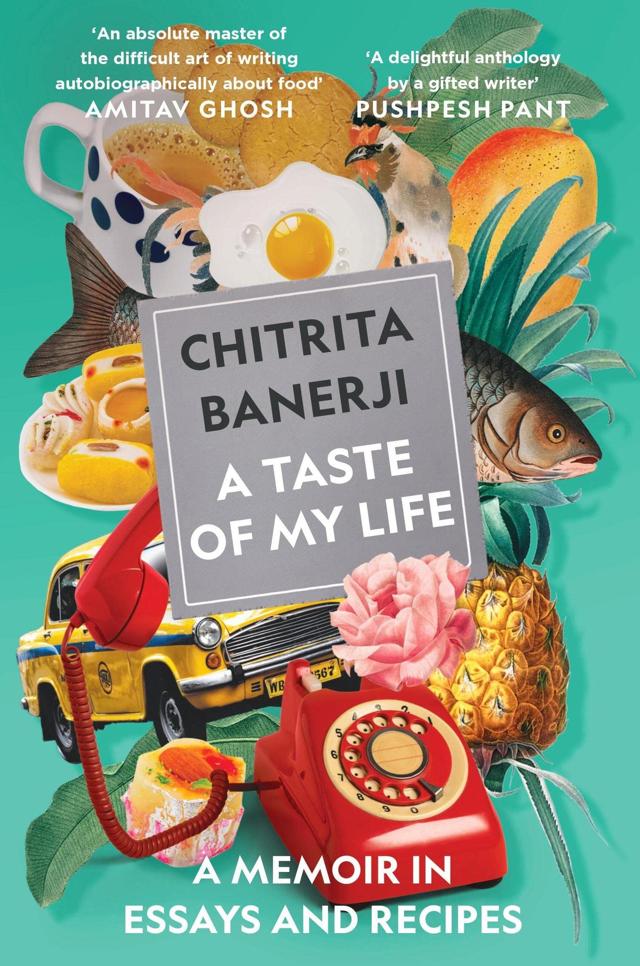
Chitrita Banerji needs no introduction - even to those who do not delve into food history, or are indifferent to kitchen experiments. To the others, her books are akin to a cookery bible. Her latest publication, A Taste of My Life, is a compilation of essays written at different times recounting experiences of childhood and adulthood where food and drink act as a thread that weaves together a series of experiences that define her life. Read together these essays form an associative pattern that goes beyond the individual into the collective memory of most Bengalis. “Food is life,” as the author affirms.
Food unites: a cup of tea with her father bridges the gap of estrangement and lost years; her mother’s cooking takes her back to a jamai shoshthi lunch she had once prepared. Food also separates - generations and communities. An instance of the first is an anecdote concerning one of the delicacies of Bengal, mochar ghonto, a sauteed banana flower preparation. One would assume that most Bengalis living outside the reach of mocha yearn for a taste of the “dense, chewy, soft and brittle – and the harmonious melding of spices.” It comes as a shock to the author when her young relative turns up her nose at it and asserts that French fries offer her just as good a taste. The point that this little story makes is the disparity of experience that is not only related to the food that the plant yields but to other childhood activities connected with it, such as floating a banana flower boat at dusk: “the lamp goes out but the boat stays afloat”, something unknown and unexciting to the young urban generation more familiar with global culture.
Of the second kind of divide is the instance of the missed jamai shoshthi lunch by her first husband, who was unaware of the importance of different menus in the conventions of a Hindu household and, therefore, unaware of the hurt and humiliation he had caused by casually giving it a miss.
This collection is not simply a record of lost times and people evoked by the nostalgia that separation of time and place might bring. It is a record of the cultural traditions of Bengal that are slowly disappearing, significant not only in the change in food habits but also in the food itself. The list of seasonal fruits in the book and their taste will remind the Bengali of the alteration of the jamrul (wax apple) and narkeli kul (Indian jujube). Selling now in the city market are large jamrul, which look juicy but yield just a little insipid juice, and a cross- bred or modified narkeli kul that looks like a green apple in size and has none of the sweetness or flavour of the original. What we have gained in bulk we have lost in quality and this is true of most foods.

The paan, especially the mithey paan of Bengal, is one of many on the list of the nearly-lost. Natural disasters as well as those that are not has made paan a rarity in the corner shops of the city. Then there are the cheaper substitutes – paan masala in different flavours and similar products. This has resulted in the unlearning of the method of making a “khili”, the conical form that is peculiar to the state. It is also difficult to find the flavourful khejur patali or jhola gur (liquid date palm jaggery) of the past and a range of good Darjeeling tea in tea shops for Bengalis, who are fastidious about both quality and steeping methods. This is why A Taste of My Life will appeal to a certain generation of readers, who have grown up with these and grumble about the steady deterioration of quality.

A sense of history links tradition to innovation without which history would be dry information lost in the annals of time. In relating the history of sugar production, which began as early as 1500 BCE, the author asserts that both etymologically and culturally gur belongs to Bengal. As proof of the continuation of the historical process she offers an exhaustive list of the variety of sweets invented using khejur patali and chhana by the sweet makers of Bengal, which made the fortunes of Girish Ghosh and Nokur Nandy as far back as 1845 and continues to this day.
History also tells us what we have lost through exploitative commercialism as in the case of opium cultivation by the East India Company. One precious item on the Bengali table has traditionally been posto, poppy seeds, eaten in many forms, a must in summer for its cooling properties and medical benefits. The author shows how this was once on the common man’s daily diet but has now become so expensive that it can be enjoyed only by those who can afford it. And then the social stigma attached to opium consumption through de-legalisation rid us of a tradition as old as the 11th or 12th century.
A deeply personal and introspective memoir A Taste of My Life reaches beyond this to the greater social consciousness that binds us to our history.
Indranee Ghosh is the author of Spiced, Smoked, Pickled, Preserved; Recipes and Reminiscences from India’s Eastern Hills.


