
 E-Paper



Review: Abundant Sense; Rahim – Selected Dohas translated by Chandan Sinha
A translation of the dohas of Rahim, general, poet, polyglot and bureaucrat in Emperor Akbar’s administration, that is erudite, enjoyable and edifying

 Prefer HTon Google


Most of us know Abdul Rahim Khan-i-Khanan as the author of the simple, somewhat didactic dohe (couplets) we learnt in our Hindi classes in primary school. Some citizens of Delhi might be able to substantiate this faceless idea of ‘Rahim’ with images of his recently renovated mausoleum near Humayun’s tomb. Unfortunately, though, that’s about it. In this context, Chandan Sinha’s masterful translations of Rahim’s couplets, Abundant Sense, accompanied by a detailed historical introduction, do much to recover his legacy, which holds important lessons that are as relevant today as they were in his time, approximately four centuries ago.
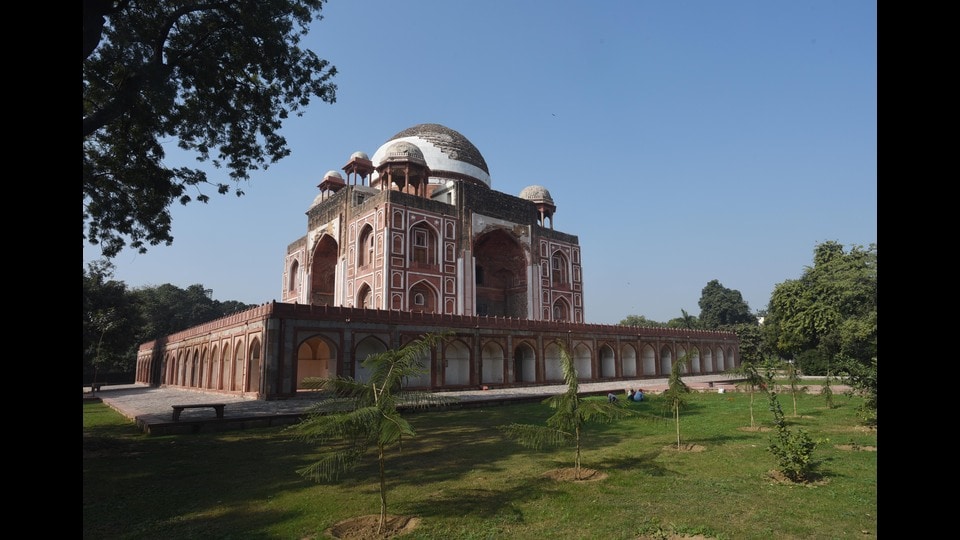
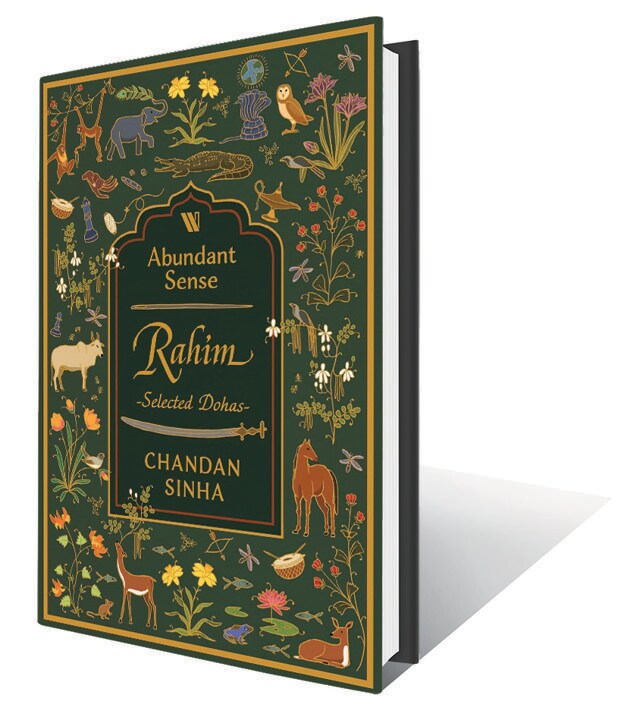
As Chandan Sinha illustrates, contemporary work on Rahim treats him either as a poet, or as a bureaucrat in Akbar’s administration. However, not only did he bridge both roles seamlessly, he was also much more: a “warrior, general, administratior, leading minister of the empire, scholars, polyglot, translator and poet” (XVIII). He was also a patron of the arts, as is evidenced through the description of his library, which accompanied him on his travels as the top-most administrator of Akbar’s empire. His library attracted a number of scholars, poets, and even craftsmen, with the latter producing beautifully illustrated translations of the Ramayana in Persian. All of this historical context, culled carefully by Sinha from Ma’asir ul-Rahimi (a 17th century biography of Rahim), serves as the backdrop to his couplets and brings out the many layers of meaning that are flattened in a decontextualised, ahistorical reading.
Another important piece of historical context is the language politics, both of Rahim’s time and the modern period, which contributed to the changes in his image over time. Sinha traces the emergence of Rahim’s identity as primarily a Hindi-language poet to the emergence of modern campaigns to promote Hindi as a distinct language, led by the Nagari Pracharini Sabha (Society for the Promotion of Hindi) in the late nineteenth and early twentieth century. On the other hand, in his own time, Rahim was better known as a poet of Persian, with his Hindi works finding little to no mention in chronicles and anthologies of that period. Neither of these images are accurate. Rather, reflecting the cosmopolitan, multilingual milieu of the time, Rahim was a polyglot who composed verses in Hindi, Persian, Arabic and Turkic.
His cosmopolitanism is also borne out by the contents of his couplets, which draw heavily from the themes, imagery, and vocabulary of Bhakti poetry. The power of his poetry was such that it gave rise to the idea that Rahim himself was a devotee of Lord Krishna or Rama. As Chandan Sinha shows, there is little to no evidence to back this claim. Instead, his poetry is evidence of the pluralism of the era, where a self-proclaimed devout Muslim could also hold deep reverence for Hindu deities. Further, his couplets, especially those on the theme of love, show the considerable similarity between Sufi and Bhakti ideas of devotion. For instance, this couplet describes the many difficulties that befall those who follow the path of love, a common theme in both Sufi and Bhakti poetry:
Rahim, astride a horse of wax, race through a field of fire,The path of love is as trying, everyone can’t aspire (121).
Just as Rahim straddled many linguistic traditions, his couplets also transcend classification into simplistic themes and genres. His work has variously been identified with Riti, Niti, and Bhakti genres. However, as Sinha describes the conventions of all three genres in engaging, yet scholarly, prose, one finds that Rahim’s work defies such neat categories. Similarly, even as the collection of couplets is divided into thematic categories for the benefit of the reader, it is easy to see the multiplicity of meanings that are carried in a single couplet, such that it could fall under several categories at once. For instance, the following couplet appears under the theme of Friends & Friendship, but could just as easily be read as referring to the vagaries of fate, an issue that Rahim possessed personal experience of:
Rahim goes from door to door, begging for every meal. Friends bid goodbye to friendship! This isn’t the same Rahim.
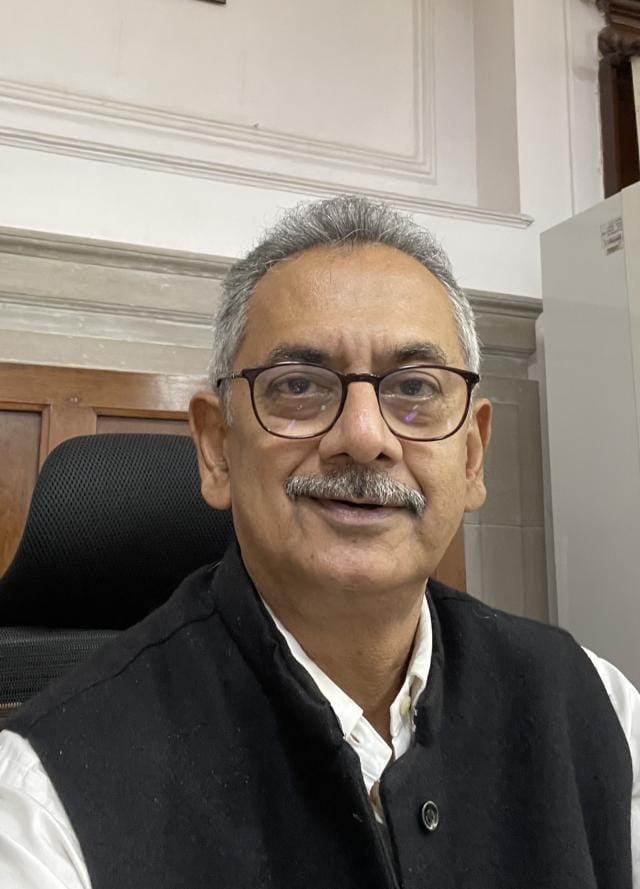
This couplet also serves as a great example of the masterful manner in which Chandan Sinha has retained the unique form of the doha (couplet), difficult as it is to render it in English. His introduction describes in immense detail the specificity of the doha form, as well as the great thought he has put into being faithful to it in translation. Resisting the temptation to adopt the free-verse form now exceedingly popular in English, Sinha not only retains the two-line structure essential to the doha (as is even reflected in the name), but also adopts a uniform metrical scheme, bestowing a great sense of coherence to his translations. Further, Sinha uses his vast knowledge of history, mythology, and literature to provide detailed explanations for each couplet. This greatly contributes to the enjoyment of the reader, as well as their edification in matters not just of poetry, but of history and heritage as well.
Chandan Sinha’s book, thus, is also a celebration of the power of doha form itself, best described in Rahim’s own words:
Couplets comprise a few letters but hold abundant sense;As the crouching acrobat, Rahim springs atop the fence (2).
Rushnae Kabir is a PhD candidate at the Department of Religious Studies, University of Pennsylvania, where she studies devotional practices in South Asian Islam.


