
 E-Paper



Review: Good Girl by Aria Aber
A bildungsroman that captures a second generation Afghan migrant’s journey from Berlin’s techno clubs to finding her passion in photography

 Prefer HTon Google


The protagonist of poet Aria Aber’s debut novel Good Girl is a second-generation Afghan migrant, Nilab Haddadi, who goes by the ethnically vague ‘Nila’. Set out like a classic bildungsroman, the work traces 19-year-old Nila’s life as a young rebel enveloped in a haze of drugs, alcohol and artistic fervour in the thumping dark of Berlin’s techno clubs. The novel captures the protagonist’s journey from chasing highs to coming to terms with the grief of her mother’s death and finding her passion in photography. The bildungsroman label is apt because Aber’s narrative also traces the formation of an intolerant neo-imperial world order through the portrayal of the city’s “ghetto-heart”, particularly Gropiusstadt in Neukölln. This is a portrait of a city in a prosperous nation in the “Global North” where the news is delivered by “middle-aged men with pearlescent smiles and young blood TV anchors in starched suits” and invariably includes stories of “an Arab man detained for terrorism, or a building with asylum seekers set on fire”. In Nila’s Berlin, Nazis “are alive and well” and “the self-hating Muslim” can be considered “a symptom of the twenty-first century”. Post 9/11, Nila grows up surrounded by stories of hate crimes and experiences of violence that are normalised. All this in a city where “everywhere, there was a Mohammed or an Ali or an Aisha trying to get by.”


The narrative deftly explores Nila’s shame and angst as a second generation migrant from a predominantly Islamic nation who is called ‘alien blood’ by her class fellows at boarding school and who faces slurs such as ‘Kanaken’ from neo-Nazis. The protagonist hides her immigrant identity from those with whom she spends her days while also dodging the scrupulous eyes of neighbours and family members who are quick to denounce her rebellious ways and eager to complain to her widowed father.
The author, herself the daughter of Afghan refugees who was born in Germany, writes in her third language English instead of in Farsi or German. As a result, her prose is deliberate and self-aware and is reminiscent of Franz Kafka. A Jewish author in early 20th century Prague who wrote in German, Kafka’s particular use of language to depict deterritorialization is the subject of much critical discourses including Gilles Deleuze and Felix Guattari’s Kafka: Toward a Minor Literature. This subject is pertinent to Aber’s own politics and poetics of exile and she invokes Kafka with a quote from The Metamorphosis appearing as the epigraph to Good Girl.
As the narrative progresses, there are other explicit references to Kafka as well as an implicit attempt to showcase that author’s relevance in the context of the persistence of the deliberate evil of administrative puzzles when it comes to refugees and asylum seekers in contemporary Europe. Nila’s formally educated doctor parents are not allowed to practice medicine in Germany. Through her protagonist, Aber points to the administrative legalese that those seeking asylum are exposed to, a typical Kafkaesque nightmare. Even after becoming citizens, the “road to a new medical license” is “too labyrinthine for someone with limited linguistic skills”. The theme of exile has also been a consistent thread in Aber’s poetry and shows up in her 2019 collection Hard Damage, which won the Prairie Schooner Poetry Prize.
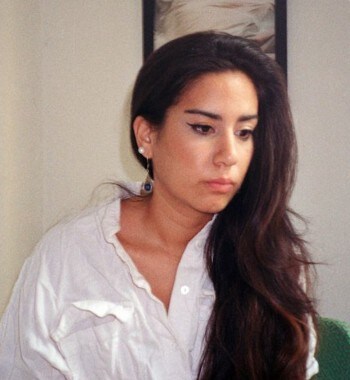
In Good Girl, which was shortlisted for the Women’s Prize in Fiction this year, Aber interrogates the episteme of colonial violence reviving itself through administrative mazes. Moreover, the political heft of her novel also lies in her laying bare the historical amnesia in media narratives investigating migration in the twenty-first century. Not only in the case of her parents, who migrated from “the graveyard of empires” Afghanistan, but also by extension for those fleeing from other countries in the “Global South” that are undergoing political conflicts and military unrest owing to the interference of neo-colonial forces of the United States, Britain and Western Europe. Nila’s is a story that carries within it multiple narratives and experiences of migration that might not neatly fit into the boxes created and disseminated through the news. Her immigrant parents, Karim and Anahita, were “married behind the barbed wire of a hotel in the hills” in Afghanistan “while the buildings fell in the city”. They “didn’t flee by boat” or “carry an infant wrapped in a blanket over a perilous mountain pass”, images ossified and fetishised in the contemporary era through a coverage of the ‘migrant crisis’ in Europe. But this, as Aber’s protagonist aptly describes, doesn’t make their exile from their homeland any less tragic. Nor does it exonerate Nila from having to carry the shame of constantly falling short of being the ‘good girl’; both by the standards set out by her family and their Afghan friends in Berlin and the parameters constituting a ‘good migrant’ success story, whatever that may mean.
A layered read, this debut novel signals the arrival of an impressively strong voice.
Simar Bhasin is a literary critic and research scholar who lives in Delhi. Her essay ‘A Qissa of Resistance: Desire and Dissent in Selma Dabbagh’s Short Fiction’ was awarded ‘Highly Commended’ by the Wasafiri Essay Prize 2024.


