
 E-Paper



Review: Gravity Archives by Andrew Motion
A poet confronting not just mortality, but the strange experience of living alongside the many versions of oneself left behind

 Prefer HTon Google


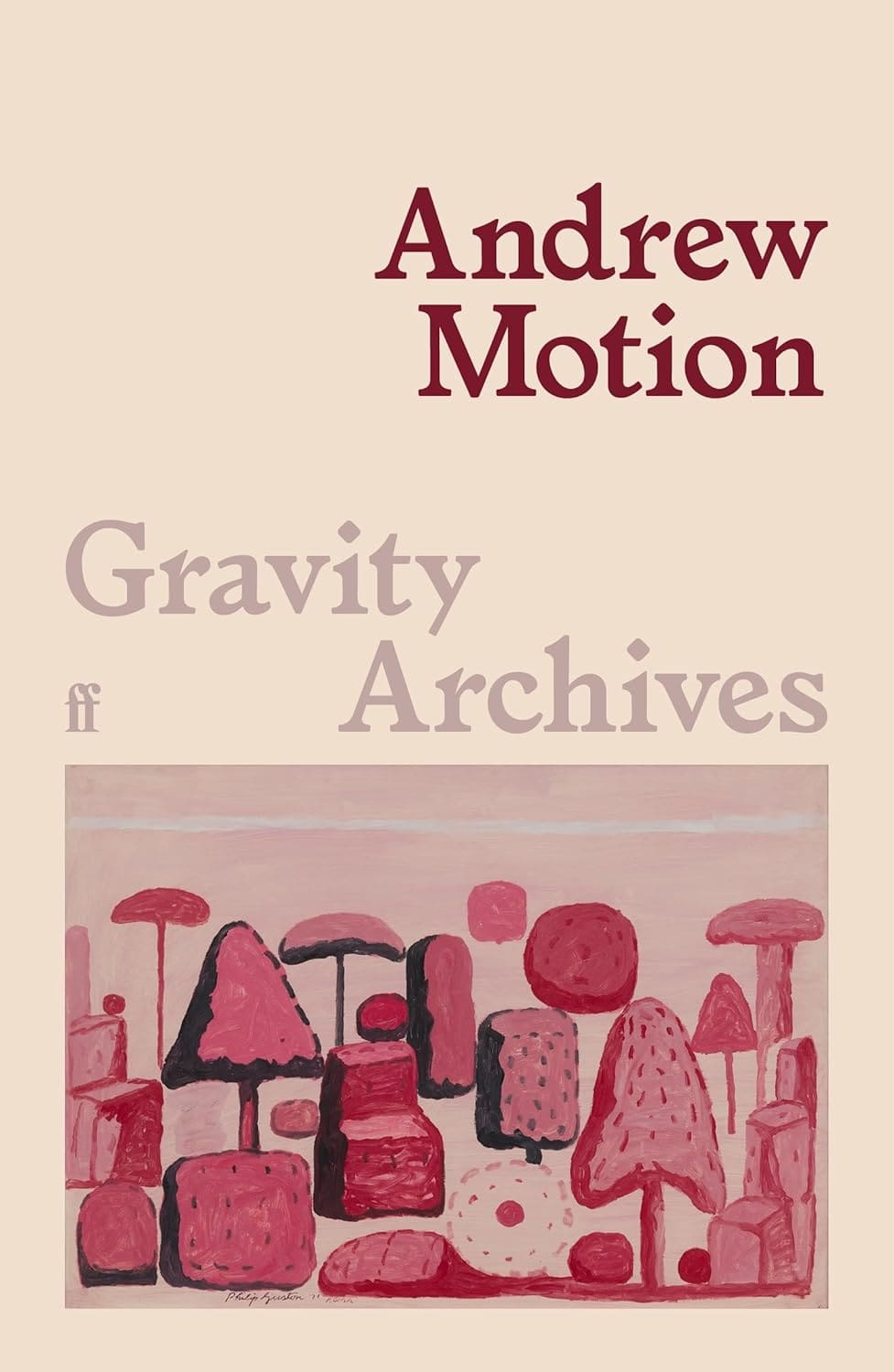
Most reviews of Andrew Motion’s Gravity Archives have understandably settled under the familiar labels. Britain’s former Poet Laureate remains, they argue, the country’s foremost elegist, still charting grief, mortality, and the attributes of ageing. Others have read the collection through the lens of his move to Baltimore, seeing these poems as nostalgic returns to London. Both observations are true, but they stop short of the collection’s more unsettling achievement. Gravity Archives is not primarily a book about death or exile. It is about the gradual archiving of the self. Which raises two larger questions: What is this gravity? And what exactly are these archives?
An archive is an unusual metaphor. It is not where life happens but where traces of life are stored after their moment has passed. Motion’s title suggests that memory itself has become a repository of previous selves, previous landscapes, and previous affections, each still exerting its own gravitational pull over the new land. The gravity he explores is therefore not merely mortality.
This becomes immediately apparent in Autumn Light, where Motion writes with startling detachment, “Andrew Motion has also died”, before describing himself as “a fool in his own opinion”. The third person is not simply theatrical self-elegy. It is the language of an archivist labelling an earlier exhibit. The poem continues: “Now he is in two minds drowning / here/there; now/then.” The slashed syntax refuses him to escape from the conflicting duals of opposites. Motion is neither wholly English nor wholly American, neither entirely past nor fully present. He can only archive this, but cannot explain it. He exists, instead, in the suspended interval between identities attached to lands.
What distinguishes this collection from much contemporary writing on migration is precisely this refusal of arrival. Migration literature often moves, however painfully, towards uprooting, belonging, or hybrid identity. Motion resists all three. His crossings between Britain and America remain unresolved, less a journey than a continual oscillation. Like the collection’s final sequence, “Yo-yo”, they become circular rather than progressive, forever pulled away only to be drawn back again by invisible strings. Gravity becomes less a downward force than an endless orbit.
Even memory refuses permanence. In the remarkable poem Snow, “...when the snow / unpacked its infinite number / of blank disguises” the world erases itself in the snowfall. The image suggests that both worlds have become exhausted into a single monotony, perhaps the only space where reconciliation is possible. The poet longs for that anonymity, wondering whether there exists “...a nowhere // now becoming a somewhere”. Yet this illusion cannot last. Reality returns with painful ordinariness in “the scrape of a shovel below my window”, until finally “...my name // as it thaws and enters my brain again / with all I regret / to launch its lonely surprise.” One’s own name, usually the foundation of identity, returns here as an unwelcome burden. Identity itself becomes something repeatedly thawed rather than securely possessed.
The long elegy, Largo, written for the Baltimore poet Joseph Harrison, extends this concern beyond biography into the competing emotional languages of his two homes. Motion repeatedly contrasts Harrison’s openness with his own inherited reserve: “You talk. I will — but warn you, Joe, / talk is not first nature. I blame Dad,”. The opposition is often read as English restraint meeting American expansiveness, but the deeper conflict lies within the speaker himself. Every conversation becomes another negotiation between older and newer selves. Even grief cannot speak in a single voice.
The archive is therefore not a place of storage but a state of motion. Nothing remains filed away. Voices continue travelling long after the speakers themselves have disappeared. This helps explain the title poem’s haunting conclusion:
“Gravity archives, quick cascades of light, // they occupy the sky with proof of loss, / and none touch down /except to climb again and then repeat.”

Those closing lines may be the emotional key to the entire collection. Rather than depicting grief as descent, Motion imagines human experience as continual ascent and return. Nothing truly lands. Memory circles back upon itself; identities are revised, shelved, and reopened; departures become new arrivals only to begin the cycle again.
In the closing sequence, Yo-yo, Motion relinquishes chronology altogether. Public elegy gives way to private remembrance. Whether speaking to Kit, invoking John Berryman, or returning to childhood, memories interrupt rather than succeed one another. Rather than separate elegies, these poems become concurrent conversations, as though the archive itself has been opened and every voice has begun speaking at once.
Perhaps this is Motion’s quiet departure from the elegiac tradition with which he has long been associated. Gravity Archives mourns not simply people but successive editions of the self. At this late stage of his career, Motion seems less interested in death than in the strange experience of surviving one’s own earlier identities. These poems suggest that we do not become new people so much as custodians of those we have already ceased to be.
Yogesh Patel has received an MBE for literature from the late Queen and holds the honour of the Freedom of the City of London. His last collection of poems, The Rapids, is published by The London Magazine. He is an award-winning poet.


