
 E-Paper



Review: Kamal Haasan – A Cinematic Journey by K Hariharan
An insightful look at the magnificent 63 year long career and pan-Indian success of superstar Kamal Haasan

 Prefer HTon Google


After being married to D Srinivasan for almost 25 years, Rajalakshmi became pregnant. She had already had two sons and a daughter. Her eldest son was 23. Srinivasan, a lawyer and freedom fighter, was worried. His wife was diabetic, overweight and short of breath. When the time came, the family rushed Rajalakshmi to a local hospital. This was in the town of Paramakudi (506 kms from Chennai). The chubby baby was born after several hours of labour and the mother had to be rushed into an emergency post-delivery surgical procedure. It was in such dramatic circumstances that Kamal Haasan, the future film superstar, was born in 1954.
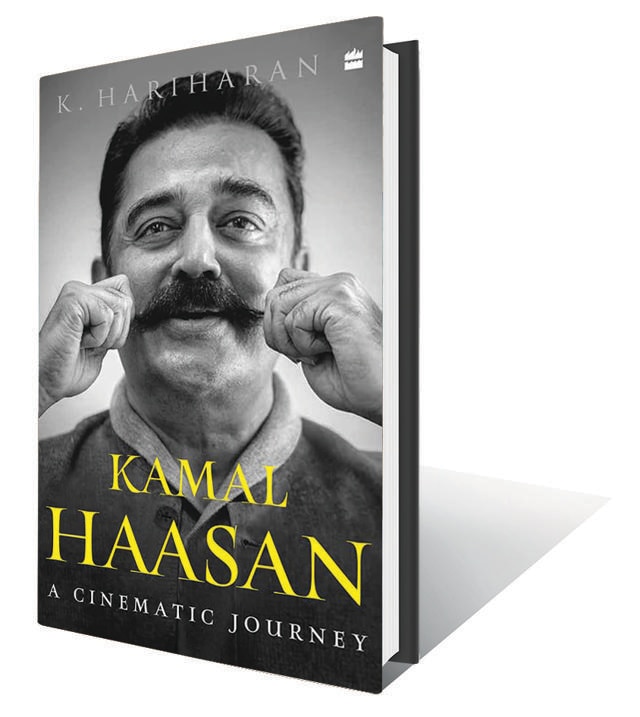
A household helper tasked with looking after the child often took him to an old thatched cinema hall where they watched many of MG Ramachandran and Sivaji Ganesan’s movies. When he returned home, Kamal would quote all the dialogues and mimic the acting. Thus, his love for acting was born. Serendipity played a part in getting him his first acting role. His mother took the six-year-old Kamal to Dr Sarah Ramachandran for a consultation. The doctor immediately saw something in him and told Rajalakshmi that her son should do a screen test with another one of her patients, the film producer AV Meiyappan. Meiyappan was impressed with Kamal and immediately cast him as the main child artiste in his film, Kalathur Kannamma. “I truly consider myself fortunate that a stalwart like AV Meiyappan turned the spotlight on me,” says Kamal Haasan. The film became an enormous success and he won the National Award for Best Child Actor.
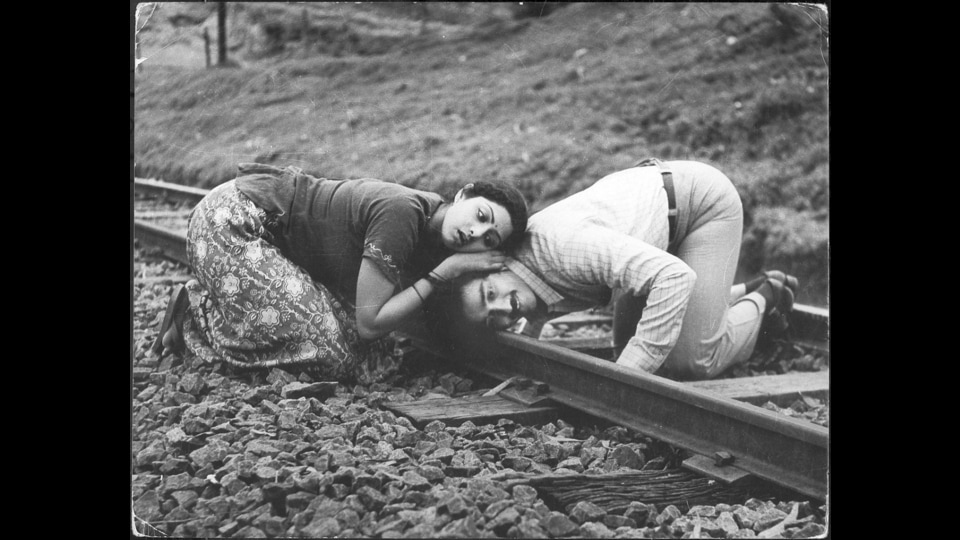
K Hariharan recounts all this in vivid detail in Kamal Haasan — A Cinematic Journey. The Chennai-based film scholar is himself a national film award winner, who has made nine feature films and over 350 short and documentary films. His book traces Kamal’s film career from the beginning, including his fruitful partnership with director K Balachander with whom he did 26 films. It all began with Arangetram (1973), in which the 17-year-old Kamal played a villain. In Moondru Mudichu (Three Knots of a Wedding,1976) Balachander used sound effects to replace the spoken word. So when Kamal and Sridevi met for the first time in a clock shop, they were interrupted by the incessant chiming of the clocks. The next time, they communicated by hitting clothes on a wet stone. “In another instance, I played a melody on the mouth organ for her. Rajini (Rajnikant) watched this with the sound of a hand pump in the background. What a way to define characters!” Kamal says.
Much later, Balachander said, “In our first few films, I can take the credit for propelling Kamal to become a genuine artist. But for the rest, I cruised on his success.”
Kamal received mass appreciation right from the beginning of his career and acted in 150 films between 1972 and 1987. By the time he featured in Bharathiraja’s debut film, 16 Vayathinile (1977), he was the most prominent actor in the Tamil film industry. He was paid ₹27,000, while the struggling Rajnikanth got ₹3,000. The shooting took place in a remote village where the actors stayed in a small government guest house. While Kamal slept in the bedroom, Rajnikanth and Bharathiraja spent the night on the veranda. Hariharan’s book is full of nuggets like these that are sure to excite film buffs.
The author provides insightful analyses of themes, plots, camera angles and reasons for why a scene was shot in a particular way. He also describes the socio-political, religious, and cultural background of each film that has made it to the book. So the reader learns that early Tamil cinema was engaged in a battle to counter the hegemony of Hindi cinema. “Until 1975, it was intrinsically bound with the vernacular Dravidian movement to unsettle the pseudo-nationalist vision of Nehruvian dynastic politics,” he writes.
Kamal’s first foray into Bollywood was with Ek Duuje Ke Liye (EDKL, 1981) produced by LV Prasad. Despite an initially lacklustre response by Mumbai film distributors, EDKL became a huge hit and the Laxmikant-Pyarelal song, Tere mere beech mein, kaisa ye bandhan anjana became the romantic anthem for young Indians in the early 1980s. Kamal’s success also opened doors in Bollywood for singers like KJ Yesudas and KS Chithra. In reverse, Lata, Mangeshkar, Asha Bhosle and Udit Narayan also sang Tamil and Telugu songs. When EKDL celebrated its golden jubilee, Kamal flew to Mumbai for a function at Novelty Theatre. There, LV Prasad asked, “The floor is spanking and clean, isn’t it?” “Yes, it is clean, but what is so special about that?” wondered Kamal.
Apparently, when Prasad was 26 years old, the same age as Kamal in EDKL, he had worked as an usher at the same theatre. “Between screenings, I had to mop this floor clean every day. I am happy such traditions are still being followed by the workers here,” he said presenting the star with a lesson in humility.
Hariharan’s book touches on a range of films including Raja Paarvai, Nayakan, Pushpak’, Sathya, Gunaa, Thevar Magan, Indian, Anbe Sivam and Michael Madana Kamal Rajan. His interpretation of the appeal of the comedy MMKR (1990), directed by Singeetam Srinivasa Rao, which tells the story of quadruplets kidnapped at birth, is especially interesting. In MMKR, the siblings grow up in different places and after many twists and turns, are reunited with their mother. This lost-and-found trope is an old favourite that has featured in many films made in different Indian languages, including Raj Kapoor’s Awaara (1951) and Manmohan Desai’s Amar Akbar Antony (1977). The author believes these films, that were especially popular from the 1950 to the 1970s, actually deal with a part of modern Indian history that most commercial filmmakers of the time were unwilling to tackle directly – the Partition of 1947. “Millions died and thousands of families fled across the borders, leaving their loved ones behind and or losing them somewhere in their journeys. More impactful than the loss of lives was the loss of one’s identity,” he writes. The films then can be viewed as an allegorical rendering of the Partition narrative.
The book also presents the bizarre side of fan reactions to the superstar: “I was once going back in a car after finishing the day’s shooting. A big crowd had assembled to watch us at the location and suddenly one young boy ran alongside the car with a blade in his right hand, slitting his left wrist, and shouting out my name like a possessed person. I was shocked, even angry, at this insane act of fandom. I stopped the car and rebuked him never to do such an act again,” says Kamal.
Ardent fans of Kamal Haasan will enjoy this book and those who don’t know much about his Tamil film oeuvre will learn much from it. Since many of the films, especially the early ones, are available on YouTube, it might be a good idea to watch them and read Hariharan’s commentary alongside.
Defying changes in cinema and society, Kamal Haasan’s career has lasted a mind-boggling 63 years. And with the release of Kalki 2898 AD and Indian 2 in the last couple of months, the journey continues.
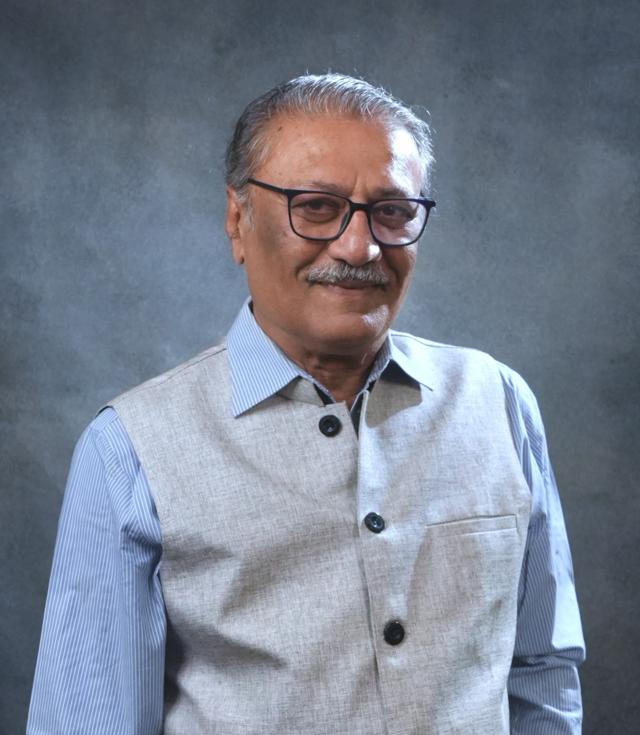
Shevlin Sebastian is a senior journalist. He is the author of The Stolen Necklace; A Small Crime in a Small Town.


