
 E-Paper



Review: Never Logged Out by Ria Chopra
The eight essays in this ambitious first book attempt to grasp the internet’s ongoing making and unmaking of the Indian Gen Z individual

 Prefer HTon Google


“One day we logged onto the internet. And then we never logged out.”
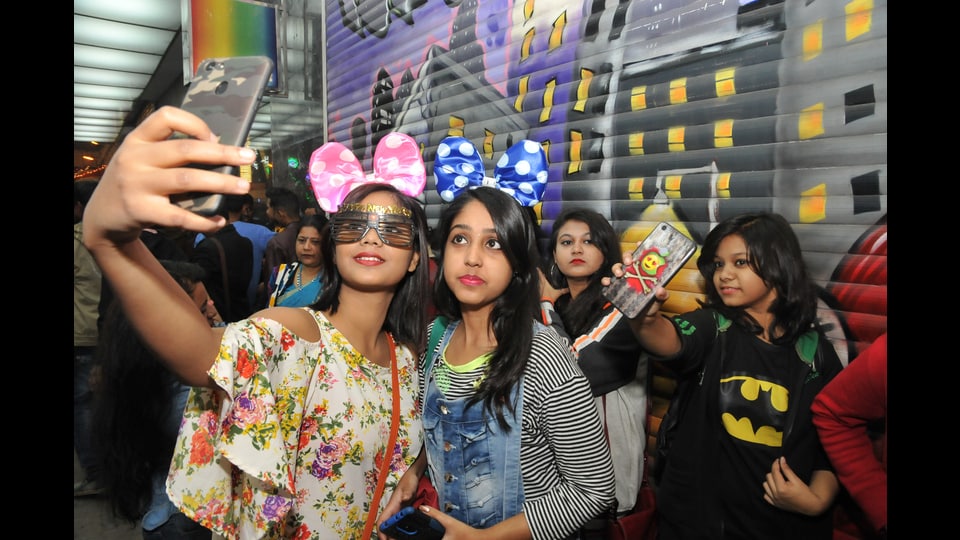
For a certain cohort, it is difficult to imagine that more people alive today have experienced years completely without the internet than those who haven’t.
Ria Chopra, who specialises in writing about Gen Z pop and internet culture, is part of that generation:
“Gen Z has straddled three eras: where the internet didn’t exist as we became people; where it was work and play and a tool to become a person; where it has become a habitat in which we live as people.”

This straddling — “internet as both origin story and ongoing narrative” — places her in an excellent position to analyse the various ways this “single greatest transformative force” has forever impacted the existence of those born in the late 1990s and the first decade of the new millennium. Since India didn’t get hi-speed internet access at the same pace as the Western world, Chopra believes, correctly, that discussions need to acknowledge the specific experience of India’s Gen Z, who “grew up with, on, and, in many ways, because of the internet”. Of course, much of the focus here is on young urbanites who share the author’s socio-economic background.
The eight essays in Chopra’s ambitious first book, Never Logged Out: How the Internet Created India’s Gen Z, are uniquely Indian even as they retain a global perspective. The attempt is to grasp the internet’s ongoing making and unmaking of the individual. Accurately portraying something as dynamic in the static medium of print is a challenge; encapsulating the Internet’s very particular effect on each person who has ever used it and will ever use it (a “unique Morse code that only we can ever fully grasp”) is near impossible. Still, Chopra does this successfully by blending memoir, reportage, culture writing, and deliciously nerdy research. The pieces in this volume are nuanced, honest and humorous, and passionately enthusiastic too.
From a concise history of the Internet, in India and abroad, to the differences between its early days when intentional platforms encouraged discovery and active engagement to the present when it’s all about infinite passive doom scrolling, Chopra examines it all. She looks at the commercial and technological forces driving it, and how this has had an impact on identity formation online and in the real world. Her takes on how love looks, feels, and is in a performative digital age governed by algorithms, the aesthetics of consumption, and why we want what we want, are insightful. Also perceptive is her view on human memory with its protective in-built forgetting mechanism versus the indelible, static, and uncurated memory of the Internet and its resultant effect on our minds, identities, and growth.
Other works measure the cost and features of online fame, ponder about how truth, vulnerability, and privacy interact with authenticity and anonymity, and dissect the shifting nature of knowledge itself in an era where information is accessible to all. There is also an acute awareness of the importance of being able to think and comprehend well, and subsequently have the wisdom to know what to do with it. And then there are musings about accurate representation of the Internet in our films, books, TV shows, and other media and confessions about loving it, warts and all.
Like American sociologist Sherry Turkle said in Alone Together: Why We Expect More from Technology and Less from Each Other, “We have to love technology enough to describe it accurately. And we have to love ourselves enough to confront technology’s true effect on us.”
This book does both. It also asks the right questions: How do we reclaim agency in a digital world that thrives on our passivity? What does identity mean beyond the things we surround ourselves with? Can we regain our ability to exist without proving said existence online? How far is curiosity and access on the internet healthy, and when does it spill over into obsession? What happens to us when the internet starts deciding what we should remember and forget?

Chopra doesn’t claim to have all the answers. Her story of Indian Gen Z’s internet entanglement ends “without clarity or closure, but an awareness of just how much more there is to understand”. The author does not shy away from tackling sticky issues including the controlling tendencies of oligarchs who own tech platforms, the impact of social media on mental health, and the surge of manufactured addictions.
But though Chopra writes in the opening essay that “I honestly feel lucky to have been born at a time when the internet was still log-out-able,” she also unabashedly embraces everything positive that this “one-of-a-kind beast” continues to give her. This is a hopeful book that ends with “a deep acknowledgement of both fact and feeling” and rightly acknowledges that our virtual lives are important -- “I was there. This is what happened. This is how it made us feel. [...] It mattered” – even as it looks ahead with optimism.
Anushree Nande is an independent writer, editor, and publishing professional currently based in Mumbai.


