
 E-Paper



Review: Poor Economics for Kids by Esther Duflo, illustrated by Cheyenne Olivier
This children’s picture book, that breaks down complex concepts and talks about poverty and social justice in an engaging way, does a fine job of holding up a mirror to society

 Prefer HTon Google


If you are in the mood for a children’s picture book that talks about poverty in a thoughtful and direct manner and through the lens of social justice, Poor Economics for Kids deserves to be at the top of your to-be-read pile. Sensitively written by Nobel laureate Esther Duflo and joyfully illustrated by Cheyenne Olivier, it breaks down complex concepts without ever talking down to the reader. It is engaging at various levels – intellectual, emotional and visual.
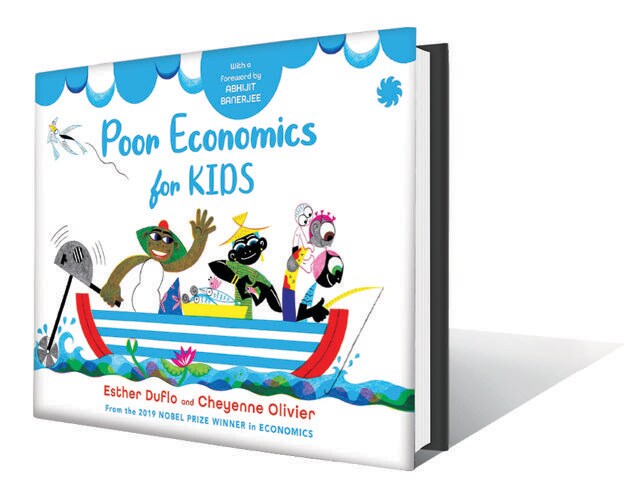
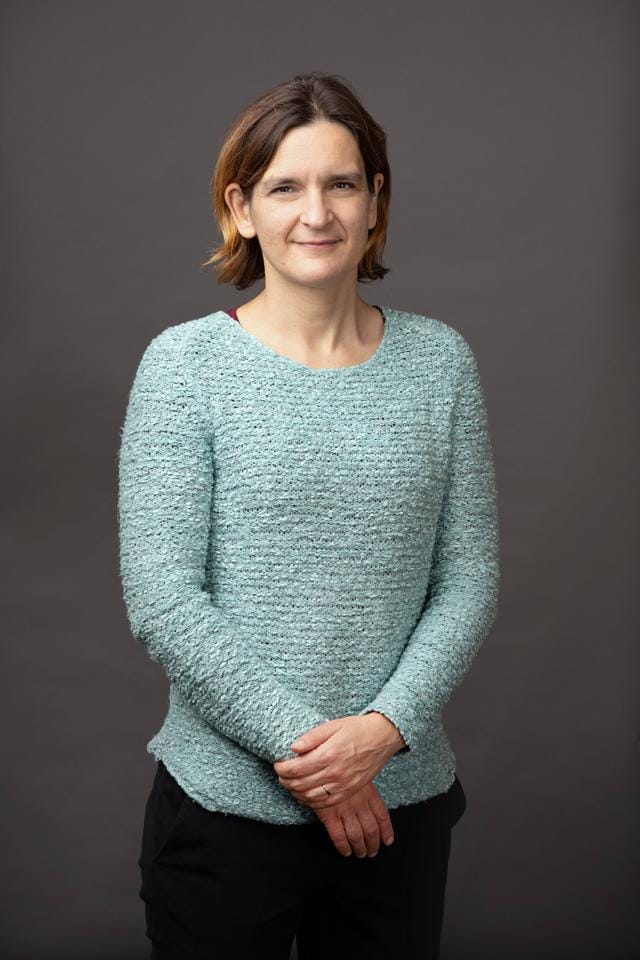
Duflo is a professor of economics at the Massachusetts Institute of Technology and Collège de France. Olivier is an illustrator based in France. Their book is based on material that was presented earlier in Poor Economics: Rethinking Poverty and the Ways to End It (2011), which Duflo co-authored with husband and colleague Abhijit Banerjee. Together, they won the Nobel Prize for Economics (shared with Michael Kremer) in 2019. That book was written for adults, out of a desire “to knit together a coherent story of how poor people live their lives” because they felt that the poor are often reduced “to a set of clichés” in social theory, literature and policy. They are viewed as people “to be admired or pitied” but not “as a source of knowledge” or “as people to be consulted about what they think or want or do”.
In retrospect, it is not surprising that Duflo chose to write a children’s book on the same subject. Much before she met Banerjee, when she was six years old, she read about Kolkata in a comic book on Mother Teresa that presented the city as densely populated and filled with misery. However, when she actually visited as a university student in her twenties, she encountered a reality that was more nuanced than the portrayal in the book. She learnt that books could play an important role in how we visualise and think about places.
Armed with this knowledge, she has crafted a narrative that encourages readers to think critically about the information presented to them. Divided into 10 chapters, the book revolves around the lives of Nilou, Afia, Neso, Najy, Oola, Bibir, Thumpa, Seleni, Imeuni, Tsongai, Imai, and a number of other people who live in a village. The exact location of this village is not indicated. Duflo remarks that it “could be in India or Kenya or Vietnam or elsewhere”, pointing towards the fact that villages in these countries deal with similar issues.
While Banerjee has not partnered with Duflo on writing Poor Economics for Kids, he has contributed a foreword that captures the essence of the book: “…too much of the discussion in the world about the poor is wrong-headed because it ignores just how hard it is to be poor and therefore blames them for the problems of their own lives”. He challenges the rude assumption that “the poor must be losers who don’t have it in them to help themselves” and urges readers to imagine what it must be like to live a life of poverty.
In this book, we meet children who are bored because they do not get the help they need, teachers who are overwhelmed because the classroom has more students than they can manage, and parents who are unable to help because they never went to school and now, they cannot afford the fees of private tutors either. Everyone pins the blame on someone else until they find a solution whereby younger people in the villages are trained to work with children.
The author also takes us into the world of communities that suffer due to the lack of appropriate and prompt medical care and due to poor access to scientifically sound information on how cleanliness and hygiene can protect them from disease.
The reader learns about the hardships of villagers who live off small farms and do not have much work to do for several months of the year. Even when they are aware of opportunities in cities, they are afraid to venture out because of the possibility of failure and subsequent embarrassment. In addition, they are reluctant to live away from their families.
Poor Economics for Kids also examines the issue of women’s representation in politics at the village level. Girls and women are socially conditioned to believe that they cannot be leaders. Even when seats are reserved for them in elections, some find it hard to trust their own potential and others worry about upsetting insecure husbands. They also have to deal with the patronizing attitude of unqualified but entitled men.
Duflo writes, “When I was a little girl, I desperately wanted to be a boy. I hated dresses, and at the age of five, declared I would never wear one again.” All her friends were boys. She found their toys “cooler” than the “cuddly animals and jumping ropes” that girls played with. Though her parents assured her that she could do whatever she wanted, she felt that they were lying and that she would be denied the same chances as boys on account of her gender.
She draws on this experience to write about Nilou, a character in the book, who is laughed at because she wants to become a truck driver when she grows up. Nilou’s teacher wants her to pick a vocation that is more suitable for girls. “You should be a teacher, like me,” she says. Nilou, however, wants to be on the move and keep discovering new places. When she narrates her experience at school to her parents, they tell her to think about who would take care of her house, husband and children if she were to go wherever and whenever she pleased as truck drivers do.
The book does a fine job of holding up a mirror to society. Girls who dream of seemingly impossible things do face numerous obstacles. Next, Nilou hopes her cousin Neso will give her some validation. “Nobody listens to me in this backward place. You live in a town. Tell me that my dream can come true,” she says during a phone call. But Neso too disappoints her: “You know drivers have a hard life, and nothing is made easy for girls. How will you go to the bathroom on the road?” But Nilou is not one to be cowed down. The anger bubbling inside makes her run away from home. What happens next is worth reading.
Fortunately, this book does not depict the poor — and poor girls and women in particular — only as victims. It highlights their intelligence, resourcefulness, strength and creativity. It shows how old women who are thrown out of their homes find financial freedom with state support to launch their own businesses, and how young women with digital skills become successful rural entrepreneurs. We meet villagers who get together to protect trees from lumberjacks bent on destroying their forests. They refuse to sell farm produce to middlemen who make profits at their expense, and decide to sell their goods directly in cities.
We also witness the glory of their collective might when they take on an insurance company that is reluctant to pay up when a family’s boat is damaged in a terrible flood. This is a wonderful entry point into the subject of how the world’s poor are even more vulnerable to the impact of the climate crisis because of their precarious access to housing, employment and insurance. The book unpacks what losses insurance companies cover and those they do not, how they view the poor, the risks they are willing to take, and how they exploit the poor. It also introduces readers to the idea of disaster funds set aside by governments for citizens.
While the book is being packaged and promoted as a children’s book, it is likely to resonate equally well with adults who are interested in economics, social justice, and the politics of poverty but do not have the patience to read journal articles packed with dense scholarly jargon. Olivier’s warm and inviting illustrations add to the volume’s appeal.
Chintan Girish Modi is a freelance writer, journalist and book reviewer.


