
 E-Paper



Review: The Once and Future World Order by Amitav Acharya
Questioning long-standing assumptions and providing an alternative narrative to the standard discourse about modern civilisation having evolved in the West

 Prefer HTon Google


A timely tome by Amitav Acharya, who teaches global affairs at American University, Washington, DC, The Once and Future World Order draws on historical examples to convey a sense of cautious optimism, not about a peaceful world but about a more inclusive one.
A sweeping take on history, not geopolitics, the book delves deep into the world of the past and then swivels to the world of tomorrow. To that extent, it is not as much about contemporary flux or major power contestation as it is about the future order in which the decline of the West is accompanied by greater agency for outlier nations, which are termed “the Rest”. These closely approximate the Global South of today and go by heritage labels such as the G-77 and the Non-Aligned.

Acharya’s introduction is a lucidly written essay that captures the inegalitarian world historically created by the myths of Western supremacy. He laments that the West itself has contributed to the instability, injustice and disorder that we see around us today. There is deep irony in his suggestion that the decline of the West, in fact, is likely to ease some of these challenges.
The indictment here is that the Western-dominated order that has existed for some centuries now, curated by domination, subjugation and exploitation by a colonial concert, was never as benign as made out by many scholars and historians in the West. Even the formal global order represented by the treaty-based UN system founded in 1945 is hardly egalitarian even though the UN Charter advocates equality. The author points out a dark truth about the Versailles Conference. When negotiations were underway to establish the League of Nations, US President Woodrow Wilson, apparently with the support of both Britain and Australia, resisted the insertion of the “racial equality” clause proposed by Japan. This he did even as he was promoting democracy and self-determination around the world.
The book explores the concept of World Order and the juxtaposition of Order and Chaos. The World Order, as Acharya puts it, was never monolithic in the past ages. There were many Orders in the ancient and Old World, whether seen through timelines or geographies. Acharya takes the reader on an informative and fact-filled journey across the Sumerian, Greek and Roman, as well as the Indian, Chinese, Islamic, Meso-American and South American civilisations. Many of these had drawn upon the wisdom and knowledge of their historical predecessors or contemporaries to take the form they did. Acharya sees the World Order that once was as a shared creation. There was a threat of diffusion among earlier civilisations. They all contributed to the development of the now globally accepted social, political, economic and cultural systems. Africa too had a role to play. The author feels that today, we tend to erroneously attribute principles of governance, democratic institutions and rule of law as gifts of Western civilization whereas these often originated, and were finessed through practice, in older civilisations.
In the chapter on the Rise of the West, the author challenges historian Niall Ferguson’s denial of imperialism and takes apart his theory of the “six killer apps” that facilitated Europe’s rise. The author argues that these factors, ie, competition, science, property rights, medicine, consumer society and work ethic, require closer scrutiny, because these features of Western domination, likewise, had their provenance in older civilisations.
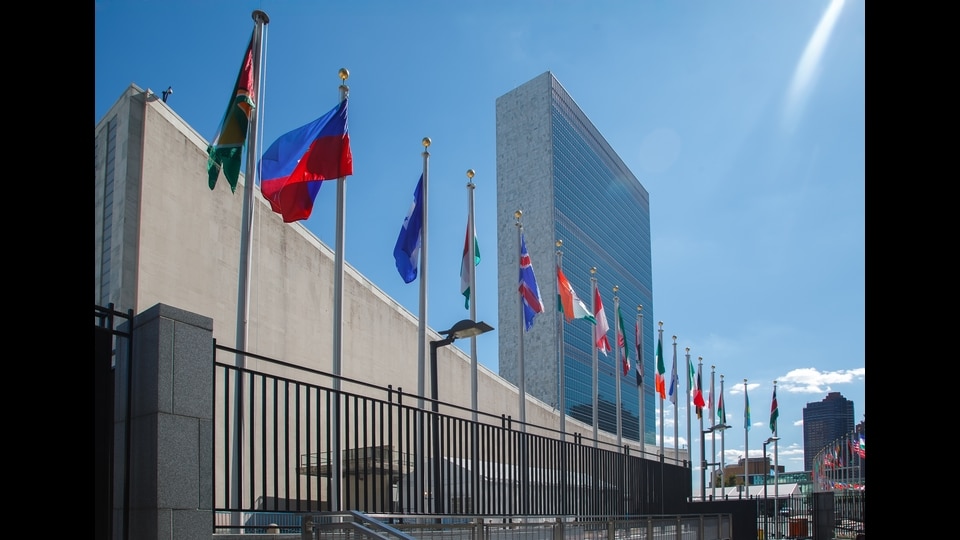
The author avers that older Orders were many, and many were defined by a geographical identity. Orders, often imposed by empires, coexisted with Chaos elsewhere beyond their realms, and constantly waxed and waned with the ineluctable tide of time. Today, the existing World Order is severely challenged. The United Nations represents the only truly global order that the world has known. Today it has 193 members; way more than the 51 it had when it was founded in 1945. Yet, it has failed to reform and accommodate the significant changes in the balance of power since 1945. Continued Western domination has perpetuated exceptionalism. Vested interests of the privileged permanent members of the UN Security Council have prevented any meaningful reforms such as expansion of the permanent membership of the UNSC.
Acharya questions Fukuyama’s “end of history” idea which suggests Western liberalism is the acme of social and political development. He asserts that the Future Order will have to be a modus vivendi between the US, China and the Rest.
In walking the reader through the several interesting chapters that explore the history and achievements of the ancient world, the author does not hesitate to question long-standing assumptions. For example, Hellenization, meaning the diffusion of Greek culture, was hardly a beatific occurrence. It was spearheaded by Greek colonisation, through warfare and violence. Roman democracy, like Greek democracy, in fact, was not utopian. It was limited to the elite and comfortably coexisted with slavery and pervasive territorial expansion.
The chapter on India is of great interest. As Acharya observes, out of ancient India came two contrasting pathways to organising a World Order. The first was through ruthless warfare and imperialism. This was the path taken by Ashoka before the Kalinga war, and the other, through morality, benevolent rule and peaceful accommodation of adversaries, as evident in the Emperor’s post-Kalinga ahimsa philosophy drawn from Buddhism. This also resonates with the teachings of Mahavira, Gautam Buddha and Mahatma Gandhi.
Acharya’s book provides a stimulating alternative narrative to the standard discourse about modern civilisation having evolved in the West. What is striking, of course, is how much control the West still has over the writing and interpretation of the history of the world. The author succinctly points out that the 20th century Geneva Conventions outlining the principles governing hostilities actually draw, almost verbatim, from the code outlined in Manusmriti two thousand years ago in India. In the same vein, Vasudhaiva Kutumbakam from the Maha Upanishad has preceded the modern notion of a global comity of nations by nearly three millennia.
Acharya has also dissected the Chinese ideal of Tianxia, meaning harmony and order under the heavens. Some would argue that today, China’s call for establishing “a community with a shared future”, riding on the back of acute unilateralism and hubris, is actually about Chinese centrality in the emerging global order.
The American world order, which is conflated with the liberal international order, is slowly giving way to new impulses. The Future Order, Acharya avers, will be multi-civilisational. It will not be dominated by any single nation or a group of nations. It is expected to be a multipolar world. He calls it “a global multiplex” in which an eclectic mix of nations, Big Tech and business, non-governmental groups, even individuals, will have agency in shaping events and outcomes.

Dismantling or creating a new order is not easy. The existing one was created at the cost of a world war. The problem with the existing order is that is has been given a treaty basis, which enables perpetuation of privilege in the permanent membership club that is the UN Security Council, and renders it impervious to external calls for change. At the Cairo (1943) and Potsdam (1945) Conferences, “the Rest”, as Acharya labels them, were granted the UN Charter but had to pay a price for it by accepting permanent membership for some in the UNSC, as custodians of the world order in perpetuity.
On that note, one also wonders if the author is not over optimistic in conjuring up a vision of a more inclusive world to come. Without a level playing field today, especially in decision making at the UN and access to deep-tech, data and artificial intelligence, Acharya’s Future Order, like the current one, may at best be oligopolistic, and at worst, dyadic. In fact, there will likely be not one but two future orders: the “Normative Order” will continue to be defined by the static UN and attendant structures; the “Empirical Order”, as characterised by the rise and ebb of certain powers, will gain potency. It is in this uncertain space that India, as one of the oldest and the longest “living civilisation”, is striving to emerge as a credible power, though not without drawing the ire of privileged powers.
Sujan Chinoy, a former Ambassador, is the Director General of the Manohar Parrikar Institute for Defence Studies and Analyses; views expressed are personal.


