
 E-Paper



Gurmehar Kaur upfront, Cong deploys its Gen-Z leaders to announce legal aid for protesters
Congress's choice of Gurmehar Kaur besides other youth wing leaders to make key announcement was notable as protests were fuelled by anger among Gen Z

 Prefer HTon Google


The Congress has announced a legal-support helpline for students facing police or administrative action over their participation in youth-led protests over the NEET-UG paper leak and related issues, with activist Gurmehar Kaur, who works with its youth wing, sharing details.
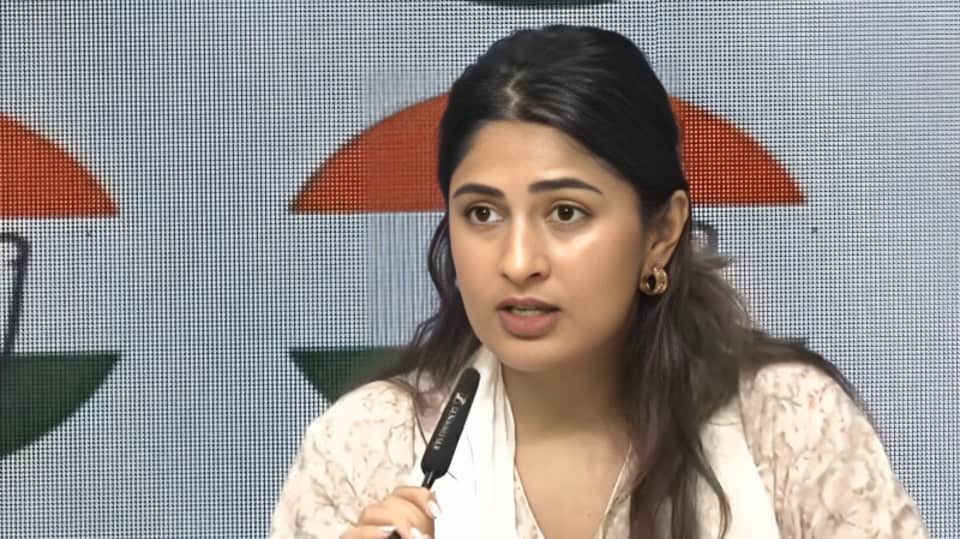
“We unequivocally condemn all the attacks on students. The Modi government had promised during the negotiations that no student would be picked up and that there would be no police action against them,” the party posted along with a video of the press conference on Monday, referring to the Cockroach Janta Party's protest that ended after senior BJP leader Dharmendra Pradhan resigned as education minister in Narendra Modi's cabinet.
“But today, there is a list of FIRs that have been filed against students in West Bengal and Bihar,” Gurmehar Kaur said.
She was accompanied by Vinod Jakhar, president of the Congress wing National Students' Union of India, and Youth Congress office-bearer Richa Singh who is from Bihar; they also spoke on the occasion.
The Bihar BJP government later in the evening announced it's withdrawing all such cases and releasing those arrested.
Leader of Opposition Rahul Gandhi has pointedly blamed Union home minister Amit Shah for the police action — an issue that the Congress sought to raise in Parliament too.
The Congress announced support via the ‘Chhatron ki Goonj’ (CKG) legal SOS helpline at 98118-67474.
A similar, though separate, announcement was made by the CJP.
The Congress has been holding its own protests and rallies led by Rahul Gandhi on similar issues, but preferred a parallel track as the CJP aggressively billed itself as “apolitical”.
Messenger matters
The Congress's choice of Gurmehar Kaur, 29, to front the announcement — she was tagged prominently in the party's social media posts — was notable as the protests were fuelled by anger among Gen-Z and also saw high participation of urban classes and young women. That's the demographic she comes from as someone who was born in the latter half of the 1990s, raised in smaller towns in Punjab and elsewhere as an army kid, and studied in Delhi and the UK.
PM Modi, 75, has also been mindful of the Gen-Z demographic and chose selfie videos on Instagram as a mode of communication during the CJP protests. Modi also took a veiled dig last week at Rahul Gandhi, 56, being considered a “youth”.
Gurmehar's life trajectory
Unlike other youth leaders who came through student union politics, Gurmehar Kaur emerged from a non-political background 10 years ago due to a viral video that led to threats on social media.
Then a student at Delhi University's Lady Shri Ram College for Women, she ended up in the public eye by speaking out against war, when she was part of a silent film series in 2016. That was the year of two major terror attacks in India, in Pathankot and Uri.
In the video, as a 20-year-old, she held up a series of placards, the most striking of which read: “Pakistan did not kill my dad, war did.” Her father, Captain Mandeep Singh, had been killed in a militant attack in Jammu and Kashmir in 1999. The video urged both India and Pakistan to abandon hostility and “solve the problem”. Her stance attracted abuse and charges of being pro-Pakistan. By February 2017, the video resurfaced and went viral alongside a campaign titled ‘I am not afraid of ABVP’, after clashes between the ABVP, which is the student wing of the BJP's parent body RSS, and Left-backed student groups at Delhi University's Ramjas College. She faced grave allegations even from BJP MPs.
Time magazine later named her a “free speech warrior” on its 2017 list of emerging global leaders, and she went on to write a memoir, ‘Small Acts of Freedom’, besides a book profiling young political figures across India. She studied at Oxford University after her DU degree.
That trajectory — a soldier's daughter and a peace advocate, not backing down in the face of threats — landed her a wider public profile, and then politics with the Congress. She has, more recently, been working with the Youth Congress on Punjab Re-Root, an outreach campaign in the poll-bound state ahead of 2027 assembly elections.
Richa, Vinod promise all help
Youth Congress leader Richa Singh also spoke at the press meet: “The way the police in Bihar have brutalised protesting students is utterly reprehensible. Our NSUI activists, including Patna University president Shantanu Shekhar, have been taken into custody and beaten.”
Police have not reacted to specific cases, though an officer firing an AK-47 rifle at a protest in Patna has been suspended.
NSUI president Vinod Jakhar, who is from Rajasthan, referred to the Congress's ‘Chhatron ki Goonj’ campaign that started from his state in June, and told protesters, “We want to assure all students that Leader of Opposition Rahul Gandhi, the Indian Youth Congress, NSUI, and all organisations of the Congress party stand strongly with you.”


