
 E-Paper



Review: Watershed by Mridula Ramesh
Increasing demand, asymmetric distribution and contaminated supplies have left a large growing population vulnerable to water stress, social conflicts, and medical conditions

 Prefer HTon Google


India’s water crisis is worse than it may seem. In effect, it is worsening by the day, each season, and year on year. Post independence, per capita water availability has declined from a high of 4,000 cubic metre in 1947 to an abysmal low of 1,486 cubic metre in 2021. It is an alarming trend - the accepted global norm is 3,000 cubic metre. Given the country’s annual water endowment of 4 billion cubic metre, the general picture is one of scarcity amidst plenty.
Statistics reveal only a part of the daily ordeal that a sizeable population in the country has to go through, both in urban and rural centres. Household water connections have remained an exercise in numbers as per capita daily allocation of 135 litres for urban and 55 litres for rural areas is good only on paper but not on the ground. The gap between water haves and have-nots has only widened. No surprise, therefore, that increasing demand, asymmetric distribution and contaminated supplies have left a large growing population vulnerable to water stress, social conflicts, and medical conditions. Over the decades, programmes and projects have delivered promises but not enough water. As a consequence, a country with a strong cultural and spiritual connection with water is now water stressed.
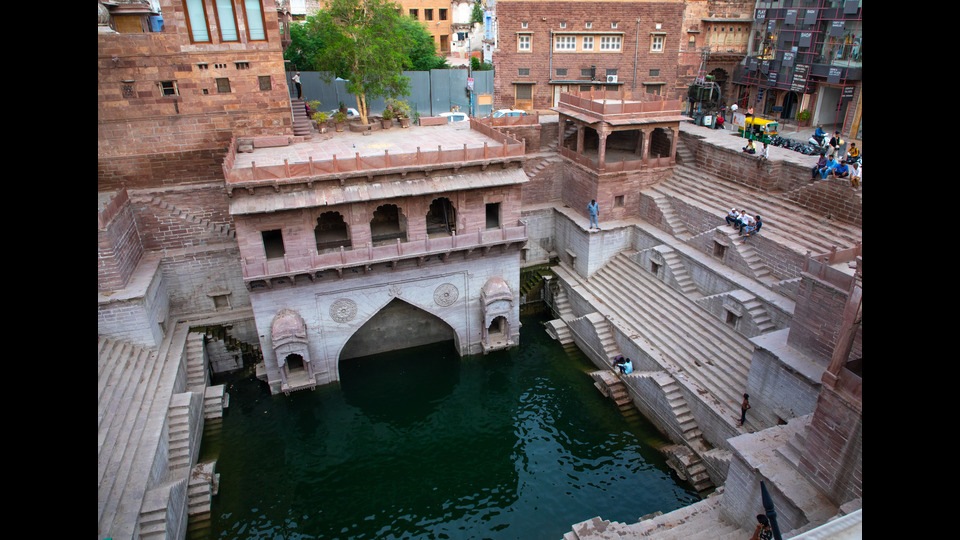
The solution to the crises may seem obvious, yet it has remained somewhat elusive for the well-entrenched water bureaucracy both at the federal and the state level. As the total precipitation is received during a few monsoon months in a year, tapping rainfall into surface storage structures for use during the lean season remains a workable solution. Before being subsumed under the urban sprawl, traditional water tanks were peppered across the country and had helped Indians even out seasonal and geographical variations in rainfall. Large dams were supposed to have performed better as a replacement, but the cumulative storage capacity of these structures has remained below par. As a result, India’s per person surface water storage is an abysmal 150 cubic metre. That’s 10 times less than the global average of 1,500 cubic metre. In comparison, China stores thrice as much while the US stocks 10 times more than India. As a consequence, multi-locational hydroanarchy has been more of a norm than exception as the country inches closer to an abyss.
The water bureaucracy must take the blame for deepening the hydrological fault lines created by the British. Contemporary water management continues to favour capital-intensive big engineering structures that modify the landscape on which region-specific water conservation techniques and judicious water use was practised for centuries. Far from appreciating the hydrological diversity and reviving traditional systems, water institutions have sought to spread scarce resource across land and time. Not much seems to have been learnt, partly because the resolution to the crises rests on the very premise that drove us to the present predicament. Thus, the story of water has continued to evolve as an expanding sedentary society negotiates a world of moving water.

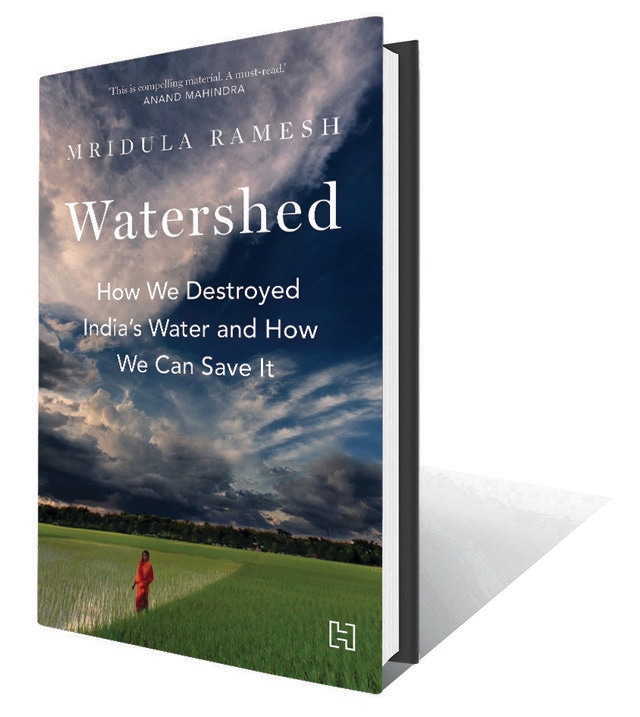
Focusing on this and much more, Watershed provides a comprehensive assessment of the country’s unfolding water crises. As the impact of climate change becomes more pronounced, the extremes of drought and flooding is bound to expand water insecurity. Amidst this scary scenario, the book highlights community initiatives on water conservation that need to be integrated with beleaguered mainstream water systems, and their possible up-scaling. Making the water sector resilient to challenges is the running theme as the book traverses 4,000 years of our water history. Watershed is a readable primer on our rich, complex and diverse waterscape and nudges the reader to learn from the past to carve out a water-secure future.
In proposing a checklist of actions, however, the author misses out on the fact that the society has long delegated all decisions on managing water to the water bureaucracy, which decides what happens in eveyone’s home. The fundamental question about water is related to power, and only by developing a new social contract with communities can the water bureaucracy come up with a hybrid water management system where the power over water is shared to promote location-specific community-driven initiatives. With the water crisis on the verge of breaking through the thin walls of political institutions, forging a power-sharing alliance with the communities can usher a new era in water management. Without that, individual and community action towards conserving water will remain at the periphery with political institutions pursuing business as usual. Institutional reforms in the water sector can be the first step towards saving the country’s water.
Sudhirendar Sharma is an independent writer, researcher and academic.


