
 E-Paper



Ruchi Narain: ‘I was not trying to break rules; frankly, I didn’t know any’
The director and scriptwriter reminisces about working on Hazaron Khwahishein Aisi, often being the only woman in the crew when she started out, dealing with people stealing her scripts, and how OTT has changed things

 Prefer HTon Google


Did you begin writing as a child? What was your childhood like?
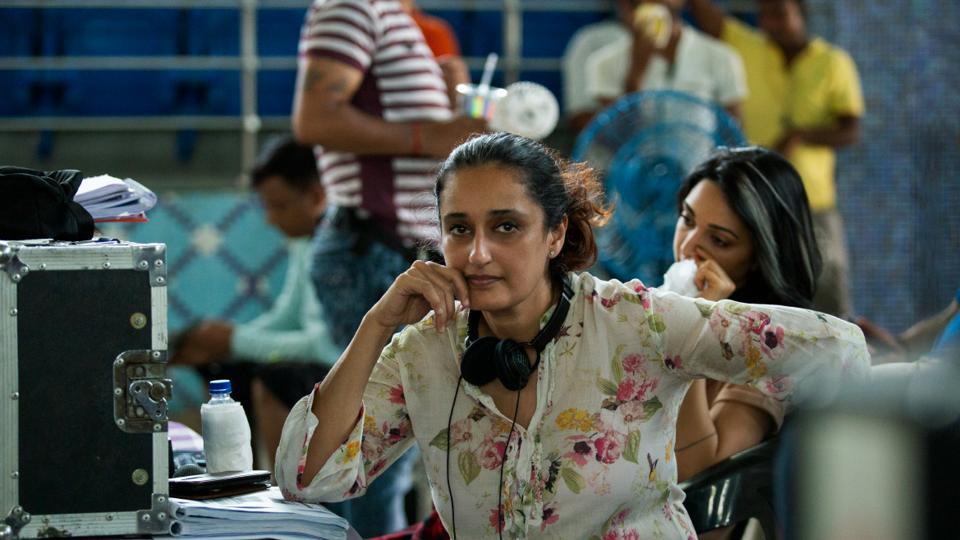
Well, I never wrote anything in my childhood. In fact, I had a sort of a nomadic childhood, mostly away from India. I lived outside, like a lot the Middle-East, Muscat, Dubai, Doha; also some time In Sri Lanka; then, for a couple of years in Mussoorie. I also went to many schools; I didn’t know where I actually belonged back then. I have done British and American schools, ICSE schools, and basically schools of all kinds. However, having said that, we as a family were always connected to India culturally. I have a huge extended family and we are essentially Dilliwalas. My family has been in Delhi since before Shahjahan perhaps. Both my parents are from there. So during school vacations, one month, we would be in Delhi and meet the whole extended family and one month, we would be with my bua (aunt) in Goa. So I was very connected to India even though I did not stay here as a child. We lived in those big family houses whenever we were in India; lots of cousins and a lot of fun! We always had a blast. Some 30-odd cousins coming together, can you imagine?
Including school and college, I have been to 12 different educational institutions. I was a very good student and always topped every school I went to. So growing up, there was never really any pressure on me to choose my calling. I was always made to believe by everyone around me, mainly by my teachers, that I would be good at whatever I chose to do. My physics teacher wanted me to be a physicist; my math teacher wanted me to be a mathematician and so on. Strangely, my weakest subject was the English language and English literature where I had a B+ grade. So I never really thought about being creative. And films, in fact, were very, very far away from my world because, especially in the Middle-East, where I spent the bulk of my early years, we never went to the cinema. There was no culture of going to the cinema. And even if we watched some films, they would never be Hindi movies. We saw American films, Hollywood films. And they were just movies for me. I didn’t know who makes them and how or anything like that. Then I went to a boarding school called Woodstock in Mussoorie and with my grades, I assumed I was going to Princeton or somewhere like that in the west to study further. But my parents insisted that I study in India because they wanted me to have a connection with India and to understand the country.
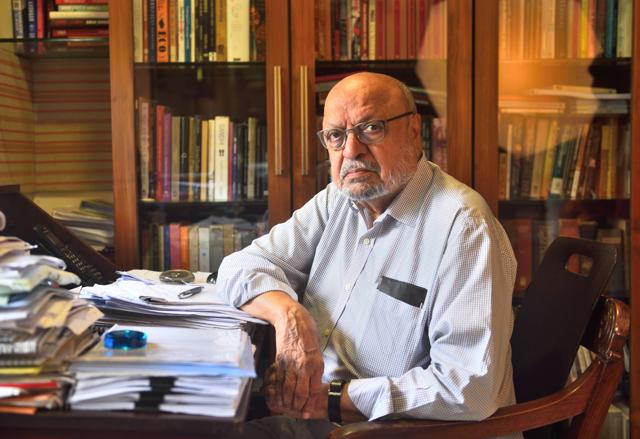
Initially I was upset but since I had to choose a place in India to study, I chose Bombay over Delhi because my family was in Delhi. That’s how I made it to St Xavier’s’. I didn’t know anybody in Bombay and stayed at the hostel on Marine Drive. But then I fell in Love with Bombay. Bombay really took me in. The way this city embraces you is beyond words. It makes you feel like you can do whatever you want. It sounds stupid but when I was studying History at St Xaviers’, Shyam Benegal came over one day to give a talk at college and at that point, I didn’t know who he was! But before the talk we saw his film Ankur and I remember a scene where a character throws a stone and I felt like that stone had hit me. It was eye-opening. I was like, “Oh my god, when you make a film, you can say so many things without spelling them out! And people are into it because they understand it, connect with it.” There was my realisation! After the movie, Shyam Benegal talked to us and that was the first time I realised that films are not made by themselves but that there are people who make them. Before that, I was a regular movie-watcher who only thought of the actors I saw on screen. After that day, I started thinking that it would be cool to make a film.
After college, I was dying to make some constructive use of my time. I was interested in working on documentary films. So I caught hold of a directory and started cold-calling people. In fact, I called up IDPA (Indian Documentary Producers Association) and because I had an accent, the receptionist connected me to the president of IDPA. Can you imagine? I was only a fresh graduate who was looking for an internship. But here I was, on the phone directly with Aruna Raje. And she was such a kind and generous person that she dictated the numbers of twelve directors to me on that phone call. And she also told me to tell the directors that she has sent me. And she hadn’t even met me! But that’s how helpful she was. I went through that list but none of them at the time was doing a documentary. The last number on that list was Gopi Desai’s.
When I called the office, the person who picked up the phone told me that Gopi was away for three months and asked me what I was looking for. After hearing my sob story, the person asked, “Is that Ruchi Narain?” I was surprised because nobody knew me. Turns out, he was someone who knew me from Xavier’s. He said, “I am Nikhil Advani.” Then Nikhil asked if he could introduce me to Sudhir Mishra who, he said, had made a film called Dharavi. I was excited. He made me meet Sudhir Mishra and Renu Saluja. I knew of Renu Saluja because she was the big shot editor at the time. Everyone wanted to work with her. Sudhir took one look at me and thought, “Girl!” So he asked me if I would handle costumes for his next project. I had no idea about costumes but I knew it wouldn’t take me too long to figure it out. So I started working with Sudhir right from the start.
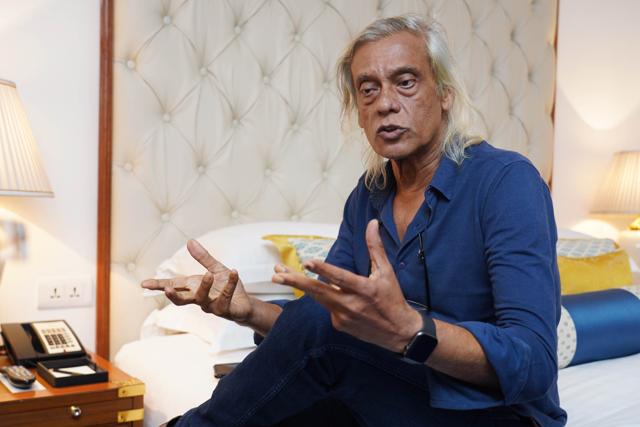
You must understand that we are talking about 25 years ago and unlike today, there were no girls in the crew back then. I was almost always the only girl on the project. Then, at that time, computers were new and I told everyone that I was a computer expert. That’s how I moved from costumes to AD and writing. Because I had started typing the scripts on the computer. One day, a senior writer who had come to our office asked me, “Oh, you like writing?” I said yes. He laughed and said, “So what do they call female writers? Writerni?” I said, “No, writer.” It was a bizarre time back then. Nobody wanted to give women any money to do anything. It’s still difficult but at that time, it was impossible to find funding. Things have definitely changed for the better. Especially with OTT, it is amazing.
Then, I worked with Sudhir as an assistant director on one his projects. After that, Renu Saluja asked me if I would assist her and it was a huge honour but I had realised that the only part of the filmmaking process that I was yet to understand well was writing. So I politely refused. At the time, Saurabh (Shukla) was writing a film called Sarhad for Sudhir Mishra, which was a Partition story, which never got made. I approached him and asked if I could type out the script for him. He was more than happy. Literally, I had zero creative contribution to that script but by sitting with Saurabh every day and discussing scenes, I understood the process. Then I started seeing myself as a writer as well.
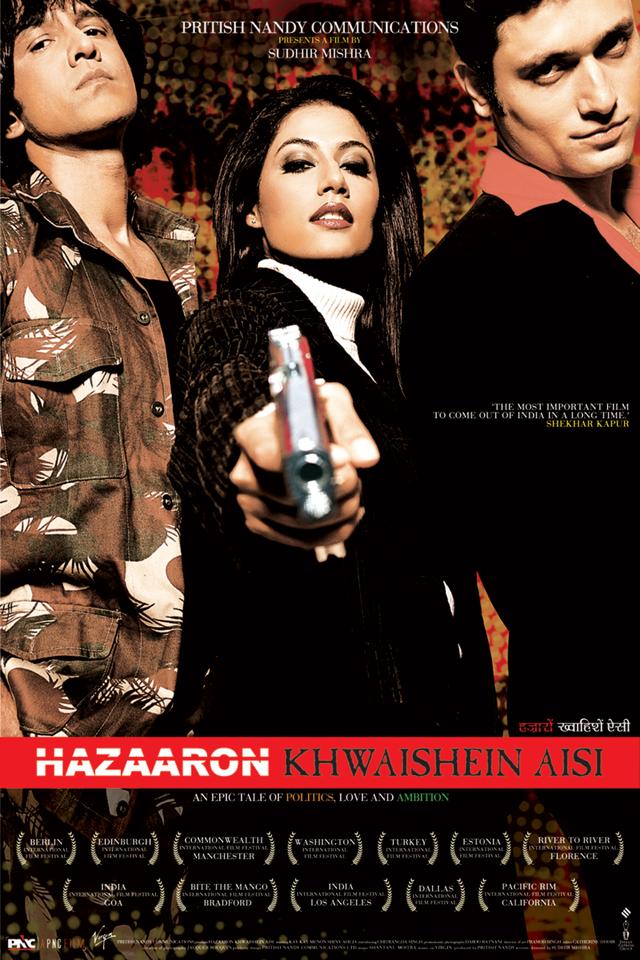
Tell me about the journey of Hazaron Khwahishein Aisi, about writing it, and also writing the many-layered character of Geeta played by Chitrangada Singh.
The story of Hazaron Khwahishein Aisi started off with a conversation between Sudhir Mishra and Shiv Subramaniam, who unfortunately passed away recently. Shiv was a highly well-read, educated, gentle and generous person. He always saw himself primarily as an actor but I thought he was a better writer than an actor. He was sort of a reluctant writer so most of the work I did as a young writer is thanks to Shiv. Because people would go to Shiv asking him to write something and Shiv would direct them to me. There were two incidents that sparked off Hazaron Khwahishein Aisi. One was the fact that Sudhir had assisted and worked with the generation of filmmakers that believed in idealism like Sayeed Akhtar Mirza, Ketan Mehta and Kundan Shah. He always wanted to make a film about the idealism of that generation. The other thing is that Sudhir and Shiv also started talking about the wild west of Bihar. Sudhir’s grandfather was the first chief minister of Madhya Pradesh so he had heard a lot of those stories already. One of them was about how one day, some guys in a small town police station couldn’t find a cop. So they assumed the adivasi villagers had killed the cop. So they went and brutalised the village. They burnt their houses, raped the women and beat up the men. Then the cop who they thought was killed staggered back to the village. He had gone to some relative’s wedding and was lying drunk somewhere in the village. Sudhir was talking about this bizarreness; he wanted to make a film about that. If you remember, there is a scene in Hazaron Khwahishein Aisi, in the third act, which is an allusion to this incident when Geeta gets raped.
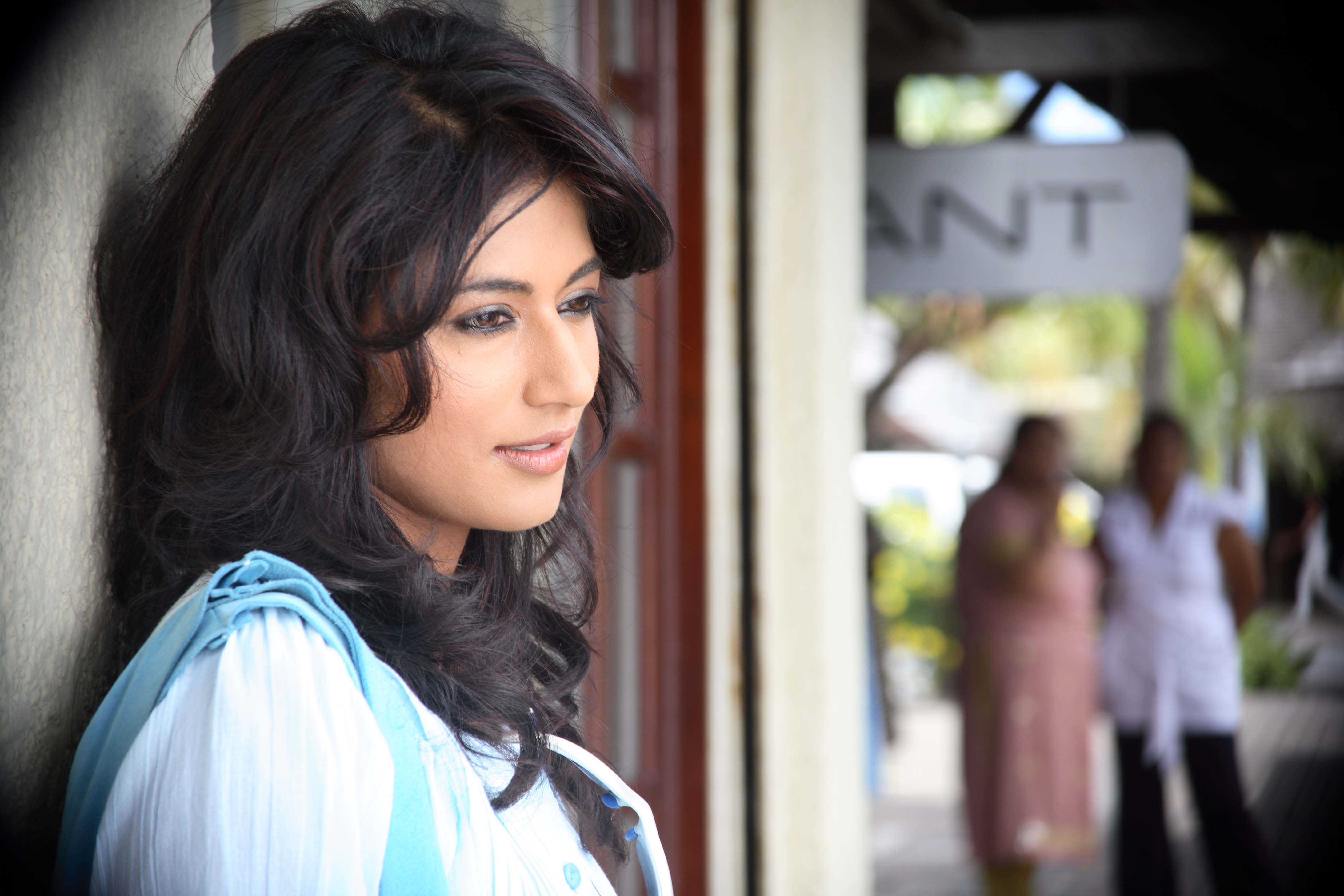
That is actually how the story and the writing process started. Then they started talking about Delhi University and all that. They couldn’t understand how to write the girl’s character and they thought, “Let’s get Ruchi because she is a girl!” So Geeta’s character brought me into the film as a writer. But, of course, you can’t write just one character in a film and I was a very enthusiastic young writer. I got involved in the whole scriptwriting. Also, since I did not grow up on Hindi films, I was not trying to break any rules because, quite frankly, I didn’t know any. And because I was a history student, I was quite into the project.
I remember I had so many arguments with Sudhir. For instance, the film was in English because we were getting French funding. I said it would make no sense for the Bihari villagers to be speaking in English or even in Hindi because they should be talking in Bhojpuri. I told him that anyway nobody in India was going to watch this film anyway, and that it would make no difference to an international audience as they were going to watch it with subtitles. And that’s why in the film, although most of it is in English, you have Telugu, Punjabi, Bhojpuri, Hindi and English depending on which characters are speaking. We were the first people who did that. I feel that because I was so new, I was able to disregard and fight the prevalent wisdom.
I was 24 when I started writing Hazaron Khwahishein Aisi. It took around nine years to get released. In the meanwhile, I also did my TV serial Talash, which I was initially writing but eventually also directed. At the same time, I started writing Calcutta Mail, which got made and released before Hazaron Khwahishein Aisi. Hazaron Khwahishein Aisi was made on a shoestring budget and most of the people on it, except for Sudhir, were newcomers. It was Shiney’s (Ahuja) first film. It was Chitrangada Singh’s first film as well. KK had done Paanch before that but it was unreleased. He had done Last Train to Mahakali but he wasn’t that well-known back then. Though everyone knew -- everyone in Aaram Nagar (a suburban Mumbai neighbourhood) -- that he was a good actor. Along with writing it, I was an Assistant Director on the film. In those days, there were no casting directors. So the ADs would do the casting. Between Swanand (Kirkire) and I, we cast the whole film.
Why do you want to make cinema?
Cinema is a medium that allows me to use all my abilities and also allows me to express myself in the best way possible. It allows me to say what I think in a non-pedantic but very human way. That’s why I love it. You’d be surprised but I am not a fan girl. I don’t call myself a cinema-lover or anything like that. I mean, of course, I love watching movies but that’s not the reason why I make movies. I make movies because they allow me to share what I want to. And that’s the only reason why I make movies.
You hit it quite young, at 24. But I am sure it was not always a rosy ride. Tell me about your struggles.
You feel I hit it early but Hazaron Khwahishein Aisi was another level of struggle because there was no money in it and we wrote it for six years. We spent three-four months shooting it and then we had to wait for another three years for the film to get a release. Before a film is out, there is always uncertainty looming over your head, high-pressure, high-anxiety stuff. My film Guilty worked very well on Netflix. I know it because everyone, even some international guys reached out to me. But then the film I made with Chitrangada and Shiney, Kal, did not do too well. Even Calcutta Mail was not a success. Besides, along the way, I have had scripts stolen from me. One, I fought for and lost the battle. These things keep going on as a writer. You have to pick yourself up and move on. You can’t really prevent all the problems beyond a point. If the other person has decency then you can fight with them and win but if the person is too self-absorbed, you can’t do much, unless, of course, you take them to court. But I didn’t want to fight a legal battle. It takes too much out of you. That’s why you only learn and move on. As a rule, today, lots of people send me scripts. But I always tell everyone that unless it’s registered, I don’t want to read it. Nowadays, people do support writers. Now writers may have agents and all that. In my day, there was no such thing. Now, if something, untoward happens to me, I think I’ll be able to fight it better.
What’s the advice you would offer to young, aspiring film writers?
Nowadays, it is much easier. My only advice to a writer is to write. Write as much as possible, get it registered and contact people directly. Everyone is on Instagram, everyone’s contacts are out there, especially those who run companies. Now this world is far more accessible than it ever was. Basically, you have to try everything to get your first in. And through that first in, you make other contacts and build a network. I would say, get onto a set or get into an office. You may not get paid for three months as an intern but it’s okay. You know, if people like you, and you are someone who they need and want, you will get work. Some people say that you need to network and go to parties and all that. But your biggest networking is in the office or on the project you are working on because on the next job, these are the people who are going to recommend you. I genuinely believe that your sincerity and eagerness are going to supersede any technical expertise you may have. The first thing is to be good at your job. There is no option to that. Whatever myths people like to perpetuate like writing is in the blood, acting is in the blood and all are all wrong. These are all skills that can be learnt. Keep working on your skills and keep building on them.
Is screenwriting a science or an art?
According to me, science is an art; because unless you can think artistically or creatively in science, there is no science. You know, even in Hollywood, where there are film schools and an establishment of film, they don’t teach you to write to a formula. They teach you different fundas. And the number of fundas there are should tell you that there is no one way of writing a film script. You should do what works for you. I, for instance, really work from my life experience. Like I wasn’t around in the 1970s but I worked on characters in Hazaron Khwahishein Aisi from my life experience. The world, the politics are what I have seen in my life; the people I know. The rest is research. I think people undervalue research in terms of writing. You need to get the world right. And then you should write from emotional experience according to me. That’s my way of going about it.
Who are you favourite filmmakers and favourite films?
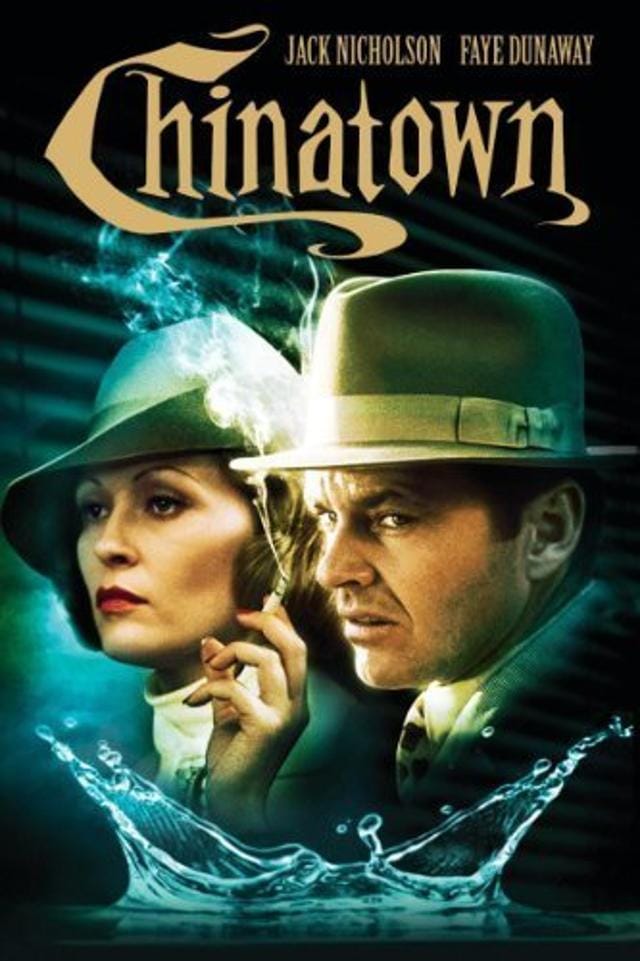
I read William Goldman, his lessons and his books and his experiences in screenwriting. I learn from him. Sometimes I feel he is helping me to write -- not necessarily his instructions but his experience for sure. Then there are two films that are my go-to pieces whenever I work on anything or if ever I am stuck. One is Chinatown written by Robert Towne and Roman Polanski. That, for me, is an ideal film. The other film that I learn from as a director as well as a writer, in fact, for every aspect of film, is The Godfather. I study The Godfather and The Godfather 2 for anything that I am working on. Whatever questions I may have or points that I have to tackle in my mind, even though it’s a totally different film, I try and watch The Godfather and understand how they did something and learn from there. You know, sometimes I even understand how to use sound in a particular way on my project. So Chinatown and The Godfather are my Mummy and Daddy of cinema, who help me learn and get out of difficult situations if ever I am stuck in them. I grew up watching a lot of American television. But I don’t want to call those shows my influences. I don’t think I have any influences as such. I really operate from a very experiential universe, which is also why my work is a little different.
Any film or show you wish you had made?
Well, I think I would have made anything I’ve seen differently but if you insist... I wish I had made A Suitable Boy.
If somebody gave you ₹100 crore, what kind of a film would you make?
There is a film I am writing right now; I would make that. 100 crores is not that much; I need more. Because there are multiple things I am working on and everything requires money though we know how to work on a budget.
Mihir Chitre is the author of two books of poetry, ‘School of Age’ and ‘Hyphenated’. He is the brain behind the advertising campaigns ‘#LaughAtDeath’ and ‘#HarBhashaEqual’ and has made the short film ‘Hello Brick Road’.


