
 E-Paper



Sanjena Sathian: “There’s a very thin line between utopia and cults”
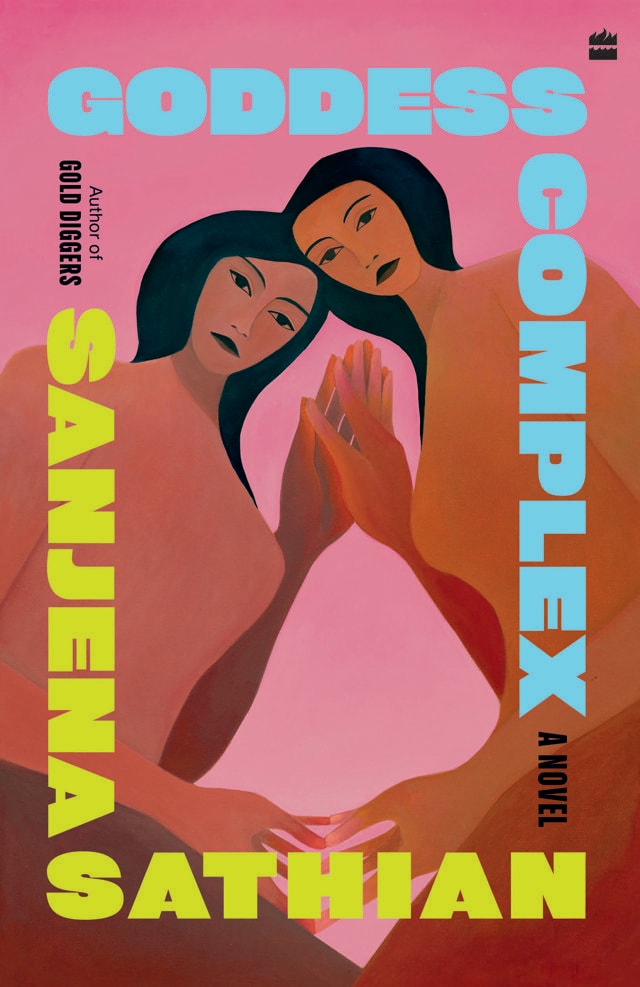
The author of Goddess Complex on millennials being susceptible to cultic thinking, the mother-daughter dynamic, and her novel’s handling of the visceral experience of being a woman in her “reproductive” years

 Prefer HTon Google


What was the driving force behind Goddess Complex?
I started writing Goddess Complex in 2018, and it began as a project about the decline of a relationship between a 23-year-old woman named Sanjana (or Sanjena – I kept switching it up) and her husband, Killian. The doppelganger conceit was always present: the narrator was going to find herself obsessed with Killian’s ex, another Sanjana (or Sanjena). But when I wrote further into that version of the project, I realised that the whole thing rode on sort of a cheap reveal, essentially, that Killian was a fool. After several years of work, I threw away the first 150 pages of that version of the novel – which I’d actually sold as a partial manuscript to my American publisher – and started over.
The discourse around motherhood in both the Indian and the American contexts is heavily laden with social and religious conservatism which your novel delves into in a nuanced manner. Was this discourse and the way the reproductive medical industry functions what you wanted to explore through fiction?
I never start a project thinking that I want to use fiction to explore a set of political ideals; if I did that, I think my books would not be very much fun to write or read. I usually start by thinking more about what’s funny or strange or mysterious about the world, and in my life and my friends’ lives. At the time that I was rewriting Goddess Complex, what was funny and strange and mysterious in my life and my friends’ lives was the decision-making process around childbearing, the way some of us were choosing to parent and others were not. These are personal dramas that have undeniable political significance, but I start with the micro, petty stuff – e.g. for Sanjana, “my best friend is having a baby and I feel neglected” (rather than “I am mad about reproductive rights!) – and eventually end up saying something macro, the political.
In Gold Diggers there was a strain of magical though the thematic concerns placed it well within the genre of a social realist text. In Goddess Complex you include a character with your own name though she is far from a literary self portrait. Is this use of the ‘uncanny’ something that you seek out while writing fiction, almost making it a play with what one considers to be ‘real’ vs the ‘fantastical’?
Very well-said; in a word, yes. Gold Diggers is an immigrant coming-of-age story that uses magical realism to say something about the familiar, even prosaic world of Indian Americans growing up in the US suburbs. Goddess Complex, by contrast, uses the uncanny to say something about the visceral (yet often creepy) experience of being a woman in her “reproductive” years. In both cases, I’ve found it fun, and also natural, to blur real and unreal, in service of saying something true.
In the novel, Sanjana notes how being an objective anthropological observer was akin to being “a concept instead of flesh”. Did having an anthropologist as your protagonist add another layer to how you examine the role of the storyteller in your own writing?
Yes, anthropology is sort of a stand-in for writing, but it was also a way for me to fictionalize and comment on some of my experiences as a journalist. Reporters perform a kind of ethnography. Ultimately, though, the real reason I was excited about writing an anthropologist was because I knew I wanted to write about a cult of some sort in the second half, and anthropologists make great literary tour guides into cultic organizations. They study belief, and many of them are curious about or fascinated by belief, but are not themselves believers. That’s fascinating on a character-level to me.
Much like in your book, there is an examination of the mother-daughter dynamic in contemporary literary fiction which then also delves into larger questions about identity, existential angst and worldmaking (Rosarita, The Illuminated, Girl in White Cotton to Tomb of Sand, Stone Yard Devotional). What drew you as an author to explore this dynamic?
I’m a daughter who has chosen not to become a mother. I couldn’t not be interested in that dynamic. I think the choices we make about whether or not to parent – which is ultimately the subject of Goddess Complex – are fascinating because they’re about us, but they’re also about our families, in the sense that our picture of parenthood is informed by our parents.
There are attempts at a visualisation of several alternative modes of existence that draw in those who are searching for meaning in a late capitalist world. What was the inspiration behind constructing these (from Moksha to the Shakti Centre)?
Alternative modes of existence is a nice way of putting it, because it shows sympathy for why people form those groups; I share that sympathy. Cults is another way of putting it. I’m an American-raised millennial, which means I belong to a generation that is extremely susceptible to cultic thinking. We were told that we were incredibly special, and that we need to find meaning in all aspects of our lives – do what you love! Then, we started looking for meaning in a recession-riddled landscape. Naturally, we start to look around and wonder – is there some other way of being? Some of those thought exercises result in really important productive social conversations – and some of them result in organisations that try to control your behaviour. There’s always been a very thin line between utopia and cults.
There are many literary allusions sprinkled throughout the text (from Jonathan Swift to Virginia Woolf and Edward Albee). Was this also another way in which you were tracing how fiction functions as a truth telling exercise, across historical eras, in society? Perhaps an exercise, though rooted in make believe, which might give shape to a more authentic portrayal of the world we inhabit than the digital double lives that most of us lead today?
I don’t think of my work as tracing the function of fiction, though that’s a nice way of reading. I just read a lot, and my characters read a lot, so they’re going to talk about their own lives through literature and art. I specifically chose Albee’s Who’s Afraid of Virginia Woolf? because it’s such an important piece about fertility, family formation, and the imagination.
Having written short fiction as well as full length novels, which form of literary expression are you organically drawn to and why?
I’m most natively a novelist. Short fiction is great, and I’ve gotten better at it, but it doesn’t come quite as naturally to me. I thrive in longer forms.
What are you working on next?
I’m superstitious and don’t discuss it!
Simar Bhasin is a literary critic and research scholar who lives in Delhi. Her essay ‘A Qissa of Resistance: Desire and Dissent in Selma Dabbagh’s Short Fiction’ was awarded ‘Highly Commended’ by the Wasafiri Essay Prize 2024.


