
 E-Paper



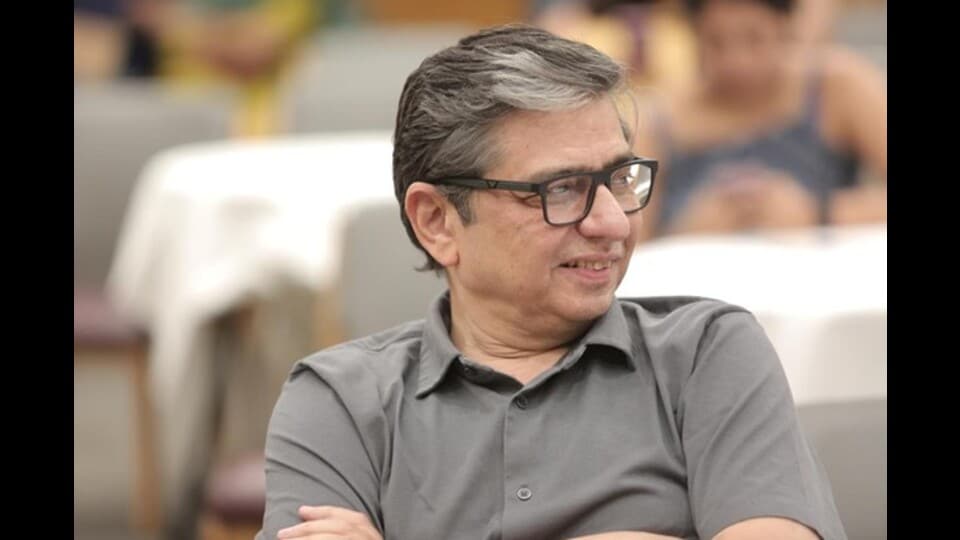
Santosh Desai: “The smartphone allows people to perform their individuality”
The author of Memes for Mummyji: Making Sense of Post-Smartphone India on digital activism and how everyone is now a broadcaster

 Prefer HTon Google


Why did you choose the smartphone as your central lens for decoding post-2010s India?
Social media resides within the smartphone and while it plays an instrumental role without question, the power that wielding a phone accords the user adds a dimension that is critical. The phone embodies power and individual agency. It helps people experience themselves as individuals and makes the idea of personal agency granular and real. It is experienced in thousands of micro decisions the user makes, in the gestures of control that indicate what is liked, summoned or dismissed. The phone and all that lies within it helped create the unique relationship of every individual with the outside world -- something that was unimaginable earlier. It is a window, a marketplace, a town square, a theatre and an escape hatch rolled into one.
In a country where most citizens were faceless and huddled within collective identities, the smartphone allowed people to experience and perform their individuality. It allowed the voiceless to not only have a voice, but also have broadcast rights. The changes it has brought about are radical and all-encompassing even as it has created a host of new problems for a society that lacks the necessary preparation to absorb the scale of these changes.

The book is a collection of short pieces on various aspects of Indian life in the digital age. The reader can dip in and out quickly. Was it challenging to balance brevity with persuasive depth for each piece?
It can be a real challenge. The key is to begin with a point of view that feels original and one that allows us to see a subject in a new way and then to resist the temptation to try and cover all aspects of it.
I find the shorter form conducive to a more compressed insight-laden expression than a longer form. It forces me to get to the heart of the issue with economy and avoid pontification.
You write: “To find meaningful employment is difficult, but to be an activist for a right-wing nationalistic cause is so easy.” How has right wing activism and the violence often directed at minorities evolved over the past decade amid smartphones, social media usage, and digital amplification?
The smartphone makes everyone a broadcaster – a phenomenon unparalleled in human history. In the past, gatekeepers filtered out the views of those that had not earned the right to broadcast. While that encouraged a form of elitism, it did ensure that what reached the public went through layers of filtering. Today, with everyone having unfettered access to the microphone, public discourse has become more democratised but its level mirrors the instincts of a much wider and unregulated base of voices.
Extreme viewpoints are expressed casually, and they become legitimised because they find not only a ready audience but rapid recirculation. This is what has been happening with extreme right-wing voices on social media. These voices have become more organised and strident and are gradually shifting the Overton window in terms of what is acceptable. Bit by bit, more extreme views are not only possible to be articulated, but they are becoming mainstream. Take a patently bogus idea like Love Jihad. That it continues to get play is proof of how narrative creep takes place.
You also explore modern love and the role of the smartphones in reshaping courtship, noting that, at one point in India, falling in love was something that happened largely in movies. How has this digital shift played out differently in urban and rural India?
Smartphones allow us to insert ourselves into someone’s personal space privately. In a society with a lot of social oversight, this ability is profoundly transformative. Interaction between the sexes becomes freer flowing while staying private. This is like a dramatic freeing up of the mating market.
In urban India, this takes the form of complicating the idea of relationships. As the young navigate the domains of love and sex, they operate without a compass or maps. All the territory is new as are the pitfalls. It is striking that in a lot of cases, romantic partners are more co-therapists rather than lovers, as they help each other navigate the complexities of a world where everything is provisional as well as possible. A completely new vocabulary has sprung up – ghosting, red flags, toxic masculinity, situationship – in trying to describe a world that did not exist before.
In smaller towns and rural India too, the opening up of this space follows a similar pattern, but its effects are different. Here, the societal context is much more present, and becomes an obstacle and threat. We see a lot more experimentation but boundaries remain. Some interesting innovations can be seen – for instance, we came across the concept of a ‘bhai friend’ in some parts of the country, which I mention in my book – a quasi-boyfriend without benefits.
You also touch on smartphones reshaping spirituality through digital prayer chains and virtual temple visits, for example. How has this changed the practice of traditional religiosity in India?
What the smartphone has enabled is for elements that were a part of our lives but were anchored to place and occasion – like religion and politics -- to become a constant presence. Through the day we receive messages that reaffirm our religious and political leanings – through morning Whatsapp forwards, live darshan, reels that we scroll through, tweets that we tune into. Religious (and political) identity becomes a more salient part of our self-definition. What was a limited, if important part of our overall self gradually becomes the dominant frame through which we imagine ourselves. We react through a religious lens far more naturally, and this slants our view of the world accordingly.
You write about smartphones’ dual role in protests —amplifying noise while enabling nuance. How do citizen recordings of human rights abuses empower politics and rights when mainstream media coverage lag? What does this reveal about digital activism’s strengths versus shortcomings?
Digital activism is an absolutely vital part of our discourse given the reluctance of mainstream media to cover main vital issues, particularly those that involve criticism of the powerful. Social media has made it possible for voices on the margin to be heard, and for dissent to find a platform. It must be acknowledged though that no one side has exclusive access to this and therefore, the space is awash with activists of all hues supporting all kind of causes. Also, the same platform is used by the powerful to shape narratives that it wants to.
You’ve written the City City Bang Bang column for The Times of India for 21 years. How has approaching issues with “innocent doubt” provided perspective?
This period has seen us dealing with two phenomena – the after-effect of liberalisation and the cascading influence of new technologies. This has led to the rise a slew of new ideas, hopes, aspirations, concepts and complexities. The column has tried to make sense of these influences as they have barrelled towards us. The attempt has been to withhold judgment, use as neutral a vocabulary as possible and focus on understanding change rather than characterising it hastily.
That is not to say that change itself has been neutral. For instance, when it comes to politics, over the years, our concerns seem to be veering towards the symbolic rather than substantive. There is a marked increase in issues that are emotive – who said what, who disrespected whom, which song should be sung, which film should be banned.
But ‘innocent doubt’ has a role to play in that it allows for perspective that is not pre-configured, and allows for nuance and complexity.
Majid Maqbool is an independent journalist based in Kashmir.


