
 E-Paper



Sinéad Gleeson: “In fiction, you can do anything”
At the Ubud Writers and Readers Festival, the Irish author of Constellations talked about the rage and defiance in her work, and about being influenced by visual art

 Prefer HTon Google


Your essays in Constellations (2021) explore the body both as subject and metaphor. In Hagstone (2024), that attention continues but through fiction. What prompted that move? What could fiction express that the essay form couldn’t?
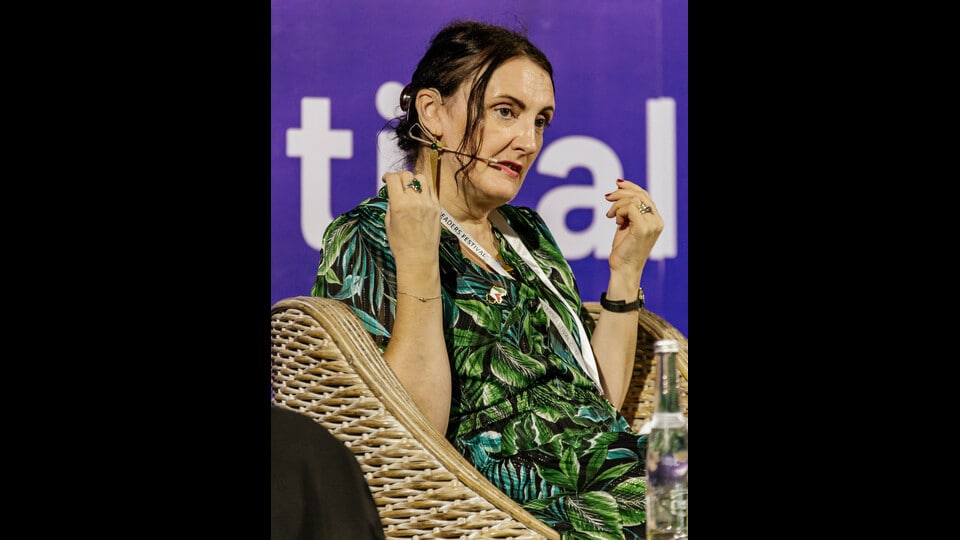
I actually started Hagstone before Constellations. And when I did, I realised that novels require a lot of attention. Essays or short stories, by their nature, they’re short. So, while you’re working on one, you can keep it all in your head. It’s not like that with novels. They’re long, like a very big engine, so you have to stay in them. And because I was busy with work and had a family, I couldn’t do it at that time. So, I started working on the essays. I like the form and more importantly, they’re finishable. If one’s not working out, you can sneak over and work on another one.
I also think they’re separated as left brain and right brain. To me, they use different muscles and instincts. In fiction, you can do anything. You can literally get away with whatever you like. With non-fiction, you have to be careful because there are other characters. So, it requires more research. But in fiction, you decide everything. What’s real and what’s not. I mean, the island [in Hagstone] isn’t real, [the characters] aren’t real. A woman came up to me at an event, and said she saw the exhibition that Nell (the protagonist) created. But it doesn’t exist in reality, I made it all up.
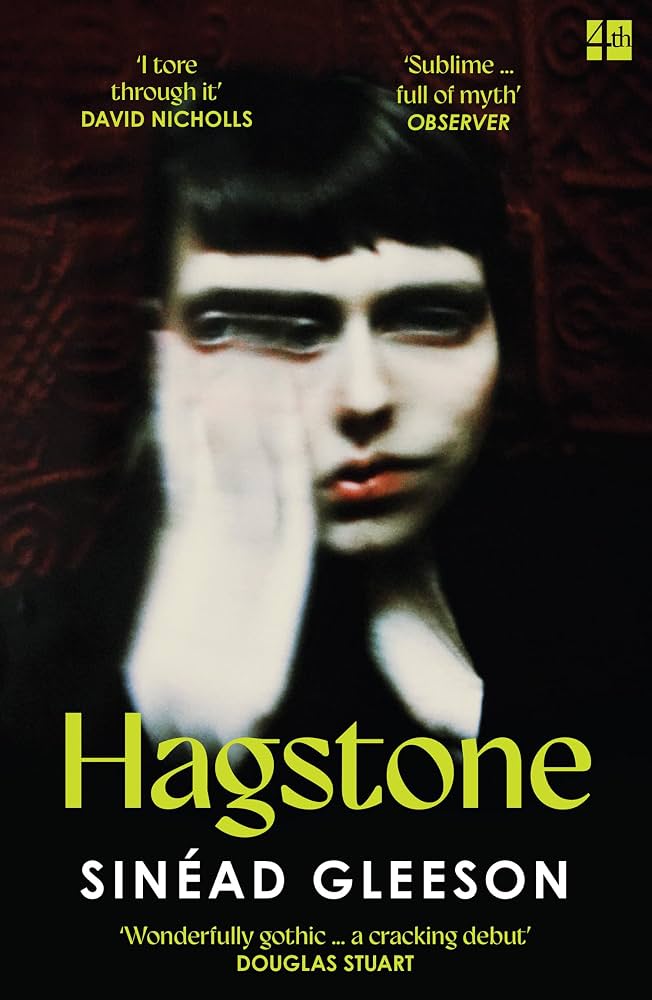
The novel’s title, Hagstone, feels heavy with meaning. How did you arrive at it?
I didn’t have the title until very, very late. In fact, when the book went out on submission, it was called something else. That was only a working title because I just couldn’t find the right one. Titles are really important because they’re the first thing a reader sees after your name.
I knew what a hagstone was — a stone you find on the beach with a single hole bored all the way through it. They’re often called witch’s stones or snake’s eggs. In different cultures they’re considered talismans. Fishermen in Ireland would tie them to their boats so they’d return safely with a full catch, while farmers would nail them to their barn doors to protect their animals.
Then, an artist told me that some people believe if you look through the hole in a hagstone, you can see another version of the world. I thought that’s probably what all writers are trying to do. We take ordinary people, ordinary lives and ordinary places, and try to transform them into art. Because my protagonist is an artist, and the novel is so much about looking, seeing, visibility and invisibility, it suddenly felt like the perfect title. It almost found me.
Your protagonist, Nell, is an artist whose body and work are in constant negotiation. Was art a way of externalising the questions you’ve been exploring about embodiment, identity and visibility?
That’s a great question. Nobody has asked me that before. I think very much so. Many of the artists I’m interested in make difficult, confrontational work about the body. Artists like Ana Mendieta, Marina Abramović, Yoko Ono, and Carolee Schneemann were creating that kind of work in the 1970s, when many people had never seen women use their bodies in those ways.
At the same time, women in Ireland faced enormous restrictions. If you were a woman working as a civil servant and got married, you had to give up your job. It was called the marriage bar. I was interested in placing Nell somewhere between those generations.
It never occurred to me that she could be an artist in a traditional sense — a painter or a ceramicist. I always knew her body had to become part of the work itself. The island becomes her canvas, but ultimately her body also becomes the subject. At one point, she even wonders if the island is a body. I think that’s really the conflict of the novel. She feels umbilically connected to the place, and she’s afraid that if she leaves it, she won’t just lose her home — she’ll lose the kind of artist she is.
Irish literature has a strong tradition of realism. Do you see Hagstone belonging within that tradition, or were you trying to push against its boundaries?
I think it’s a realist novel in many ways. Things happen in real time; the people are recognisable and grounded. But there are also folkloric and supernatural elements, and in Ireland those things have always existed alongside realism.
The first stories I ever heard weren’t realistic at all. They were Irish myths and folktales — the Fianna, the banshee, the Children of Lir, stories about magical animals and enchanted landscapes. Those were the narratives I grew up with.
Ireland was a pagan and Celtic country long before it became a Christian one, so those traditions continue to coexist. Places like the islands that inspired Hagstone feel both real and magical. They’re remote, isolated landscapes where the rocks, the sea and the wind seem to hold stories. It didn’t feel contradictory to make the novel grounded in reality while also allowing something mysterious to exist beneath the surface.
Illness and care often become invisible companions, particularly for women. How do you write about those experiences without reducing them to suffering or sentimentality?
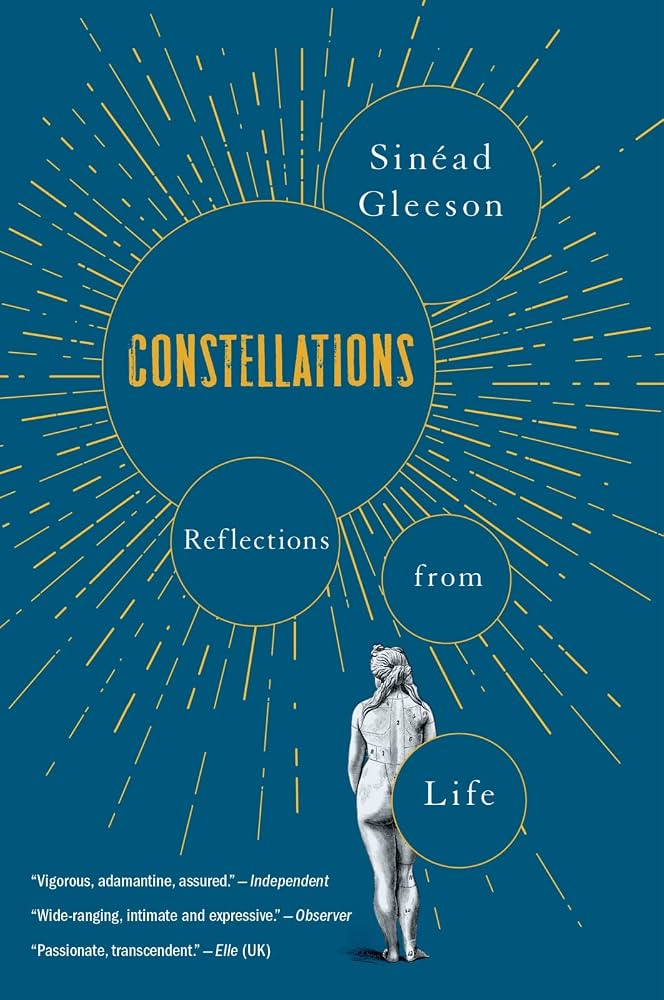
When I was writing Constellations, I told my editor that if it ever sounded like I was asking for sympathy, she should cut it. I’m quite allergic to pity. It’s not a very useful emotion.
Illness is an interruption to your life. It stops you working, seeing your friends and spending time with your family. I always thought of it as something deeply inconvenient rather than something I wanted people to feel sorry for me about.
I wanted to use my own experiences to talk about how the medical system treats women, older people, disabled people and people of colour. That meant writing personally, but the goal was always political. I wanted to challenge the way patients are treated.
I once spoke at a medical festival in Ireland attended by doctors and nurses. Afterwards, many of them told me they’d never thought to ask a patient their name before examining them or to ask permission before pulling back a hospital sheet. If the book helped people rethink how they treat patients, then it was worth exposing those experiences. Sentimentality would only have weakened that argument.
Building on that, there’s a quiet thread of rage and defiance running through your work — an insistence that the female body should be witnessed rather than ignored. Do you see writing itself as an act of resistance?
Absolutely. I think almost all writing is political. Even if I’m writing about art, science, my dog or children, somewhere within it there’s going to be something political.
Growing up as a woman in Ireland, I became aware very early that women weren’t treated equally. I was raised Catholic and went to Mass every week until I was 18. I remember looking around and thinking that all the people in positions of authority were men. Women couldn’t become priests, they couldn’t access contraception or abortion, and gradually I began to understand that women simply weren’t treated very well.
Then you learn about the Magdalene laundries, the mother and baby homes, and all the ways women had been failed. I think many Irish women writers, whether consciously or not, are still working through that history. Ireland carries intergenerational trauma — from colonisation and the famine to the treatment of women throughout the twentieth century. Those histories inevitably find their way into our writing, even when we’re not writing directly about them.
You’ve edited anthologies celebrating women’s creative labour across generations. Did that curatorial experience shape the way you wrote Nell’s story?
I think it probably did. Nell is someone who has stepped away from the traditional art world because she finds it too capitalist, too male and too interested in commerce. On the island, she has complete freedom. She doesn’t need a gallery or a deadline. She can simply make the work she wants to make.
Working on those anthologies made me realise how many women had been forgotten. The more I dug into Irish literary history, the more omissions I found. Writers with extraordinary bodies of work had simply disappeared from the canon.
Recently, Louise Kennedy and I campaigned for a plaque to honour the writer Laura Holt. She wrote 24 novels and four short story collections, yet very few people remember her today. Once you begin looking, you realise how many artists and writers have been overlooked.
Editing those anthologies felt like literary archaeology. Every time I unearthed another forgotten voice, I became more conscious of the stories that had been left out. That’s why I wanted those collections to be diverse — not just in terms of women, but queer voices, working-class voices and writers from different ethnic backgrounds. Literature should keep expanding the canon rather than repeating it.
The language in Hagstone is deeply visual — almost painterly. Was your writing process influenced by visual art?
Very much so. Everything begins visually for me. I usually start with an image before I have a story.
Quite far into writing the novel, I suddenly had this image of women standing in the sea with the water up to their knees, their arms linked together, singing. I still don’t know where it came from, but I knew immediately that they belonged in the book.
People often tell me my writing feels visual, and I think that’s because I was lucky to have an incredible art teacher when I was 15. She taught us that looking isn’t passive. Two people can stand in front of the same painting and notice completely different things. As a writer, that’s your job — to observe.
Listening is just as important. Maeve Binchy used to get on trains simply to listen to conversations. She said she used her ears like a tape recorder. Writing is an intensely sensory process. You have to look carefully, listen carefully and pay attention to how things feel.
You’ve long advocated for art that exists at the intersection of forms — literature alongside music, film and visual culture. Do you think that porousness between art forms is essential to how we tell stories?
Absolutely. When people talk about “the arts” as though they’re something rarefied, I don’t really understand it. To me, it’s simply reading books, listening to music, watching films and looking at paintings. They’re all part of the same creative conversation.
I spent a lot of time in hospital as a child, before the internet existed. It was lonely, but books, music and art gave me comfort. I’d listen to music on a Walkman, read constantly and, whenever I could, visit galleries. Those were the things that sustained me.
Think about the pandemic. What did people turn to? They watched films and television, listened to music, read books, baked, and painted. We instinctively reached for creativity because it comforts us.
I don’t think I’ll ever write a book that doesn’t include art, music or film in some way. They’re simply part of how I see the world.
Rutvik Bhandari is an independent writer. He lives in Pune. You can find him talking about books on Instagram and YouTube (@themindlessmess).


