
 E-Paper



Tahmima Anam: “Progress depends on those who rebel”
The author of Uprising on climate change, poverty, the oppressions of patriarchy, and the influence of Bangladesh’s Monsoon Revolution on her novel

 Prefer HTon Google


Where did you find the seeds of inspiration to write Uprising?
Many years ago, I was doing a trip to the Sundarbans, and somebody told me that there was an island brothel. If you take a boat from Mongla, which is the port, into the Sundarbans, you pass it on the way. I thought, what an unlikely and almost mythical place. It must not be real.
But then I looked it up and did some research, and it is indeed a real place. There has been a brothel on that island for more than 50 years. I immediately thought of setting a novel there. But I felt that it would be very difficult to read until I realised that the novel could be not about the condition of the people who were there, but rather their escape. When I realised the novel could be an uplifting story about a revolution, about a seismic change, about people taking control of their destiny, that is something that really excited me and gave me the will to write and finish the novel.
How did you decide to set the novel in a desolate island?
Well, I think islands are very interesting for novelists because they create a very closed community, and you can really do a lot with that. In this case, this community of women had been resigned to their fate.
But it wasn’t until the arrival of Kusum that things could really change. The fact that it was a place that was beyond the reaches of society, where it had its own laws and its own social structure, to me as a novelist, is really fascinating. I think, in order for the revolution to be what it is, it really had to come from a place where these women were almost in captivity. These women are imprisoned on the island, and how do they get out? The island gives you that context and gives you that setting.
Your novel raises the concern of the sexual trafficking of women. How do you think this can be fought against?
As a novelist, I have to think less about what the impact on society will be because I’m not a politician. I’m not the person who makes the policies. I’m just here to give you a glimpse into a world that you might not otherwise see. Then it’s kind of up to you. The novel raises certain questions. It is there to provoke you. It’s there to make you uncomfortable. After that, it’s beyond the novelist’s realm what happens in terms of change. But I do feel very committed to telling stories that would otherwise go untold. That is a very deep commitment of mine.
I understand, but what are the issues that cause this to happen to some women?
These women are subject to multiple forms of oppression — not just prostitution, but poverty and climate change. They’re vulnerable in multiple ways, and their condition as sex workers or as enslaved people is one aspect of that. Many things have to go wrong in society for that situation to be created.
Did you want to write about climate change through the novel?
Absolutely. Climate change is a reality everywhere in the world now. We are all experiencing the climate crisis, but nowhere more than on a low-lying delta like Bangladesh. When setting a novel in contemporary Bangladesh, you really can’t avoid writing about climate change. It is a fact of life. That was definitely one of the governing ideas behind the book.
You write that these women “had always been poor”. Do you believe their suffering is caused by poverty or by political and cultural issues?
The cause of women’s suffering is patriarchy. The cause of women’s suffering is that we live in an unequal and unjust society. On top of that, women who live in poverty experience forms of violence that women who live in relative wealth and privilege don’t. So, poverty is another layer of oppression. Climate change is another layer of oppression. All these forms of vulnerability affect women more than men. But fundamentally, the reason women are oppressed is because we have accepted that women have lesser rights and lesser privileges across all societies and social classes in the world. That is a fundamental fact of human society — that women will accept forms of subjugation that men don’t have to accept. That is the fundamental reason that women experience violence.
How challenging was it to write about the issues of Bangladesh while living in England?
I live in England, but I visit Bangladesh two or three times a year. My entire family lives there. My sister and my father run an English-language daily newspaper. My mother is a human rights activist. So, I live in London, but I am very closely bound to Bangladesh as the source of all of my creative output. It’s the society that I’m most interested in. These are the problems that I want to write about. So, yes, I will always write about Bangladesh, and I don’t find it difficult. I feel a great deal of respect and humility towards any subject that I write about and feel the need to do it some form of justice. That’s just a writer’s sort of Hippocratic oath — to try to treat their subject matter with deep humility, respect, and the understanding that, on some level, there is very little we can know about other people.
We live in our subjective worlds. So, making the attempt to try to see the world from another perspective is what a novelist does, wherever they may be writing from.
How much research did you do for the novel?
I did not visit the island until after I had finished writing the novel because I really wanted it not to be based on real people or real characters, in order to preserve their anonymity. I did some research. I did research into Bon Bibi, trafficking, and climate change, but fundamentally the novel doesn’t come out of research. It comes out of a set of ideas about revolution and uprisings. It’s powered by the storylines of its characters and the arc that I wanted those characters to have.
Afterwards, I visited the island, met the women who live there, befriended them, and still keep in touch with them. That was a really important part of it. But I didn’t write the book based on those people.
Bon Bibi is one of the novel’s more interesting characters.
Bon Bibi is a deity in the Sundarbans. Whether it’s the West Bengal part of the Sundarbans or the Bangladesh side, Bon Bibi is revered as the protector of the forest. There are many stories about her. The myth is that she was abandoned in the forest and raised by a deer, and then she comes back to become the protector of the forest. She protects humans against demons like tigers, but she also protects the forest against humans. She is the guardian of the Sundarbans and the local goddess, deity, or mythical figure of that very particular part of Bangladesh and West Bengal.
Motherly love is a prominent theme.
Yes, that’s a very big theme in the book because the children of the island really just want to be mothered. There’s the scene where they say, “On the island, we really want to get lice because when we get lice, we sit on our mother’s laps and they pick the lice out of our hair.” It’s this moment of tenderness. The women have such difficult lives. They suffer so much that it’s difficult for them to be tender towards their children. When Kusum makes the women go on strike and builds the tube well, it’s the first time they can feel that tenderness or softness coming up in them. That is a very important thing for everybody — for the women and for their children.
Then, of course, the cruel madam, who’s the villain in the story, is called Amma. So, definitely, the theme of mothers and children, what it means to be mothered, and the desire to be mothered is a very important theme in the book.
All the women except for Kusum are inured to their wretched lives. Why do they seek external forces for their liberation instead of unshackling themselves as Kusum did?
When Kusum arrives on the island, they have accepted their fate. Sometimes they talk about their lives as, “Well, at least here, nobody is shaming me. You know... I can do whatever I want.” They’re acting as though they’re somehow more free than they would be if they lived somewhere else. This is just part of people becoming familiar with their forms of oppression, having Stockholm syndrome, or whatever you want to call it. They don’t have the imagination, the education, or the will to break free until one person comes and shows them that there could be a different life or a different future for them and their daughters.
Do you think that many women in our society have accepted their fate and that there are only a few women like Kusum?
I don’t think it’s necessarily women. I think we all live these lives where we’re blind to our own limitations, and sometimes it’s difficult to see a way out. We need people to remind us that change is possible.
People who accept their fate are not passive. They’ve just been ground down. They’ve suffered so much that they lose the ability to see beyond the conditions of their suffering. That’s why the children are there to remind their mothers, “We’re going to be freed by Bon Bibi.” And the mothers are like, “Oh, there’s no such thing.” For them, the safest thing is to survive and make the best of their situation.
I think that’s definitely a human condition: we accept our fate. We accept certain limitations because we think it’s safer. It’s too dangerous or risky to imagine that we can change things.
So, yes, I think progress does depend on those who decide to rebel, those who decide to show everybody that another future is possible.
There are some glimpses of what happened recently in Bangladesh. Were you thinking of that political change while writing this?
Absolutely. The protests in the city in which Kusum participates are definitely based on what is now called the Monsoon Revolution, or the July Uprising in Bangladesh. She refers to the ousting of a dictator, and that dictator is certainly based on Hasina, although she’s not named in the novel.
Kusum experiences a taste of what it means to protest, and she feels enormously empowered by that. She says to her sister, “When the policeman comes to beat the legs of the protesters, they can’t tell whether they’re beating the legs of a rich girl or a poor girl.” She feels that the street is an enormously equalizing space, and she takes that understanding of what it means to protest with her to the island.
So, on one hand, the novel reflects the idea of resistance by women, and on the other hand, it reflects the resistance against the political system in Bangladesh. Is this a book of resistance?
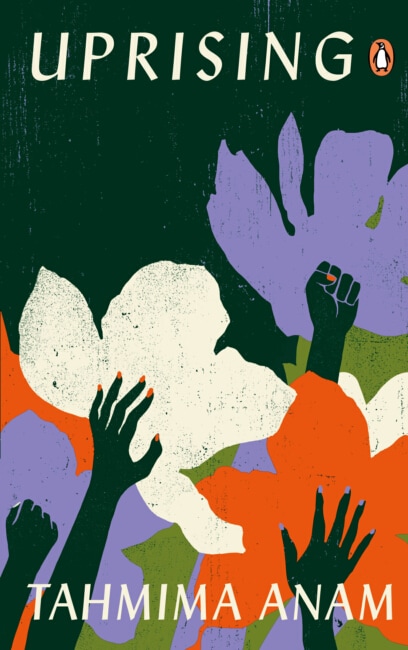
It’s absolutely a book of resistance. Yes. It’s called Uprising. It’s about revolutions. It’s about change. It’s about the possibility of revolutions. That’s definitely what it’s is about.
Who are your favourite authors?
I’m hugely inspired by Toni Morrison, Salman Rushdie, and American writers like Willa Cather and Flannery O’Connor. Beloved by Toni Morrison is probably the book that I return to again and again, and I consider it a masterpiece.
Mohd. Farhan teaches English at Jamia Millia Islamia, a Central University in New Delhi.


