
 E-Paper



Tom Stoppard and the triviality of history
The British playwright, who died late last month, was suspicious of big events and great men, focussing instead on minor characters

 Prefer HTon Google


In 1917, as the First World War roiled Europe and other parts of the globe, Zurich was a rare oasis of peace. The largest city of neutral Switzerland attracted spies, exiles and anti-war activists, including some very influential ones such as the Irish novelist James Joyce, the Russian communist revolutionary Vladimir Lenin and the Dadaist poet Tristan Tzara. Struck by this coincidence, British playwright Tom Stoppard, who died on 29 November at the age of 88, brought the three of them together in his play, Travesties.
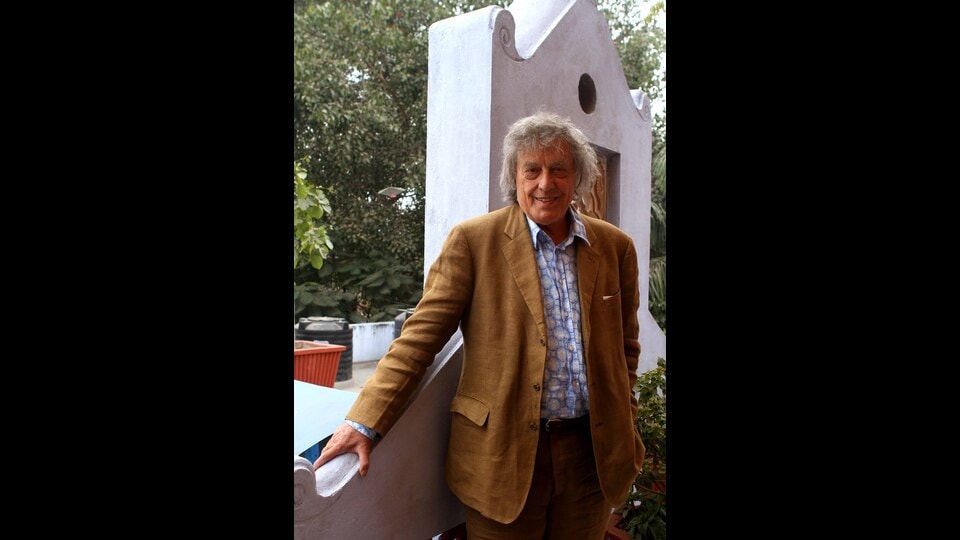
Like much of Stoppard’s work, Travesties, first performed in London by the Royal Shakespeare Company in 1974, was a post-modern reworking of a classic play — in this case, Oscar Wilde’s The Importance of Being Earnest. Narrated by an unreliable British consular official, half a century after the incidents take place, Travesties sets up a collision between Soviet realism and modernist surrealism. In some ways, it encapsulates all the major themes of Stoppard’s prodigious oeuvre — exile, love, big ideas, witty dialogue.
I watched a double-bill production of Travesties and The Importance of Being Earnest by a Kolkata-based theatre group in 2004. As a high school student keen to study English literature at university, I was already familiar with Wilde’s work and reputation, but this performance was my introduction to Stoppard. Struck by the sheer ingenuity of the play, I found many of his other works at the British Council library in slim Faber editions — Rosencrantz and Guildenstern Are Dead (1967), Jumpers (1972), Arcadia (1993), The Invention of Love (1997), The Coast of Utopia (2002). Yet, even as I read Stoppard through my undergraduate years, I had no inkling of his relationship to India, his childhood years in Darjeeling, or his connections to my home town, Kolkata.
Born in the industrial city of Zlín, about 250 km southeast of Prague (capital of Czechoslovakia), on 3 July 1937, Stoppard, then called Tomáš Sträussler — left his country of birth, along with his parents, when he was 18 months old. His father, Eugen Sträussler, a doctor employed by the shoe company Bata, was transferred to Singapore in the wake of Germany’s invasion of the country. Bata tried to save its Jewish employees from Nazi persecution by transferring them to branches in different parts of the world. “His [Stoppard’s] baby words would have been in his natal language,” writes the playwright’s biographer Hermione Lee, “which he would soon forget.”
By early 1942, Nazi Germany’s ally Japan had invaded Singapore and the Sträussler were yet again compelled to flee. Stoppard’s mother, Martha Becková, took a ship out with her two sons to Bombay (Mumbai), but the vessel on which his father evacuated a month later was sunk by the Japanese. Stoppard would learn about the cause of his father’s death from one of his associates in 1999. Becková and her sons first went to Nainital, then Lahore, and eventually to Darjeeling, where she took up a job managing a Bata store. Returning to the hill station in 1991, Stoppard wrote about his memories of seeing the Kanchenjunga: “massive yet ethereal, lit like theatre, so ageless and permanent as to make history trivial.”
The triviality of history and the significance of coincidence find prominence in much of his work. In his breakout play Rosencrantz and Guildenstern Are Dead, the action focusses on two minor characters from Shakespeare’s Hamlet. As Rosencrantz and Guildenstern sit around tossing coins and sharing gossip, the monumental tragic actions of the Shakespearean tragedy take place off stage. Similarly, in Travesties, the narrator is not only of major historical figure that appear on stage, but an obscure bureaucrat with questionable memory.
Although finding biographical correlation is anathema to modern criticism, it is impossible not to notice the coincidences between Stoppard’s life and his work. As he would find out many years later, his grandparents, Julius and Hildegard Sträussler, perished in a Jewish ghetto in Riga, Hildegard’s mother died in the Theresienstadt concentration camp, and Marta’s parents and two sisters died at Auschwitz. The Holocaust could have as easily claimed the Sträussler family as well. After Marta married British army officer Kenneth Stoppard in Calcutta, the family moved to England in 1946. Eight-year-old Tomáš had already become Tom by then; decades later he would describe England as the coat he put on at eight and never took off.
Stoppard would return to India in 1990-91, travelling extensively through Madras (now Chennai), Jaipur, New Delhi and Darjeeling. Even before this tour, he wrote a radio play In the Native State, later rewritten for the stage as India Ink. Set in a fictional princely state in the 1930s and in England in the 1980s, the action of India Ink revolves around English poet Flora Crew and Indian painter Nirad Das. As Nirad paints a portrait of Flora, she writes a poem about the painting, with both of them influencing each other. Nirad introduces Flora to Indian rasa theory, eventually producing an erotic nude miniature of her, giving prominence to eroticism over the hateful politics of their turbulent contemporary world.
In the inaugural run of the play in London in 1995, Flora was played by Felicity Kendal, who had, like Stoppard, grown up in India, albeit in the 1950s. Her father, Geoffrey Kendal, and mother, Laura Liddell, were actors who performed Shakespeare’s plays touring through India. Their life and works inspired the 1965 film Shakespeare Wallah, directed by James Ivory and produced by Ismail Merchant, with music by Satyajit Ray. Felicity starred in the film as Lizzie Buckingham, the female lead opposite her brother-in-law Shashi Kapoor, who was married to Geoffrey’s elder daughter Jennifer Kendal. Felicity later formed a professional and personal association with Stoppard, acting in several of his plays, such as On the Razzle (1981), The Real Thing (1982) and Arcadia (1993).
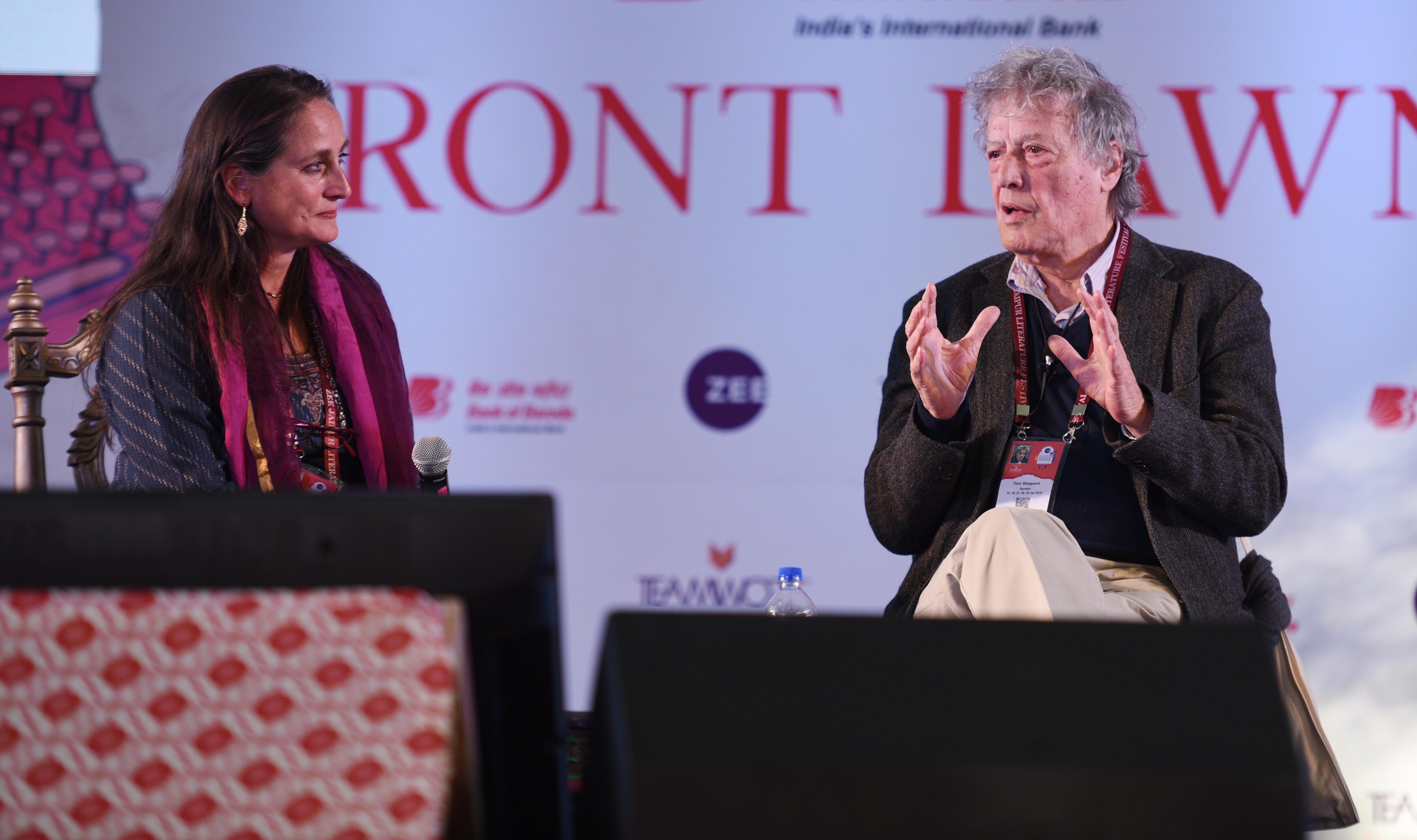
Scholars have critiqued India Ink for its inadequate engagement with British imperialism. Nandi Bhatia writes in a 2009 paper that the play “obscures questions of power that are germane to postcolonial societies” and does not adequately acknowledge “the uneven outcomes of imperialism, making the play a “theatrical show that represents the empire as a benign enterprise.” While attending a literature festival in India in 2018, Stoppard said that he approached the British Empire and India through the lens of nostalgia. Yet, what the play does illustrate is the difficulty of neatly categorising history, reminding us that upheavals and unexpected crossings underline the fragility of identity and the lasting power of imagination even in the most turbulent times today.
Uttaran Das Gupta is a writer, journalist and cultural commentator


