
 E-Paper



Unlock Diaries: The call of the cashew trees by Manu Bhattathiri
Memories add a sweet sharpness to imaginings of the future


A whole new world awaits me once this virus unlocks us. I long for the salty air of Goa or Mangalore. I would give an arm for the mist of Ooty, a leg for the stroganoff steak at Grill House. But I realized something special last week. I would give my soul to walk under the cashew trees of my home village again and have another heated argument with my grandfather.
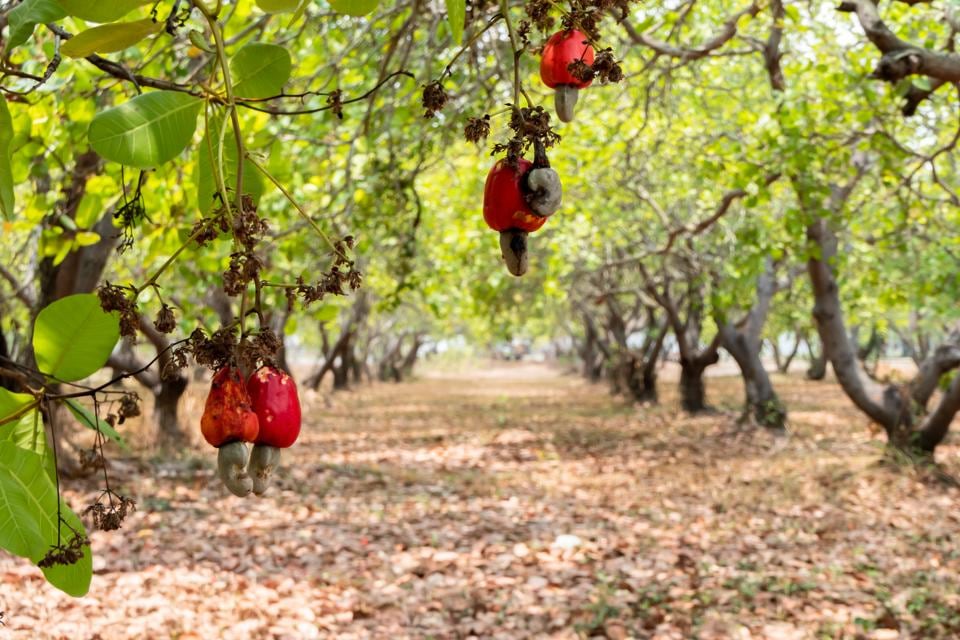
I call him Appoo, short for Appooppan, which means grandfather in Malayalam. Our first debate was on whether there was air on the moon or not. In the seventh standard, I was already in love with science and one day, I told Appoo that if I said something to him on the moon, he wouldn’t be able to hear a word. “Sound doesn’t carry there,” I explained. “Because there’s no air on the moon.” Crunching the dry cashew leaves under our feet, we watched a column of red ants march about uninterrupted by our useless babble.
My grandfather pulled out a succulent stalk of grass and began chewing it. “Does the moon rotate?”
“Of course. Like the earth, like the sun. It rotates fast.”
“Well, imagine something as big as that, rotating,” he said. “It’ll create a lot of wind. Wherever there is motion, there is wind. And wind means air. That is common sense.”
And thus, I was introduced to the passion of arguing. I told him the moon pulled objects much feebler than the earth did, and so it couldn’t hold on to its atmosphere. But he paid no attention. “Look at the fan,” he told me. “The moment it starts rotating, there’s wind.” I countered that that was only possible here, on earth. In fact, the moon was so densely pockmarked with craters because it had no air to offer resistance to the falling meteors.
“You admit that the moon moves fast,” Appoo said conclusively. “How can there be no wind?” He told me to observe things around me, and to not blindly trust my textbooks.
You see, Appoo would accept nothing that goes against common sense. Luckily, he gave in to the earth being round, but he denied that the stars twinkled because of our atmosphere. “Nonsense,” he cried. “Anything made of fire shimmers. It has nothing to do with the earth’s atmosphere.”
Every time I learned something new — that went against obvious conclusions of quotidian observations — I would run to my grandfather. We would walk in the shade smelling the ripe cashew fruit, dust red ants off our legs, and argue endlessly. As I grew older, I brought him news that anything that falls off a plane, whether it is a feather or an iron ball, reaches the ground at the same time if there is no air to break its fall. I told him that light has a speed, that although light seems instantly present everywhere, it actually has to travel at its own speed like other objects. I spent hours pointing out to him that the body did not become lighter when a person died and his soul left him — science had conducted enough experiments to prove that was not true.
Read more: Covid-19 Short fiction: Bombay Mixture by Manu Bhattathiri
My grandfather laughed sadly and said I was a classic example of how modern education had dampened the brain of a bright boy.
All through my childhood, I perfected my skills to counter him. I quoted scientists, drew equations with twigs in the mud, knowing fully well he couldn’t grasp them. I showed him books that proved I was right. I had found a secret joy in laying bare his ignorance, in scorning his silly viewpoints, in making clear my revulsion for the way he persisted with his opinions. And persist he did. Never once in all my boyhood did Appoo ever give in to what I said.
During this lockdown, when I first discovered that many of my friends were struggling with mental issues, I was taken aback. I had fortunately never been anxious, never depressed. Whenever TV news channels gave me reason to worry, to ponder about our bleak future, I merely said to myself: “Evolution often poses one species against another. At present it is mankind versus a virus. There’s nothing new about it. It’ll pass.”
I must, however, confess that I did not go on to study science after all. I have been a literary man, an advertisement guy, a journalist. And yet I argued like a scientist, even if I was only arguing with myself! Inside of me, cold logic won against the mood of the day. It was then I realized it had been several years since I had crunched those cashew leaves under my feet. As an adult, when I visited my grandparents’ home, I kept mostly to the house, stabbing my fingers on the mobile phone or staring at my laptop screen. Even otherwise, holidays meant savouring the briny air of the sea or the mist of the mountains. Over the past three decades, it had never occurred to me to walk again with Appoo and argue about something, anything. That’s how much my life has locked me down, can you imagine!
I hope — once the virus frees us — to run to my home village and, once again, have a heated debate under the cashew trees. It is another matter that Appoo passed away almost nine years ago. I’m sure when he hears the crunch of those leaves, he will come to me, nonetheless. There are many points I want to contradict him on.
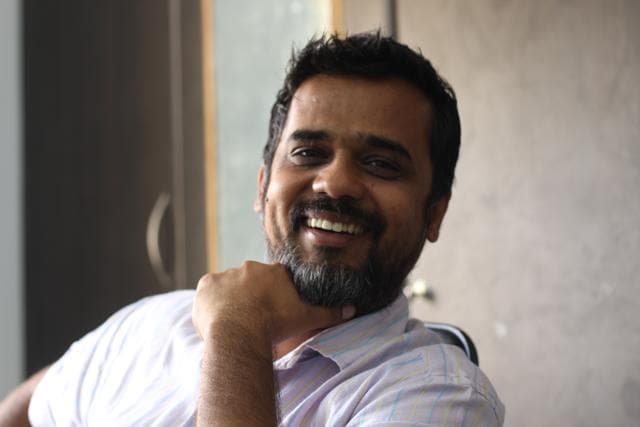
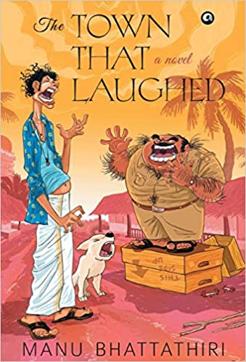
Manu Bhattathiri is the author of Savithri’s Special Room and Other Stories, and The Town That Laughed. His new novel is set to be released by Aleph Book Company later this year.


