
 E-Paper



Will Schwalbe: “People with gay friends can be homophobic”
The author of We Should Not Be Friends on his experience of volunteering with the Gay Men’s Health Crisis during the AIDS epidemic in the US

 Prefer HTon Google


In your book, you write about the 40-year friendship between a gay man and a straight one. How did this happen given the panic that many straight men experience around gay men?
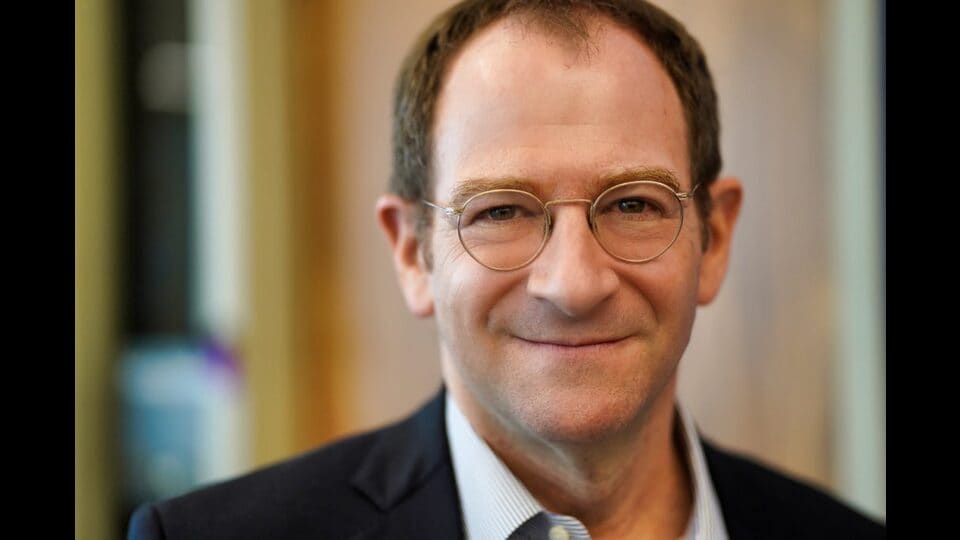
Yes, the panic was especially present in the early 1980s when this friendship started. Chris Maxey was a legendarily famous jock. I was already an out gay man and AIDS activist. He was a state champion in several sports, which is a big deal, and a nationally ranked wrestler. There are a lot of jocks and athletes who are charming, delightful, warm and lovely people. But there is a culture of hyper masculinity around athletes, and particularly in some sports. This hyper masculinity expresses itself in a kind of panic about being thought gay, about being surrounded by gay people, or even about coming into contact with gay people for fear that you were thought gay. In those days, it was unusual for a jock to have a gay friend. I made the very understandable assumption that Maxey would not want to be friends with me because I was gay. I needed to protect myself from being hurt physically and emotionally.
But, over the course of the book, I think what I am really writing about is that I was much more prejudiced against Maxey than he was against me. I made a lot of assumptions about him, and who he was in his heart. One of the things that I want to get across is to not judge people in any way and not before you really have gotten to know them. While studying at Yale (University), we were put in a secret society of 15 kids who had to meet twice a week for dinner, which we could never miss, and we had to tell each other our life stories.
Over the course of breaking bread twice a week, I realised that I had got Maxey all wrong. He was the first one who kind of reached out to me, and we developed this friendship that has really struck a chord with people who have read the book. These are not just gay men who have been in similar situations but also women who genuinely want to be friends with men.

How beautiful! Why do you think this story moves people so much?
I think that our story speaks to the desire to spend time with people and be friends with them based on who they are in a more wholesome way and not just their gender or sexual orientation. Not everything has to be sexualised. We tend to do that in our (American) culture. So many interviewers and readers have asked me, “Were you attracted to Max?”
He is a handsome guy but not my type. He is perfectly comfortable around me because he happens to like women, and not every woman. I think that a lot of women have responded warmly to the book because, at least in the United States, it is still very hard still for straight women and straight men to have friendships because of the assumptions that people make about how they should behave with each other. These assumptions are sexualised.
I was moved by the scene where Maxey tells you, during one of the secret society meetings, that he would beat up anyone who troubled you. How did it feel to hear that? Did you feel guilty about the kind of person you had imagined him to be?
I was feeling a little bit guilty, but actually, especially at that time, the assumption that I made was not so crazy. I mean, I was wrong about Maxey, but it was not wrong to assume that a jock would probably be hostile to a gay person. Even today, it is so hard to find an American football or baseball player who is gay and out. You will find a couple of sports with a lot of gay people playing them but the hyper masculine sports have incredibly few. Why? Well, it is obvious. They are there but they do not feel physically safe coming out.
Even though Maxey said those words to me, it took him longer to change his thinking fully.
Later, when he started a school and had to support his first gay student, he could rely on your experience of teaching him about what it was like to be gay. How did it feel to know that you had trained a straight person to be there for a gay person?
Maxey was so proud to be able to support that student. He wrote me a letter. I was so proud of him, and how he handled it, because he did not walk up to this kid and use that annoying cliché: “I have a gay friend.” People with gay friends can be homophobic, so that statement does not make any sense when it is used in that context. Maxey understood that this kid saw him exactly the way that I saw him the first time. By the way Maxey behaved, he proved to this kid that he would be safe in being who he really was with Maxey. His actions mattered, not his words. I am big on fact-checking. I found this kid, shared the story with him as it appears in the book, and asked him if he was okay with using the story. Guess what? He admitted that he hated Maxey initially. He, like me, had made all these assumptions about Maxey as a person. And then things changed when Maxey showed him who he really was.

In the book you also write about volunteering with Gay Men’s Health Crisis. What was that organization like, and what kind of work were you involved in?
It was hard. When I came to college, there were very few kids who were out. That, in and of itself, was quite an isolating experience. When the AIDS crisis was beginning, I started to get involved as an activist for Gay Men’s Health Crisis, which was a new organisation headquartered in New York City and co-founded by my friend and mentor Larry Kramer, He adapted DH Lawrence’s novel Women in Love into a film and produced it.
Larry was one of the people who realised that AIDS was going to become this massive crisis globally. What began with 14 cases went up to a little over a thousand, and it kept growing until there were millions of deaths worldwide. I remember a time when no one knew what caused AIDS or led to its spread. There was no test or cure, and it was 100 per cent fatal.
When I started volunteering with the Gay Men’s Health Crisis on a hotline, we were located in a brownstone townhouse. It was a couple of rooms that someone had loaned us.
I also volunteered with another organisation called the AIDS Project New Haven. I was this young kid. The people I was getting to know — my fellow volunteer workers — were dying of this new disease. The media at the time was just horrible. They talked about AIDS as God’s judgement. People were talking about tattooing gay people so that they could be recognised, and also putting gay people in concentration camps to contain the spread of the disease. They were starting to view all gay people as diseased, and to think of AIDS as a solely gay disease.
Even as people were dying in large numbers, Ronald Reagan, who was the US President at the time, and the whole government kept ignoring it for as long as they possibly could.
You also mention in the book that, during the AIDS epidemic in the US, when people went to eat at restaurants, they refused to be served by waiters who were perceived as gay. Can you recall any other examples of prejudice and exclusion?
Yes, my friends who worked in restaurants used to tell me stories. As part of my own experience working on an AIDS hotline, I remember this phone call with a woman called saying, “I think I have AIDS.” She was hysterical. I asked her, “Well, why do you think that you have AIDS?” She replied, “I just had my hair done, and I think my hairdresser is gay. I think he gave me AIDS when he washed my hair.” That was the level of hysteria.
Was this a heterosexual woman? What advice did you give her?
Oh yes, absolutely! The lesbians were heroic, and were a major part of the social networks offering care and support for gay men with AIDS. They were also at the forefront of activism. Coming back to the woman who called the hotline, I said, “I want you to pack your bags and go right to the hospital.” I was just so fed up. My supervisor asked me to get out. He took the call and said, “You have nothing to worry about. You can’t get AIDS from having your hair washed.” You see, I was in my early twenties. People were dying all around.
A call that I had taken right before that was from a guy who said that his lover was dead in bed next to him and he could not get any funeral home in New York to pick up the body because the funeral homes were terrified. We had a small list of funeral homes that were open to taking in gay people. Following that, talking to the woman who was worried about getting AIDS from having her hair washed was a lot for me to digest. But, of course, my response to her was not right. I feel bad about that. She was absorbing what she was hearing from the culture that she was part of. It was not her fault. That said, it was a really weird time.

When you moved into publishing, was there any hostility towards gay people?
There was no hostility as such, but there was what you could call a pink ceiling. There was a limit to how far you could rise as an out gay person. There was definitely a glass ceiling for women. I mean, it was a straight white man’s club. When I started working full-time in publishing in 1987, after spending three years as a journalist in Hong Kong, there were some successful gay books, but it was a while before there were a lot. I was lucky that I worked for an extraordinary man called Lawrence Hughes who headed William Morrow.
He was a wealthy, patrician, white, straight man. His list included some of the biggest best sellers by Jacqueline Susann and Sidney Sheldon. But it also included radical Black writers like Nikki Giovanni and Amiri Baraka, and an extraordinary book called A Way of Love, A Way of Life: A Young Person’s Introduction to What It Means to Be Gay by Frances Hanckel and John Cunningham. It would be banned today in Texas schools, but Larry published it. He also published Andrew Holleran’s Dancer from the Dance, which was remarkable. He had no trouble with my being gay. I was lucky to land in a really nurturing publishing house.
Tell us about your friendship with the poet Mary Oliver.
When I was 15, I went to work at a summer stock theatre and met a guy called Bill Reichblum, who became a lifelong friend. He eventually became the Dean of Bennington College, a very famous American liberal arts school. Bennington had incredible literature teachers like Jamaica Kincaid and Mary Oliver. I used to spend a lot of time there, visiting Bill. Mary Oliver and her partner — Molly Cook — were always there. We used to spend endless time drinking and laughing. Mary was blunt and warm. She had a really earthy sense of humour. She went for walks, and nothing escaped her notice. And God, she loved dogs!
Chintan Girish Modi is a journalist, educator and literary critic. He can be reached @chintanwriting on Instagram and X.


