Early on in Agency , sci-fi writer William Gibson’s new book, Verity Jane, a trier of apps, is hired by a start-up to stick her head into a headset. It comes with a pair of glasses, a phone and Eunice, or UNISS, an AI entity that identifies itself as female, who knows more about Verity than she would care: what she has checked on Wikipedia, about her former lover and employer, and at which moments Verity is likely to call up family. Soon enough in their interaction, it is Verity who asks Eunice if she “feels like a walk. We could go to a park”.
Eunice also takes no snark from Verity. When the latter balks at the range of personal information the AI has gathered, Eunice says, Verity, too, is “always finding [things] out, aren’t you?” If all this sounds quite familiar in the age of Pepper, a personal robot with social skills designed to make eye contact and study how we gaze back at it, and not quite The Future from the master of future fiction, it is because Gibson’s sci-fi has gone real.
With his sixth novel (All Tomorrow’s Parties, 1999), Gibson, had, in fact, begun to set his works in what might happen, say five to ten years hence. Future mapping, let’s face it, since the burst of information technology, is a waste of time. Gibson’s current novels operate in a zone that can be called the Stretchable Now, in which the present becomes the past in seconds, and the faster that happens or the stranger things get, the less shocked we are by it.
After The Peripheral (Agency is its sequel), a story about two related zones, one in a US small town closer to present-day US inhabited by injured soldiers of foreign wars, and the other in a London run by Russian oligarchs, Gibson wasn’t expecting to have to “revise the world’s f****d ness quotient”, he told The New Yorker. And then he saw Donald Trump come down an escalator and announce his presidency. His speculative antenna had “not prepared him” for Trump as US President, the writer said.
{{/usCountry}}After The Peripheral (Agency is its sequel), a story about two related zones, one in a US small town closer to present-day US inhabited by injured soldiers of foreign wars, and the other in a London run by Russian oligarchs, Gibson wasn’t expecting to have to “revise the world’s f****d ness quotient”, he told The New Yorker. And then he saw Donald Trump come down an escalator and announce his presidency. His speculative antenna had “not prepared him” for Trump as US President, the writer said.
{{/usCountry}}So Gibson tried out an America with a woman president in his latest book. Agency offers no guarantee that it will lead to a happier outcome. For in this world, too, no one has agency. Gibson, who debuted big with Neuromancer (1984), is still saying, as he did in his first novel, that no one really does. Not in cyberspace, a word he coined, or anywhere else.
Verity is the hire who may have to work with an AI who may be used in military ops, according to the directions the AI is whispering to her, who, in turn who will report her responses to someone else. There is a person who is watching the Verity-Eunice interaction, and he is watched by someone else. Agency is a grim read but what a ride it is.
Timeline
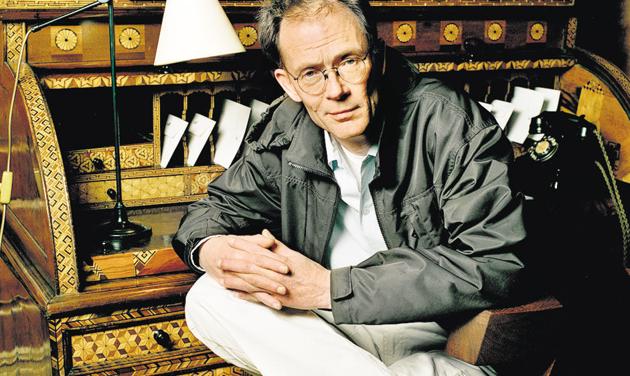
Place and time: William Gibson, 72, is an American-Canadian writer credited with pioneering the sci-fi genre, cyberpunk. Since the 2000s, he has moved closer to realist writing, about a near future in which no one knows who is in control.
Must reads: Burning Chrome, Neuromancer, The Difference Engine (co-authored with frequent collaborator, Bruce Sterling), Mona Lisa Overdrive.
Gibsonisms: “The future is already here — it’s just not very evenly distributed.”
“The sky above the port was the color of television, tuned to a dead channel.” (Neuromancer)
“History is a best-guess narrative about what happened and when.” (Pattern Recognition)