
 E-Paper



A purposeful life with Jay Shetty


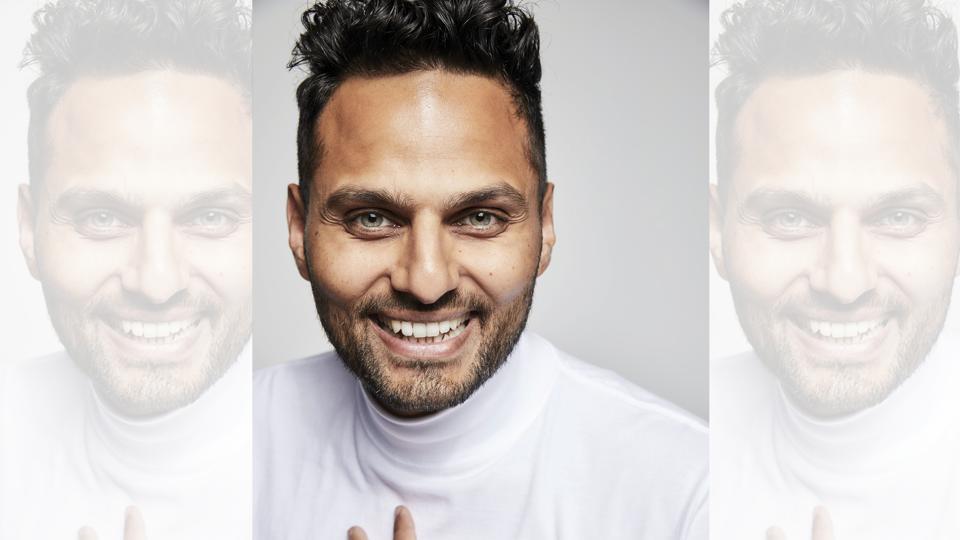
A monk at 22, a job seeker at 25 and now a corporate ‘guru’ at 33, the British-born has always had a very clear understanding of his goals at every stage of his life
Who goes from being a shaven-headed, saffron-robed monk in an out-of-the-way ashram in India to being noticed by Arianna Huffington and getting invited to host Huffpost Lifestyle in NYC? Jay Shetty, that’s who. A social media sensation and purveyor of viral wisdom.
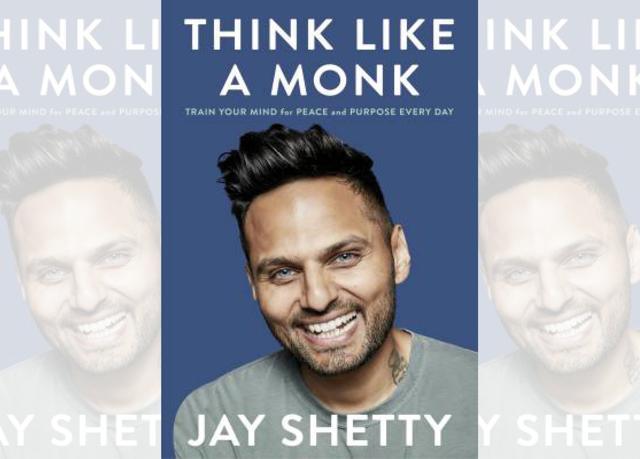
Jay’s first book, Think Like a Monk, released in the middle of the pandemic. In normal times, while he would have been on book tours and meeting ‘followers’, he had to stay put in Los Angeles, “taking precautions and trying to be as safe as possible”.
But thinking like a monk can be particularly useful in these times, when most people are feeling cut off and isolated, Jay says. “Loneliness has a negative connotation in our vocabulary. Monks and philosophers like Paul Tillich, however, prefer to describe it as solitude and focus on the strength of being alone. The monk mind helps to reconnect with yourself. That is crucial for finding your own peace.”
His other lesson that is useful for these times is that when people feel motivated to serve others in times of crisis, they can find purpose.
The wisdom quest
At 33, Jay Shetty is young to be a ‘guru’, even for the millennial. His journey in this realm began when he was even younger. At the age of 18 while he was still attending business school in London, Jay accompanied – albeit reluctantly – a friend to hear a monk give a talk.
“I had never met a monk before that. I knew people who were rich, beautiful, powerful, highly educated and accomplished. But after meeting Gauranga Das that day, I realised I had never met anyone who was truly happy in the way he was,” he says of his first turning point.
Jay felt the compulsion to learn more about the monk way and began to spend summer and Christmas vacations with Gauranga Das. “Meanwhile, I had begun to observe the lives of my friends. They seemingly had it all – the partner, the car, the home, the high-paying job. But in their moments of honesty and vulnerability they told me there was something missing. I contrasted that with what I saw in Gauranga Das and the other monks; they had a sense of joy, stillness. Gauranga Das had, in fact, been a topper at IIT and given it all up. I knew there was something to that path.”
So, at the age of 22, Jay moved to an ashram in India and took up monkhood. “It was incredibly difficult at first,” he remembers. “I was sleeping on the floor, had to wake up at 4 am, sweep, clean and fetch water. I didn’t have access to my rap and hip-hop or my Game Boy. I did, though, tell myself that if I really wanted to see if it worked, I would have to do it exactly how they did it. After a week, I didn’t miss anything. The ashram routine became deeply nourishing.”
Three years later, he would give it up and return to live with his parents in London, with no job prospects and a student loan to pay off. “The monk mindset allows you to understand the most authentic, real version of yourself,” Jay explains. “I wasn’t meant to be a monk. I wanted to share relevant, practical information and wisdom with as many people as possible.”
Monk ki baat
Joining the mainstream wasn’t easy. “It took me a long time to reconnect. I applied for corporate jobs and received 40 rejections.”
During this tough phase, Jay says, he used all the wisdom of the monk mind, testing the tools he had acquired during monkhood on himself. “Business consulting was my area and I joined a consulting company. There, I began to figure out how to share mindfulness in the corporate world.”
Isn’t the corporate world the very antithesis of the monk way? “True, you can end up competing around things you don’t really love or care about. The principle of dharma on which monk thinking is built translates to purpose. When you find your dharma, even in the corporate world, you realise you don’t need to compete or put others down to accomplish things. Service – as an attitude, not necessarily doing charity work, though that is also important – is another key component of thinking like a monk. Empathetic people connect and thrive. It’s a myth that you have to be negative or crude to get ahead.”
The other benefit of corporate workers embracing mindfulness is meditation. “It’s proven to tackle stress and pressure. That can definitely help you succeed in the corporate world,” Jay says.
Even as he was teaching corporate employees find purpose and beat stress, Jay wanted to reach a wider audience. He began to make videos carrying these messages. Ellyn Shook, chief leadership and HR officer at Accenture, where he then worked, showed some of Jay’s videos to Arianna Huffington during a Davos convention. Huffington had her team meet Jay and he was invited to host Huffpost Lifestyle. “It was what Malcolm Gladwell would describe as my ‘tipping point’,” Jay says.
He moved on from there to create his own programmes and launched the podcast series, On Purpose, last year. “I had the opportunity to connect with all these wonderful people offline and thought it would be great to share their journeys with everyone,” says Jay, whose Facebook page has over 27 million followers. On Purpose was the No. 1 podcast on Spotify in India, Jay tells us. “I am so grateful to the Indian audience and all my friends there who support me.”
Hrithik Roshan shared news of Jay’s book on his Insta page. “I feel the love from India. I visit every year and spend time at the ashram. It keeps me rooted. The moment I’m able to travel, I’m coming back 1,000 per cent,” he says.
Family first
Jay’s success, built on an astute combination of easy-to-consume wisdom, social media and technology, has not only brought him fame and popularity, it has also helped him make millions. Asked whether such affluence can co-exist with the monk way, Jay Shetty explains: the monk mindset is that nothing is intrinsically good or bad. It’s given meaning by how we use it – like a knife wielded by a violent man or in the hands of a surgeon.
“Social media is the same. Money, therefore, is a resource, an energy that can be harnessed for good.”
Also, he points out, he’s no longer a monk. “I have a wife and we want to have children. I should be able to serve and support my family. I’m saying, think like a monk, not necessarily live like a monk.”
Accompanying him on his journey is Radhi Devlukia Shetty, whom he married in 2016. An Instagram star in her own right, she’s a trained dietician and nutritionist and promotes healthy eating. Jay, who believes that emotional and spiritual motivations are the keys to real connections, says they met when he was without a job and had very little to offer her. “From that she was able to build a trusting relationship. She has an unbelievable energy. And if you aren’t following her on Insta, please do.”
Priya Bala is a senior lifestyle journalist and editor based in Bengaluru, and has edited several mainstream publications in the past.
From HT Brunch, November 1, 2020
Follow us on twitter.com/HTBrunch
Connect with us on facebook.com/hindustantimesbrunch


