E-Paper



Pakistan economic woes go from bad to worse before elections
The next government will face a balance of payments crisis and most likely go to the International Monetary Fund for yet another bailout, says an expert


Five months before national polls Pakistan’s government is struggling to fix its economy.
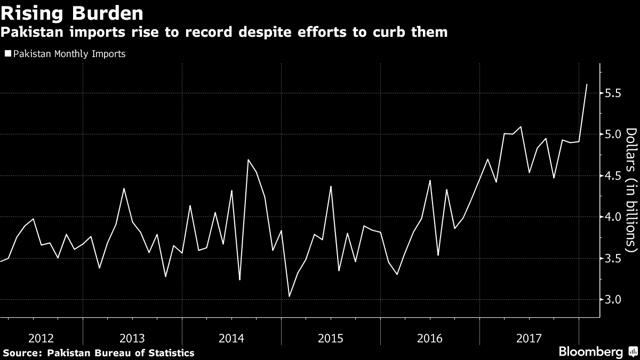
The South Asian nation of more than 200 million people devalued its currency in December and raised taxes in October to curb rising imports. Despite these moves both Pakistan’s current account and trade deficits are hitting records while foreign exchange reserves continue to fall.
Pakistan’s external sector indicators “signal a crisis and are going from bad to worse,” said Uzair Younus, a South Asia director at Washington-based consultancy Albright Stonebridge Group LLC. “With elections around the corner, the government will simply kick the can down the road. The next government will face a balance of payments crisis and most likely go to the International Monetary Fund for yet another bailout.”
Record Imports
The nation’s imports rose to a record last month despite the government increasing taxes on more than 700 items in October. With the tax on almost half those products reversed this month, the import bill remains under pressure. The nation’s economy is growing at 5.3% — the fastest pace in a decade — with import demand fuelled by China’s financing of power plants and road projects valued at more than $50 billion as part of Beijing’s flagship Belt and Road trade route.
Widening Deficit
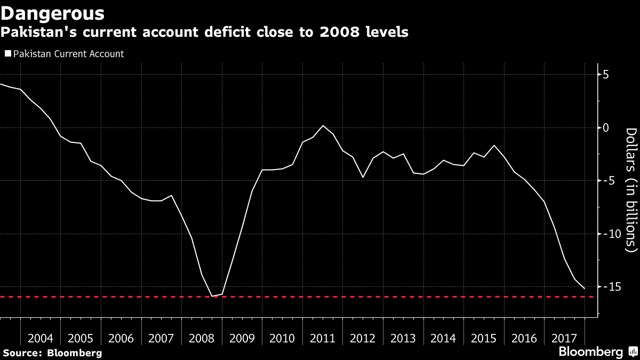
The current account deficit has continued to widen after a currency devaluation in December, putting further pressure on the rupee and pushing authorities to borrow more. The government raised $2.5 billion in November in an international debt sale. The current account gap reached 4.7% of gross domestic product in the seven months ending January, compared with 3.5% a year earlier, which is higher than annual forecast for 22 developing economies compiled by Moody’s Investors Service.
Dollar Reserves
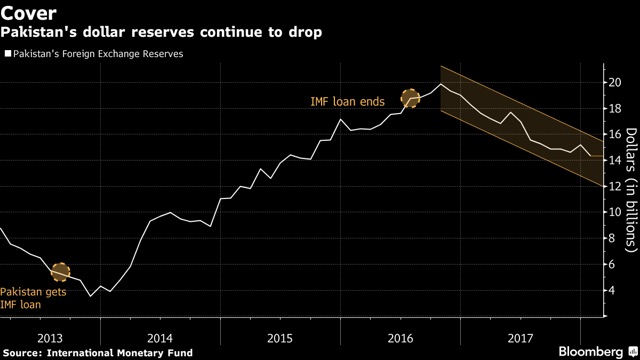
Pakistan’s foreign exchange reserves have continued to decline after the last IMF loan programme ended in September 2016. While the nation raised dollar-denominated debt in November to bolster reserves, outflows since then have almost wiped out that amount. Some economists are predicting the nation will need its 13th bailout since 1988 later this year to shore up its finances.
Rate Hike
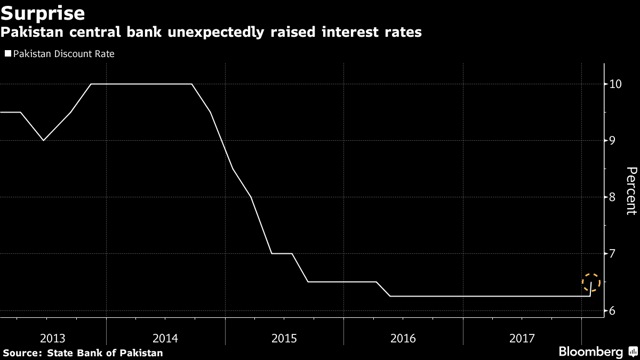
Pakistan’s central bank unexpectedly increased its interest rate for the first time in more than four years last month. State Bank of Pakistan Governor Tariq Bajwa said the regulator is “pre-empting signs of the economy overheating and trying to keep inflation under control.”
Rising Risk
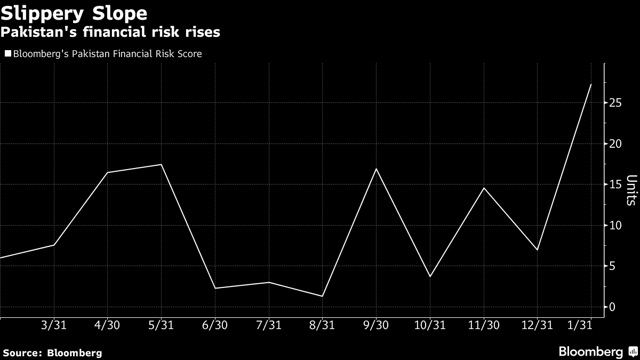
Pakistan’s financial risk in January rose the most since Bloomberg started compiling data in 2015. Pakistan’s benchmark stock index has dropped 18% since a peak in May last year with foreigners selling shares after the country was upgraded to emerging market status by MSCI Inc. Political turmoil following the ousting of former Prime Minister Nawaz Sharif in July spurred further drops.