Petrol prices in India are set to cross the all-time high level, with a litre of the transportation fuel selling at Rs83.97 in Delhi on Wednesday.
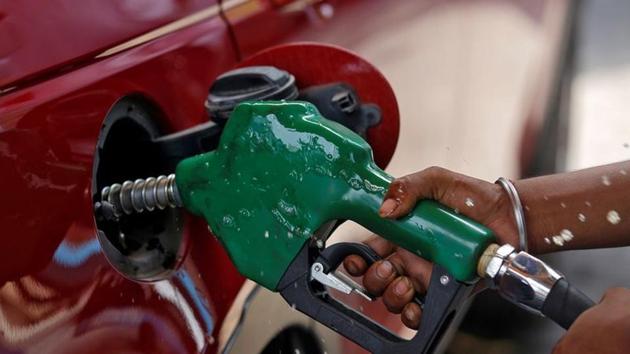
After holding steady for 29 days, the petrol price was increased by 26 paise per litre on Wednesday. The price of diesel was also increased by 25 paise per litre to be sold at ₹74.12 per litre in the national capital.
While the coronavirus pandemic has impacted global energy demand, with the vaccination underway, there has been a bounce in international crude oil prices. While Brent was trading at $53.86 per barrel, the West Texas Intermediate was at $50 a barrel at the time of writing this story. Every dollar per barrel increase in crude prices increases India’s oil import bill by Rs10,700 crore on an annualized basis.
“The oil companies have kept the retail prices a bit stable. The price has gone up a lot. There is no cushion,” said a senior government official requesting anonymity.
Petrol had reached an all-time high price of Rs84 per litre on 4 October 2018 in Delhi. The all-time high price of diesel in the national capital was Rs81.94 per litre on 30 July this year.
Transportation fuel prices in India have been on an upward trajectory. Retail prices of petrol and diesel in India track global prices of these auto fuels, not crude, although they are broadly linked to crude oil price trends. This has also added pressure on the government to cut taxes on fuel. On top of the refinery gate price of auto fuel, central and state taxes and dealers’ commission are added to arrive at the retail price.
{{/usCountry}}Transportation fuel prices in India have been on an upward trajectory. Retail prices of petrol and diesel in India track global prices of these auto fuels, not crude, although they are broadly linked to crude oil price trends. This has also added pressure on the government to cut taxes on fuel. On top of the refinery gate price of auto fuel, central and state taxes and dealers’ commission are added to arrive at the retail price.
{{/usCountry}}The Wednesday price hike comes in the backdrop of the 13th Organization of the Petroleum Exporting Countries (Opec)-plus decision on Tuesday for “adjustments to the production level for February and March 2021.”
The Opec-plus December’s decision was to increase the crude oil production by 500,000 barrels per day from January and gradually return the 2 mb/d to the global market.
“The Meeting acknowledged the need to gradually return 2 mb/d to the market, with the pace being determined according to market conditions. It reconfirmed the decision made at the 12th ONOMM (OPEC and non-OPEC Ministerial Meeting) to increase production by 0.5 mb/d starting in January 2021, and adjusting the production reduction from 7.7 mb/d to 7.2 mb/d,” Opec said in a statement.
The Opec + decision holds significance for India, as Opec accounts for around 40% of global production and 83% of India’s crude oil imports. A low international crude oil price regime had helped India, with India buying crude oil at an average price of $19 per barrel to fill its strategic crude oil reserves.
“It pointed out that rising infections, the return of stricter lockdown measures and growing uncertainties have resulted in a more fragile economic recovery that is expected to carry over into 2021. The Meeting recognized that market sentiment has been buoyed recently by vaccine programmes and improved asset markets, but underscored the need for caution due to prevailing weak demand and poor refining margins, the high stock overhang and other underlying uncertainties,” the Opec statement added.
India, the third largest oil importer globally is working to help state-owned oil refiners and private sector companies draw up a coordinated approach for sourcing crude oil as reported by Mint earlier. The first such calibrated strategy, involving public and private firms, may not only help save on oil import bills, but may also be able to counter China’s dominant global position as the world’s second largest oil importer that helps it land better terms for oil imports.
India is particularly vulnerable as any increase in global prices can affect its import bill, stoke inflation and increase its trade deficit. India spent $101.4 billion on crude oil imports in 2019-20 and $111.9 billion in 2018-19.
The cost of the Indian basket of crude, which comprises Oman, Dubai and Brent crude, averaged $56.43 and $69.88 per barrel in FY18 and FY19, respectively. It was $69.88 per barrel in FY 20. With the spread of the pandemic, the price fell to $19.90 in April, $30.60 in May, $40.63 in June, $43.35 in July, $44.19 a barrel in August and $41.35 a barrel in September respectively, according to data from the Petroleum Planning and Analysis Cell. The price was $51.95 a barrel on 4 January.
ENDS