
 E-Paper



DIIs sustained the market, FIIs are pulling it now | Number Theory
.
Updated on: Jun 28, 2025, 03:10:50 IST

 Prefer HTon Google
Share via


Copy link

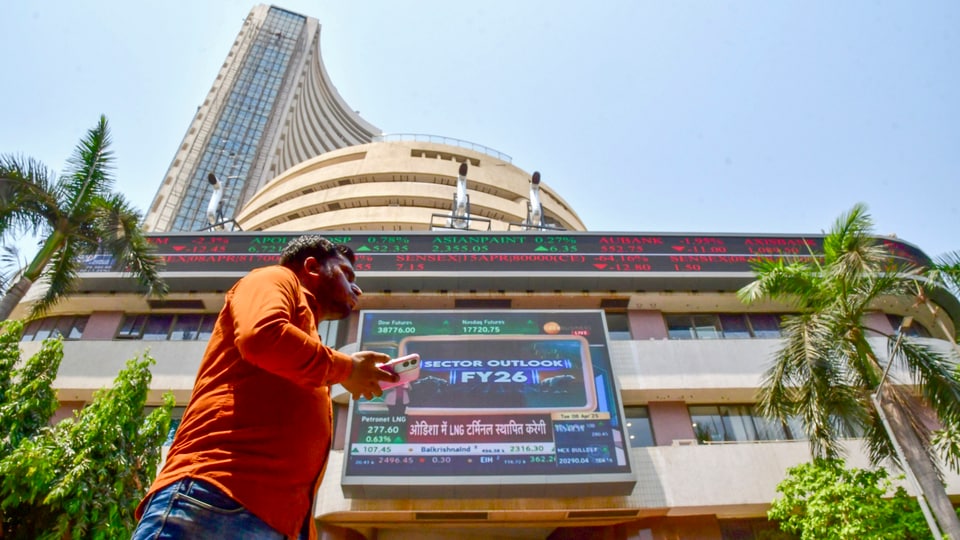
India’s benchmark stock index BSE Sensex closed at 84058.9 points on Friday. The Sensex has crossed the 84000-mark for the first time since October 1, 2024 and it is just 2% short of its all-time high of 85836.12 on September 26 2024. The Sensex is now up 7.2% on a year-to-date.
What explains this movement in the market? Foreign Institutional Investors (FIIs) coming in once again have generated the recent tailwinds. But it is the Domestic Institutional Investors (DIIs) which sustained the market when it was faced with FII exodus. Here is a more detailed take on what has happened.
FIIs turning net buyers again is what is driving the market
 FIIs turning net buyers again is what is driving the marketData as of June 26 shows that FIIs have now been net buyers for four months beginning March 2025 in Indian equity markets. They were net sellers from October 2024 to February 2025. DIIs remained net buyers throughout this period and had it not been for them, markets would have fallen even more. While DII buying sustained the markets, the recent rally (or revival) is clearly driven by FII buying. Most of the DII buying continues to be driven by money coming into mutual funds via systematic investment plans (household savings in other words). To be sure, despite turning net buyers in recent months, FII (net investment) has not reached the levels seen in September 2024.
- DIIs now have a bigger ownership of Indian markets than FIIsApart from promoters, FIIs and DIIs are the largest holders of NSE-listed firms. Historically, FIIs have held a lead over DIIs in ownership of these shares. But the gap between FII and DII ownership has been falling for the past few years. The tables have finally turned thanks to the recent sell-off by FIIs in the markets. DII ownership of NSE-listed firms stood marginally ahead of FII ownership (17.62% versus 17.2%) in the quarter ending March, the latest period for which this data is available. To be sure, it remains to be seen whether the recent rally in FII buying will put FIIs ahead of DIIs once again.
- FIIs are not binge buying anymoreIndia has often been described as a market where FIIs are more bullish about long-term gains despite the impression that short-term valuations border on the exuberant. To be sure, this assessment is based on factors such as India being the fastest-growing major economy in the world, the country’s significant demographic dividend, and equity market gains that accrue from the formalisation of the economy. An HT analysis of equity market data shows that there is more to the recent surge in FII buying than this generic sentiment about India. The value of equities held by FIIs in the Indian market stands at ₹71.52 lakh crore, as of June 15, 2025, according to data from NSDL. However, this is unevenly distributed across sectors. Companies categorised under ‘financial services’ by BSE stand way ahead of others, accounting for as much as 30% of FII holdings. The IT sector and oil, gas and consumable fuels follows, accounting for around 8% and 7% of FII holdings. However, data on net investments show that except for health care, which accounts for around 7% of FII holdings, most sectors that foreign investors have invested in traditionally saw much higher FII sell-offs since September 2024. Meanwhile, sectors such as chemicals (accounting for 1.8% of FII holdings) and textiles (0.3%), where FII holdings were relatively low, saw an increase in investments -- in the case of chemicals, FII investments increased by 6.8% and in textiles, it increased by 2.4%. This pattern suggests that overseas investors are hunting for undervalued pockets in the Indian market.




Track live Stock Market Today updates and check your NSE IPO Allotment Status Today. Stay informed with the latest business news like N Chandrasekaran, petrol and diesel prices, gold and silver rates, income tax updates, and major economic developments across India and globally.


