E-Paper



Google Pay’s smart AI pivot, music subscriptions, and LG’s absurdity
Beyond the regular noise, a closer look at personal technology. 30 July, 2026.

 Prefer HTon Google


Opening thoughts. Microsoft had to step in, and that itself was induction enough that LG has gone too far with the whole adware saga on Windows PCs. Sometime back, users started reporting that LG was generating pop-up ads on Windows PCs to download other apps such as McAfee. “Thanks again for bringing this to our attention. We’ve connected with the team at LG and as an immediate next step, they have agreed to disable the McAfee pop-up from their app. We appreciate LG working with us toward a shared goal of a better experience for our mutual customers. We will keep improving here with our ecosystem partners,” wrote Pavan Davuluri in a post on X.
Basically, if someone who had recently purchased an LG monitor connected it to their Windows computer, the display would download a utility app to control features and functionality. That app was being used to deliver these ads. It is not clear if LG has temporarily disabled these, or it’s a permanent change. Now that Microsoft isn’t at all impressed. Good to see Microsoft stepping in after users noticed this—crucial for the overall health and behaviour of third-party hardware on Windows.
EDITOR’S MARGIN
A CLEAR VISION
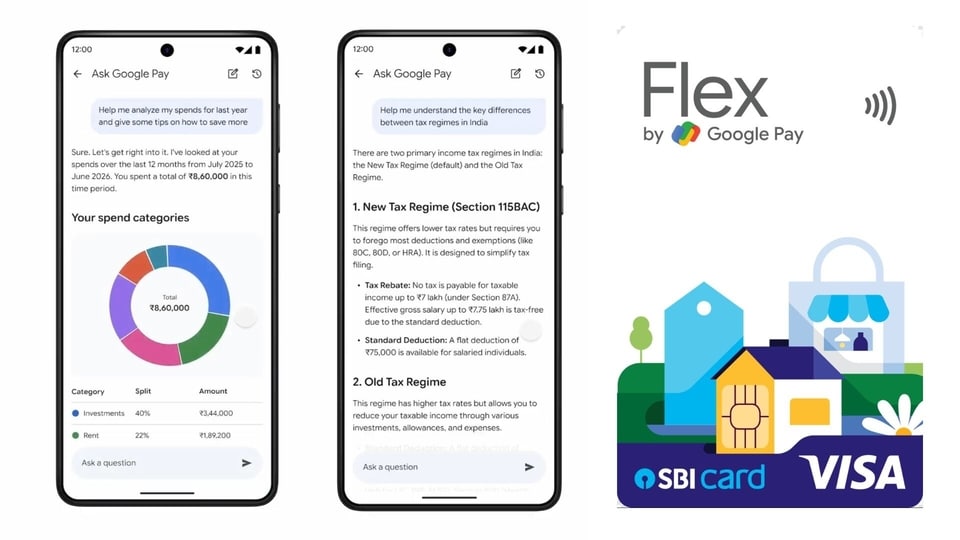
I’ve said it many a times before, and I’ve no hesitation in repeating it. That Google is the most sensible AI company, by far. Illustration after real-world illustration of deploying Gemini and AI tools for very specific use-cases that help users in particular ways. And Google does all that without the loud chest thumping that’s slowly becoming the hallmark of many AI companies. Yet another example this week, with Gemini arriving in the Google Pay app in India. That makes it the very first payments platform to implement AI on this scale, and with this much relevance.
The feature is called ‘Ask Google Pay’, and as Sharath Bulusu, Senior Director - Product Management, Google Pay, explained in an exclusive conversation with HT, the idea is to balance retrospective queries (such as analysing past spending patterns) and forward-looking financial education (for instance, retirement planning guidance or understanding compounding interest). A few things stood out for me.
- Integrates Gemini models directly into Google Pay, allowing users to analyse their finances without sharing sensitive transaction data with external, general-purpose AI platforms. Personalising AI with transaction history is strictly opt-in, with toggles available in the app’s settings.
- Instead of sending Google Pay data to the external Gemini model, the model is brought into Google Pay to make it not just convenient for users, but also safer. It is multimodal, in the sense that it uses text, images, and charts to explain financial concepts.
- Available to all Google Pay users in India, for free’ there is no need for a premium subscription.
Also read: Bringing Gemini AI to a world of money: Google Pay’s Sharath Bulusu
There is also a smart credit card play, at a time when most banks are on a devaluation spree as the cost of delivering high rewards (that was important to lure users in, to sign up for the cards in the first place; unsustainable costs became unmanageable). In December, Google made a first move in India’s often complicated credit card ecosystem, wherein users demand high rewards. At the time, the Google Pay Flex credit card journey began with Axis Bank, with a lifetime free credit card issued on the RuPay network. The co-branded partnership now expands to bring SBI Cards into the fold. The Google Pay Flex card that will be issued by SBI Cards will be issued on the RuPay and Visa networks.
- There will be parity between the Google Pay Flex credit cards issued by Axis Bank and SBI Cards in terms of the rewards—one star is earned for every cumulative ₹500 spend on the card, with certain tiers of higher rewards on higher spends in a cycle, and each star is worth a rupee when redeemed. It is clear that Google, Axis Bank and SBI Cards aren’t chasing headline rewards, though they don’t rule out a more rewarding card proposition at some point in the future for the more discerning users.
- Moderation is a core tenet of the Google Pay Flex credit cards will keep it immune for longer, than many other credit cards in the market at this time that are being hammered with reduced reward earn or redemption rates, or further eliminating categories on which rewards can be earned. This week, Axis Bank has removed gift cards as a reward earning category across its credit cards. “There’s no card in the world for which a bank can afford to give away 10% in rewards all the time,” Bulusu rightly points out.
- Google is extending a 50% discount benefit on the Flex credit card for Google One AI Plus plans—the Google AI Plus (400GB) that costs ₹4,000 annually, and the Google AI Plus plan (2TB) which costs ₹6,500 per year, will be eligible for the outright discount.
SECOND THOUGHTS
LISTENING TO MUSIC
India’s paid music subscriptions could be around 28–30 million by the 2028, as per estimates of the How India listens, streams and pays for music report by EY and the Indian Music Industry (IMI). This will be on the back of focus on monetisation and delivering premium experiences to subscribers. This will be sharp upward trajectory, from an estimated 15 million paid music streaming subscriptions in 2025.
There are some key findings I’d like to draw your attention to. The report mentions a survey size of 15,373 smartphone users conducted during March and April 2026, supplemented by psychometric research involving more than 2,200 consumers and discussions with industry stakeholders. To that point, they say 96% of smartphone owners regularly listen to music, and of that demographic, more than 80% listened for over an hour a day. There seems to be some acceptance towards paying for music streaming as well, with 38% already having walked down the paid subscription route, while 86% have paid for video.
“Art requires more than just inspiration; it requires economic oxygen. To take Indian music global and discover our next generation of talent, we must transition from being a passive consumer market into active patron’s market. Paying for an audio digital subscription is a direct investment by the fan to show support to their favourite performers and also helps in preserving and exporting our rich cultural heritage,” says Blaise Fernandes, President, Indian Music Industry (IMI).
The report notes that 60% of smartphone users listened to music on DSPs (digital service providers), compared to 32% on YouTube. As many as 61% of the respondents are willing to pay “if all free options ended and the price was reasonable”. Free alternatives and limited perceived differentiation between free and premium services remain key barriers to subscription growth.
“The report highlights an opportunity for the industry to further strengthen subscription adoption through improved consumer awareness, differentiated offerings and innovation that responds to evolving listener preferences,” says Ashish Pherwani, Partner and Leader, Media & Entertainment Sector, EY India. There are reasons why a consumer may be okay paying for subscription. It is worth noting that consumers who pay for music streaming, do find value in ad-free experiences as well as higher audio quality.