
 E-Paper



‘Indian economy cannot progress as long as…’: Rahul Gandhi hits out at Centre
India faces significant economic challenges with high inflation, a depreciating rupee, and record unemployment.

 Prefer HTon Google


Leader of Opposition in the Lok Sabha, Rahul Gandhi on Sunday said that the India's Gross Domestic Product (GDP) growth rate has fallen to its lowest in two years at 5.4 percent.
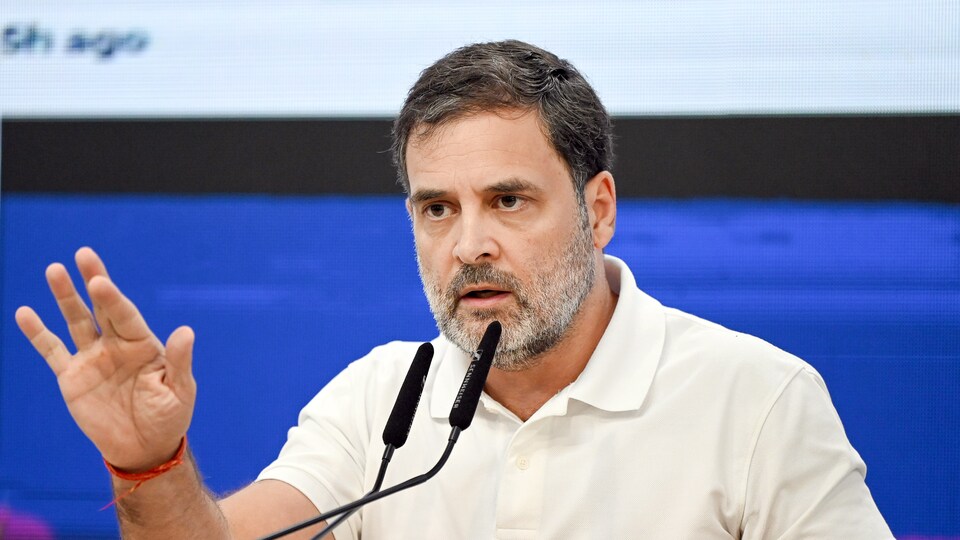
He said that the Indian economy cannot progress if its benefits are limited to a few billionaires while farmers, labourers, the middle class, and the poor continue to face economic struggles.
“India's GDP growth rate has fallen to its lowest in two years at 5.4%. The thing is clear - the Indian economy cannot progress as long as its benefits are accruing only to a handful of billionaires and the farmers, labourers, middle class and the poor are struggling with various economic problems,” the Congress leader wrote on X (formerly Twitter).
He mentioned that retail inflation has risen to 6.21 percent with potato and onion prices increasing by nearly 50 percent and the rupee has fallen to 84.50.
“Take a look at these facts, see how worrying the situation is: Retail inflation has risen to a 14-month high of 6.21%. The price of potatoes and onions has increased by almost 50% this year compared to October last year. Rupee has reached its lowest level of 84.50. Unemployment has already broken the record of 45 years,” Rahul added.
Rahul Gandhi also alleged that in the last five years, the income of labourers, employees and small businessmen has either stagnated or decreased significantly.
He also claimed that demand has declined due to reduced income, with the share of cars priced below ₹10 lakh dropping to less than 50 percent from 80 percent in 2018-19.
“The share of affordable homes in total sales has dropped to around 22% from 38% last year. The demand for FMCG products is already declining. The share of corporate tax has decreased by 7% in the last 10 years, while income tax has increased by 11%. Due to demonetisation and GST, the share of manufacturing in the economy has fallen to just 13%, the lowest in 50 years. In such a situation, how will new job opportunities be created?” asked Rahul Gandhi
“That is why a new thinking is needed for India's economy and a new deal for businesses is an important part of it. Everyone will get an equal opportunity to move forward, only then will the wheel of our economy move forward,” the Congress leader added.


