
 E-Paper



Market cap of BSE firms hits $3 trillion as stocks soar
In rupee terms, India’s current market value is pegged at ₹218.05 lakh crore, raising investors’ wealth by ₹30.01 lakh crore or $42.01 billion this year, despite pandemic worries and localized curbs affecting sentiments.


India’s stock market capitalization hit $3 trillion on Friday, fuelled by a rally in small and mid-cap stocks on the BSE.
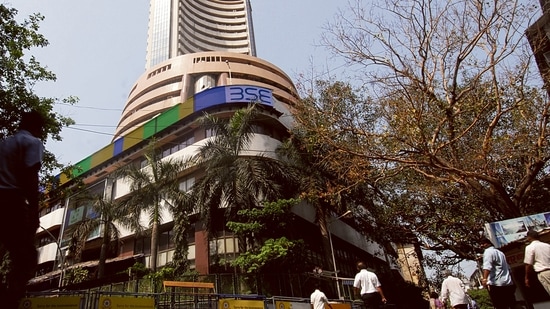
This comes even as the BSE Sensex remains 4% below its February peak, pulled down by large-cap stocks that make the benchmark index.
In rupee terms, India’s current market value is pegged at ₹218.05 lakh crore, raising investors’ wealth by ₹30.01 lakh crore or $42.01 billion this year, despite pandemic worries and localized curbs affecting sentiments. In May itself, market cap of BSE firms swelled by ₹11.03 lakh crore or $19.62 billion.
After two days of lacklustre trading following weak global equities, markets rallied on Friday, encouraged by easing Covid concerns and a strengthening rupee. The Sensex closed 975.62 points or 1.97% higher at 50,540.48, while the Nifty ended 269.25 points or 1.81% higher at 15,175.30. At closing, the BSE had a market capitalization of $2.99 trillion.
The only other countries that have a stock market capitalization of more than $3 trillion are the US, China, Hong Kong, Japan, UK, France, and Canada.
The record comes at a time when foreign institutional investors (FIIs) have been dumping Indian equities. Since March 23, FIIs have sold Indian shares worth nearly $2.48 billion. However, domestic institutional investors, including mutual funds and insurance companies, continue to invest, thanks to abundant liquidity and optimism about mid- and small-cap stocks.
According to analysts, the Nifty and the Sensex have been consolidating since mid-January, driving liquidity into midcap and small-cap segments. Also, with most large-caps fairly valued, value investors started moving down the market cap pyramid. From their 52-week lows, BSE MidCap has advanced 92%, BSE Smallcap 121% and BSE 500 75%.
“As Covid cases fell below the three-lakh mark for the fifth day in a row since mid-April, helped by the extended lockdowns by major states, sentiments have turned buoyant. Hopes have accelerated that soon restrictions/curbs would be eased once cases decline further. Visibility on the economic recovery front improved as industrial activities largely continued even during the lockdown, and now, with restrictions likely to ease, consumer demand is expected to make a comeback. Thus, investors are heading more for mid-cap stocks as growing risk appetite, and cheaper valuations of these companies compared to large-cap peers have revived their popularity,” Siddharth Khemka, head of retail research, Motilal Oswal Financial Services, said.
The March quarter performance of good mid-cap and small-cap firms were also way ahead of Street estimates despite rising input costs, mostly due to higher revenues and various cost control measures. Analysts expect earnings to support the market valuation further while keeping an eye on Covid-19 cases.
“India’s valuation premium with respect to MSCI emerging markets has remained stable at 40-45% over the last four months, indicating that the rally has been a global one,” Tata Mutual Fund said.


