E-Paper



₹5L insurance for stressed bank depositors in 90 days
Currently, the Deposit Insurance and Credit Guarantee Corporation (DICGC) guarantees each depositor a maximum of ₹5 lakh only (including both principal and interest amount) in case of liquidation of a bank.

 Prefer HTon Google


The Cabinet on Wednesday set a 90-day time limit to provide up to ₹5 lakh to each account holder of a bank if it fails, and decided to make the Limited Liability Partnership (LLP) Act more business-friendly by decriminalising its various provisions and expanding the definition of small LLPs, finance minister Nirmala Sitharaman said. Those with less than ₹5 lakh in the bank will get all their money back; those with more than ₹5 lakh will receive ₹5 lakh.
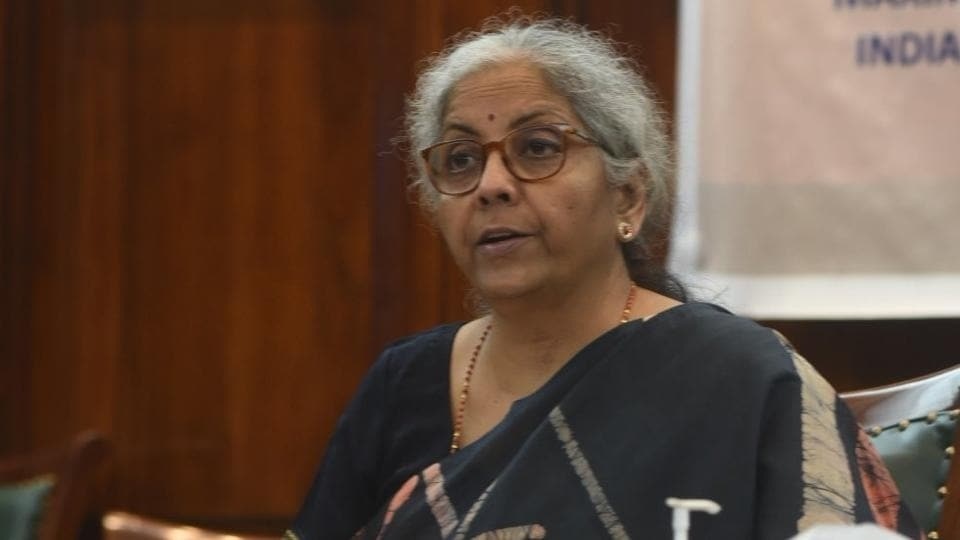
Currently, the Deposit Insurance and Credit Guarantee Corporation (DICGC) guarantees each depositor a maximum of ₹5 lakh only (including both principal and interest amount) in case of liquidation of a bank; the amount was raised from ₹1 lakh to ₹5 lakh last year to provide relief to depositors of stressed Punjab and Maharashtra Co-operative (PMC) Bank, Yes Bank and Lakshmi Vilas Bank.The troubles in PMC left depositors, many with several lakhs in the bank, in the lurch.

So far, no time limit was fixed to complete this process and the Cabinet decision will amend the existing law to define the timeline. The ₹5 lakh cap will cover 98.3% of accounts and almost 51% of deposit value.
Explaining the Cabinet’s decision, Sitharaman said the move to fix a maximum 90-day time limit is to ensure depositors that they would not have to wait endlessly for their insured amount in case a stressed bank comes under moratorium.
“Normally, at least proven history says, 8-10 years it takes... only after the complete liquidation... But now, what we are saying is even if there is a moratorium on a bank, which means everything is frozen, depositors are not able to take their money out of their accounts. At that time, this [proposed] measure will set in... What it actually means is, first 45 days will go for the bank which is now in stress to collect all their accounts where claims have to be made, and then it will be given to this insurance company [DICGC}, which in real time will check it all and nearer the 90th day you will get the money,” she said.
She said the provision will be applicable to all bank deposits -- savings, fixed deposit, current accounts and recurring deposit – and cover all commercial or cooperative banks whether they are private enterprises or public sector financial institutions. Local area banks, regional rural banks, cooperative banks, small finance banks , payment banks, and local branches of foreign banks are covered under the legal framework of credit guarantee, she added.
The Bill to amend existing law is expected to be introduced in the Monsoon Session of Parliament, she said.
In her Union Budget speech on February 1, Sitharaman had said: “I shall be moving amendments to the DICGC Act, 1961, in this session itself to streamline the provisions, so that if a bank is temporarily unable to fulfil its obligations, the depositors of such a bank can get easy and time-bound access to their deposits to the extent of the deposit insurance cover. This would help depositors of banks that are currently under stress.”
Elaborating on the other decision of the Cabinet that simplified regulatory provisions for LLPs, including decriminalising a dozen of offences, she said the amendment in the LLP Act is on the lines of recent reforms brought in the Companies Act to foster ease of doing business.
This is the first time that the LLP Act is being changed in sync with changes made in the Companies Act, 2013, that reduced compliance burdens for companies. “LLPs are more popular amongst start-ups,” she said.
“So, a total of 12 offences are to be decriminalised for LLPs. Three sections are [to be] totally omitted,” she added. Compoundable offences are those that can be settled by paying certain amount of money, while criminal offence may invite jail terms.
Sitharaman said the government will also redefine small LLPs. For small LLPs, contribution limit by partners has been enhanced from ₹25 lakh to ₹5 crore, and their turnover limits have been raised from ₹40 lakh to ₹50 crore, she said.
In her Budget speech on February 1, Sitharaman said, “The decriminalising of the procedural and technical compoundable offences under the Companies Act, 2013, is now complete. I now propose to next take up decriminalisation of the Limited Liability Partnership (LLP) Act, 2008.”
Abhishek A Rastogi, partner at Khaitan & Co, who is arguing in Supreme Court for decriminalisation of statutes, said: “Decriminalisation of these acts would provide lot of sense of security to small businesses and the authorities would follow the procedure under Criminal Procedure Code to invoke arrest provisions only in limited cases.”
Commenting on the Cabinet’s decision to set a 90-day timeline for insured amount of a stressed bank’s depositors, Deepak Thakur, partner at law firm L&L Partners,said: “This increase is a welcome step in a right direction especially from the perspective of small and marginal account holders. However, it would not provide adequate protection to middle class, who forms the significant stakeholder of the Indian banking system.”