E-Paper



Car value depreciation: Understanding the economics and ways to minimise
If you are a car owner or going to buy one soon, consider this: a car is an asset, but a depreciating one.

 Prefer HTon Google


In a country like India, a car is often a dream machine for many, while for some it is a necessity. However, be it an aspirational product or a necessity, one universal truth for any car is that the moment it rolls out of the showroom, the value of the car is decreased and the depreciation continues. If you are a car owner or going to buy one soon, consider this: a car is an asset, but a depreciating one. To simplify, an asset is a thing that holds or increases its monetary value over time. However, a car starts losing its monetary value once it rolls out of the showroom.
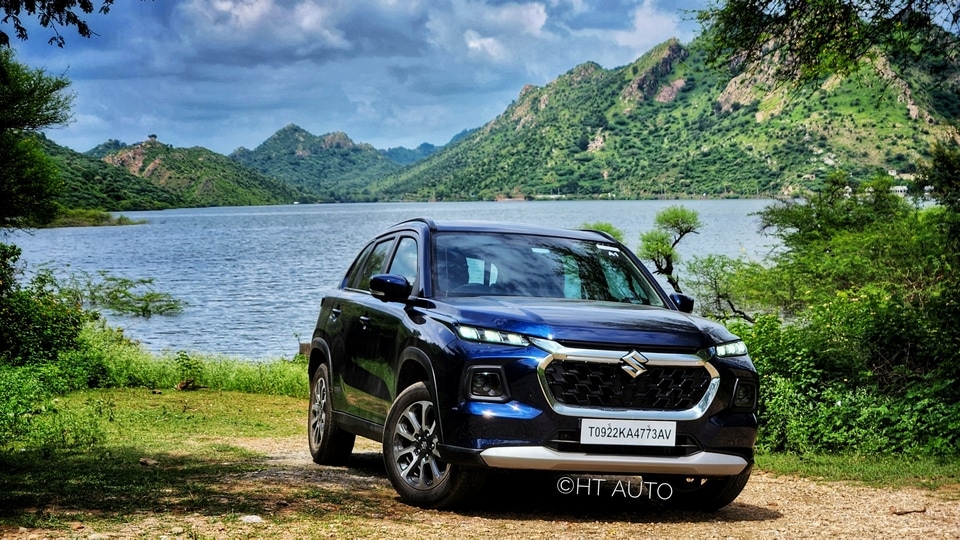
In this article, we will break down the economics behind a car's value depreciation and everything the buyers and owners should know about it.
Also Read: Maruti Suzuki Brezza facelift: Price, variants, features, colours & more
Car value depreciation: What IRDAI says
The Insurance Regulatory and Development Authority of India (IRDAI) has set the car depreciation rate, which is used for car insurance purposes in India. As per the IRDAI guidelines, a car loses approximately 15% of its original value in the very first year of ownership, while a five-year-old car can depreciate up to 50% of its original value.
| IRDAI car value depreciation rate chart | |
|---|---|
| Car age | Depreciation rate |
| Up to 6 months | 5% |
| 6 months-1 year | 15% |
| 1-2 years | 20% |
| 2-3 years | 30% |
| 3-4 years | 40% |
| 4-5 years | 50% |
The IRDAI car value depreciation rate slabs determine the car's value over the years. These rates are used to calculate the Insured Declared Value (IDV) of the car, which is the maximum sum insured against the vehicle under an insurance policy. The IDV also reflects the car’s current market value, while also serving as the compensation amount in case of total loss or theft of the vehicle.
This means that if you are buying a car priced at ₹10 lakh (ex-showroom), after one year, with the minimum value depreciation rated at 15%, it will be valued at ₹8.50 lakh, while it will be reduced to ₹8 lakh at the end of the second year of ownership.
In a nutshell, the IRDAI slabs reveal that car value depreciation is actually a loss for the owner, as the value of the vehicle is reduced over time, resulting in lower claim payout from the insurance company as well as reduced payout while reselling it.
Car value depreciation: What Income Tax Act says
According to the Income Tax Act, 196, car value depreciation is considered a loss. The IT Act allows taxpayers to claim the value depreciation as an expense, reducing their taxable income. Unlike the IRDAI slabs, the IT Act considers the 15% annual value depreciation, calculated on the Written Down Value (WDV) method. The depreciation is applied on the car’s reduced value after adjusting for the depreciation claimed in the previous assessment year.
This means, according to the IT Act, a ₹10 lakh (ex-showroom) car, at the end of the first year of ownership, will be valued at ₹8.50 lakh, while at the end of the second year of ownership, the value will be decreased to ₹722,500, applying the 15% WDV method.
However, this depreciation can be claimed only by business owners who use their car for business purposes. However, according to the IT Act, if a vehicle is used for both personal and work purposes, only the proportionate expense for business use can be claimed. If the owner is a salaried individual, the depreciation can’t be claimed.
Why a car's value depreciate?
A car's value depreciates due to multiple reasons.
Initial depreciation
It's a hard truth that the moment a car gets registered to the buyer's name and driven out of the showroom, its value starts decreasing. This is because the brand new car immediately becomes a used one, affecting its resale value, regardless of the distance driven.
Wear and tear
With age, the car gets wear and tear, impacting its condition and performance, which results in value depreciation. The degradation of components like colour, engine, tyres, brakes, and interior materials contributes to a decline in the car’s value. Additionally, mechanical or electrical issues, along with scratches and dents, also adversely impact a car’s value.
Odometer reading
A car's odometer reading directly impacts its value. The higher the odometer reading, the lower the value, as the higher number indicates greater wear and tear of the critical components.
Number of owners
The fewer the number of previous owners, the better a car holds its value. A first-hand car always holds better value than a second- or third-hand car.
OEM's exit
If the manufacturer of a vehicle exits the market, the value of the car declines. For example, Ford, Fiat, Mitsubishi, and Chevrolet cars in the Indian market have witnessed their value decrease significantly as these brands have exited the country. This is due to the lack of spare parts availability for the cars.
Model discontinuation
Discontinuation of a model also impacts the value. For example, Hyundai Santro, despite once being a highly popular car in India, now has less value in the market, as the OEM has discontinued this model.
Technology advancement:
The newer cars come with better technology and features, while the older models miss out on those, which makes the older vehicles less desirable.
Market trend
Market trends also influence a car's value. For example, the small hatchbacks and sedans in the Indian market have less value than SUVs. Hence, if you are buying or owning a small hatchback or a sedan, it is losing value faster than an SUV.
How to minimise car value depreciation
Be sure about one thing: You can not stop value depreciation, no matter how advanced or luxurious a car is when you are purchasing it. However, by adopting a few measures, you can minimise the value depreciation.
Opting for a fuel-efficient model from a trustworthy and popular car brand could help you with this. Always ensure your car is well maintained and serviced on time. Keep records, and fix the damage as soon as possible to avoid greater wear and tear.