
 E-Paper



NASA's space technology can charge electric vehicles in 5 minutes
It will be necessary for charging systems to deliver current at 1,400 amps in order to meet the industry target of cutting the charging time for electric vehicles to five minutes. However, 1,400 amp charging systems will produce a lot more heat than present systems do.

 Prefer HTon Google


The National Aeronautics and Space Administration (Nasa) claims to have developed a new technology that will make the slow electric vehicle charging process much faster. A new technology funded by it for future space missions may charge an electric car in just five minutes on Earth, and help e-vehicles get traction in the market, the US space agency said.
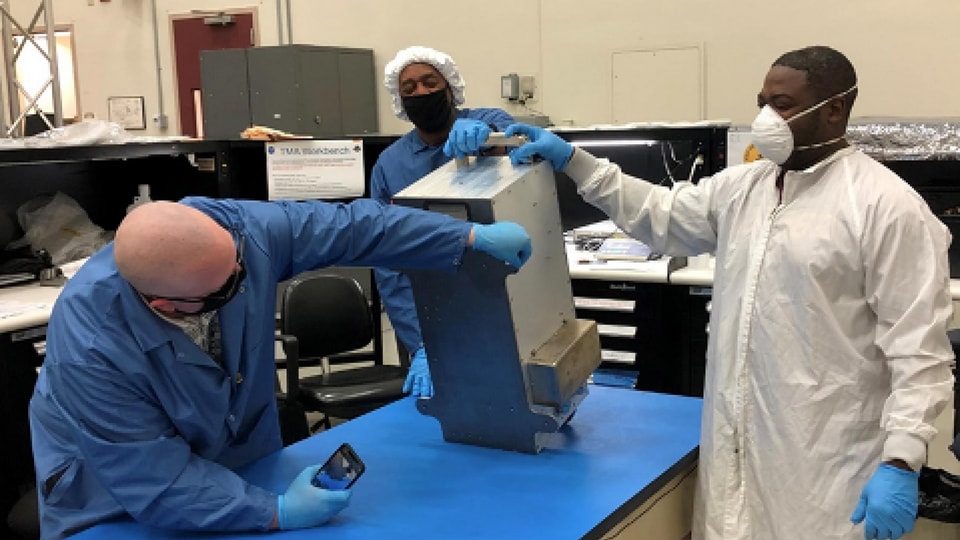
The Flow Boiling and Condensation Experiment (FBCE) technology was created by a NASA team working under Purdue University Professor Issam Mudavar. It utilises a double-stage Element Flow and Heat Transfer Experiment in the Microgravity Environment on the International Space Station (ISS).
Additionally, NASA stated in the announcement that the ISS received this heat management equipment in August 2021. Early in 2022, it started disseminating information on microgravity flow boiling.
In comparison to other methods, the novel ‘subcooled flow boiling’ technology significantly increases the efficiency of heat transmission and might be utilised to regulate the temperatures of future space systems.
Currently, charging periods range greatly, from 20 minutes at a station next to a road to hours at a home charger. People who are thinking about owning an electric vehicle have expressed big concerns about long charging periods and outlet locations.
It will be necessary for charging systems to deliver current at 1,400 amps in order to meet the industry target of cutting the charging time for electric vehicles to five minutes. Modern chargers can only deliver currents of up to 520 amperes, while the majority of consumer chargers support currents of little more than 150 amperes.
However, 1,400 amp charging systems will produce a lot more heat than present systems do, necessitating more sophisticated temperature management techniques.
Nasa asserted that it had used the FBCE principles to improve the way electric vehicle charging works. Dielectric liquid coolant is pushed through the charging cable for EV charging, capturing the heat produced by the conductor that carries the energy. A subcooled flow boiling enabled the element to extract up to 24.22 kW of heat. Nasa believes that this charging system can deliver up to 2,400 amps of power.
(With inputs from PTI)


