
 E-Paper



700,000 seized liquor bottles, 29,000 kg drugs lying at Delhi police stations
According to a document seen by HT, there are at least 700,000 liquor bottles and around 29,000 kilograms of different varieties of drugs at the lockers of around 168 police stations. The market value of the drugs, going by their selling price in the international markets, could be well over thousands of crores.

 Prefer HTon Google


A recent stocktaking operation by Delhi Police of confiscated items lying at locker rooms of police stations across the Capital showed up a staggering consignment of liquor bottles and drugs they had seized in different cases over a period of time.
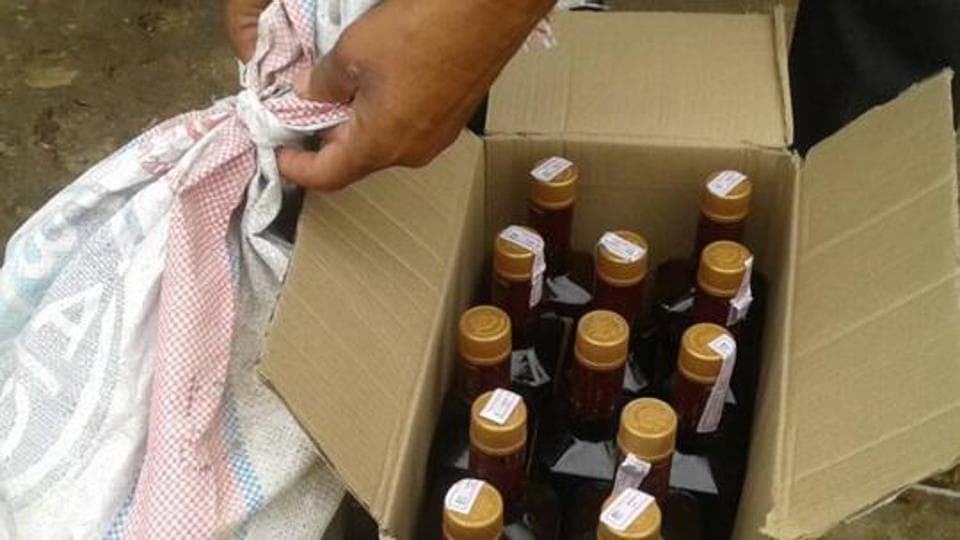
According to a document seen by HT, there are at least 700,000 liquor bottles and around 29,000 kilograms of different varieties of drugs at the lockers of around 168 police stations. The market value of the drugs, going by their selling price in the international markets, could be well over thousands of crores.
The drive to take stock of the items was undertaken last month after all police stations were told to return eligible case properties lying for years to its rightful owners after permission from the courts.
All case properties -- it could be a crime weapon; an item reported stolen but retrieved by police, or seized stuff such as liquor and drugs -- are kept in the locker rooms (called the malkhana) of police stations.
The record of each item -- be a pouch of marijuana or a small bottle of liquor -- is maintained and monitored by security guards round-the-clock.
According to a mid-level Delhi police officer, during the exercise, police noticed that every station had a large seizure of alcohol bottles and drugs.
“The total number of bottles was counted at 734,887. There were exactly 29068.16 kilogrammes of drugs. From expensive Indian Manufactured Foreign Liquor to local stuff, the liquor bottles were of different types,” the officer said, adding they will check the status of the cases and destroy the bottles in accordance with the law.
Police stations under the southwest police district, spreading from Vasant Vihar in the south to Kapashera in the west, had the largest number of bottles at 110,067. The New Delhi police district, which includes high-security areas such as Chanakyapuri, Connaught Place, Tughlaq Road and Mandir Marg, had the least at 6,135.
Police are allowed to destroy evidence only after the court’s permission. Liquor bottles have to destroyed in the presence of state excise officials. “Everything is documented. We are accountable for even a small bottle until it is destroyed,” the officer said.
The reason for such a large collection of liquor bottles, police said, is because of their focus on curbing alcohol smuggling and preventing drinking in public. Drinking in a public space (barring bars or those with a liquor licence) is an offence. This year, police registered 3,800 cases under the Excise Act and arrested around 9,400 persons.
DRUGS
The bulk of the drugs were smuggled from abroad and were caught by different units and police stations.
According to the United Nations Office on Drugs and Crime, one kilo of heroin is worth around Rs40 lakh at the point of sale (where the contraband in raw form is produced and processed). The consignment passes through six or seven channels to reach India. Dealers bear 30%-40% illicit value addition over the actual rate at each channel. So, when the contraband reaches India, it costs between Rs2 and Rs3 crore per kilo, depending on its quality, according to a senior crime branch officer, who did not wish to be named.
The records show the police stations have over 29,000 kgs of drugs, of which the most common is marijuana and heroin. There are around 15,086 kgs of marijuana and 2,042 kgs of heroin. A bulk of these two items are stored at the special cell police station. Other drugs are cocaine (around 4 kg), hashish (around 1,000 kg). There are also packets of ephedrine, methaqualone and opium among others.
“We have informed the courts about the cases in which the drugs could be disposed of. According to the law, it has to be done in coordination with the Narcotics Control Bureau, whose officers are present when the drugs are burnt in the open. The whole operation is recorded and kept as a record,” said a second police officer.
CASE PROPERTY RETURNED
While the liquor and drugs are destroyed, many case properties were returned to complainants as part of a drive launched two months ago.
A report prepared by the crime branch shows that in the last two months, police returned 472 cell phones, 4356 vehicles, 148 autorickshaws and around 5kgs of gold. These items belonged to 6,478 complainants whose cases were solved.
LN Rao, who retired as a deputy commissioner of Delhi Police in 2015 said,” It is good the senior officers are taking stock of items in the malkhana and clearing them. Many a time, they remain for decades. The malkhanas are full of such items. Drugs and liquor bottles are common.”


