Delhi chief minister Arvind Kejriwal on Wednesday asked the state development department to conduct a cost-benefit analysis of a technology developed by Indian Agriculture Research Institute (IARI) scientists for decomposition of crop stubble and provide an alternative to the practice of residue burning.
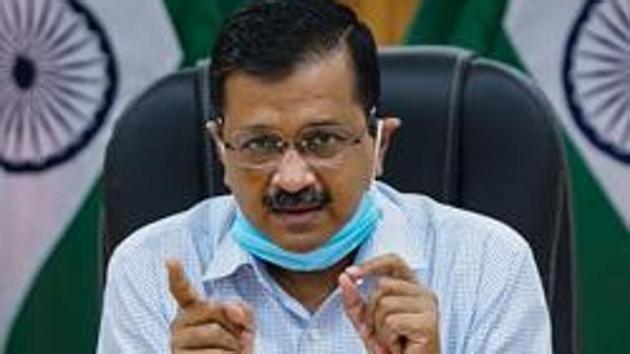
Kejriwal directed the department to explore the possibility of using the technology at farms in the peripheries of Delhi, a statement issued by the chief minister’s office said.
“Crop stubble burning is a major source of winter pollution in Delhi. I congratulate the Indian Agriculture Research Institute scientists for developing a low-cost, effective technology to deal with crop stubble burning. Governments need to listen and work hand in hand with scientists to address the issue of stubble burning,” Kejriwal said.
The technology, called Pusa Decomposer, involves making a liquid formulation using fermented farm inputs, and then spraying it over the fields to ensure speedy bio-decomposition of crop stubble. At an estimated cost of Rs 20 per acre, the technology can effectively deal with 4-5 tonnes of raw straw, the statement said.
“Research over the last four years in the farm fields in Punjab and Haryana have shown very encouraging results on the benefit of using this approach for reducing the need for crop stubble burning and at the same time reducing fertiliser consumption and increasing farm productivity,” it said.
{{/usCountry}}“Research over the last four years in the farm fields in Punjab and Haryana have shown very encouraging results on the benefit of using this approach for reducing the need for crop stubble burning and at the same time reducing fertiliser consumption and increasing farm productivity,” it said.
{{/usCountry}}On Wednesday, a group of scientists briefed the CM, who is scheduled to visit the institute for a live demonstration of the technology on Thursday, the chief minister’s office said.
“He instructed officials from the development department to carry out a detailed cost-benefit analysis and explore implementation of this technology across all farms in outer Delhi that face the issue of crop stubble.”
Smoke emanating from crop stubble burning by farmers in Punab, Haryana and elsewhere in north India causes the air to plunge to hazardous levels every winter in Delhi and nearby areas.
Every year these farm fires usually begin in full swing by mid-October. Last year, early fires were detected by September 25.
This year, farmers have already begun burning crop residue in parts of Punjab and Haryana, Nasa satellite images have shown.
Stay updated with all top Cities including, Bengaluru, Delhi, Mumbai and more across India. Stay informed on the latest happenings in World News along with Delhi Election 2025 and Delhi Election Result 2025 Live, New Delhi Election Result Live, Kalkaji Election Result Live at Hindustan Times.
Stay updated with all top Cities including, Bengaluru, Delhi, Mumbai and more across India. Stay informed on the latest happenings in World News along with Delhi Election 2025 and Delhi Election Result 2025 Live, New Delhi Election Result Live, Kalkaji Election Result Live at Hindustan Times.