E-Paper



Eighth cheetah dies in Kuno, injury marks on body, say officials
On Tuesday, another male cheetah Tejas died due to “traumatic shock” as his weight had reduced from 55 kg in February to 43 kg in July

 Prefer HTon Google


A male cheetah was found dead in Madhya Pradesh’s Kuno National Park (KNP) on Friday morning, taking the total deaths of the big cats imported from Africa in the reserve to eight.
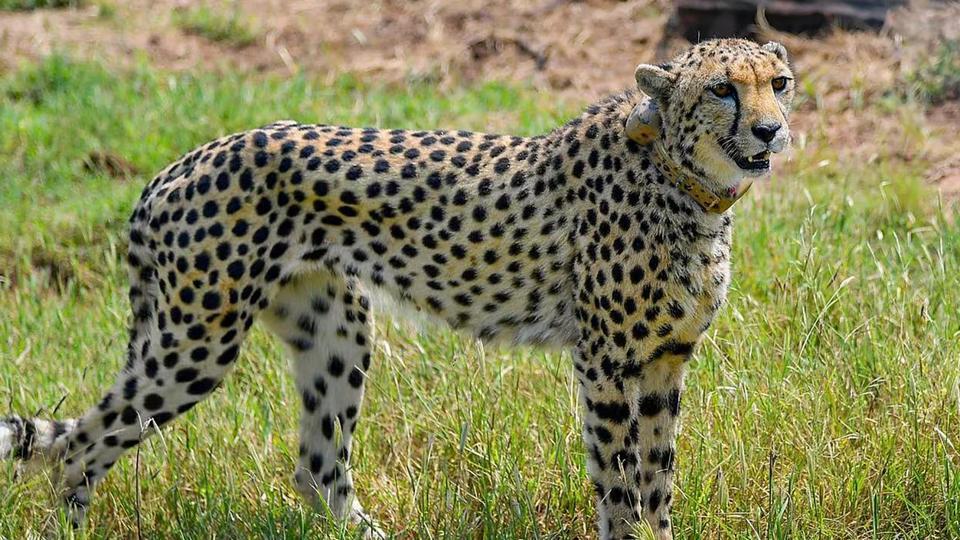
The park now has 16 cheetahs including a cub.
The cheetah, which was translocated from South Africa in February, was found dead in the wild by a monitoring team.
According to a forest department official, the patrolling team found the cheetah named Suraj in a weak condition with injury marks around his neck.
“After seeing the patrolling team, the cheetah moved from his place. The team then informed veterinarians. The team of veterinary doctors reached his location but found him dead,” said JS Chauhan, chief wildlife warden, MP.
He said the real cause of death will be known after post-mortem but injury marks were found on the animal.
This is the second death of a male cheetah in Kuno this week, raising concern about the health of the big cats among officials.
On Tuesday, a male cheetah Tejas died due to “traumatic shock” as his weight had reduced from 55 kg in February to 43 kg in July.
Inhabiting a six square km enclosure for a long time might have affected their health, South African cheetah expert Adrian Tordiffe said.
“It would have been nice to release all the cheetahs directly into the wild after quarantine but that would have made the post-release monitoring very difficult,” Tordiffe said.
“At the moment we are also discussing whether or not it will be better to select lesser-wild cheetahs in the future as they would be less stressed by the presence of people…and would be easier to monitor,” he added.
He admitted that it was a mistake to choose cheetahs, which are more wild, assuming they would “avoid human settlements” in India.
“More habituated tame cheetahs might still be fine,” he added.