
MP cabinet raises cap on CM, MLA discretionary funds
Madhya Pradesh home minister Narottam Mishra said the MLA discretionary fund has been increased to ₹50 lakh
Bhopal: The Madhya Pradesh government on Tuesday decided to increase the discretionary fund available to the chief minister and the state’s legislators.
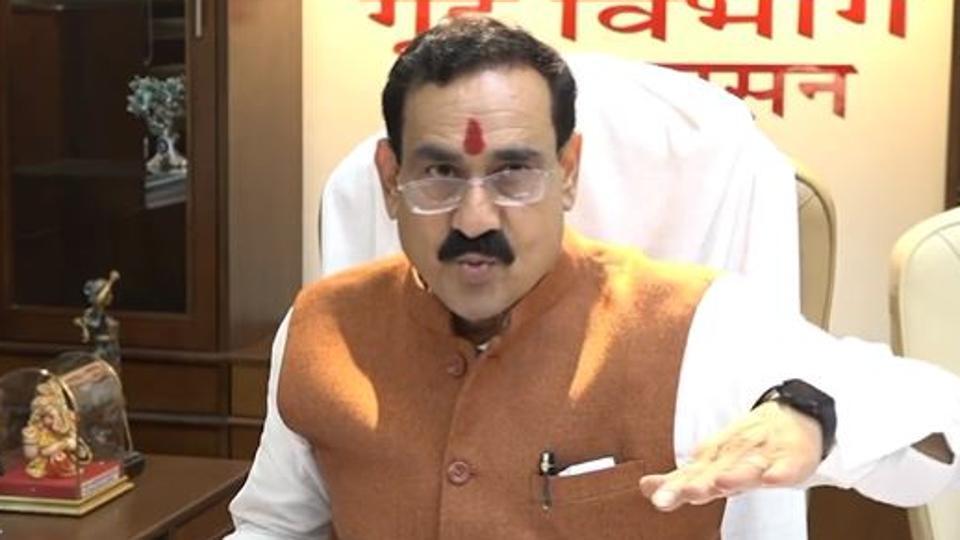
“The cabinet approved to increase the annual limit fixed for the chief minister’s discretionary fund from ₹150 crore to ₹200 crore for the financial year 2022-23,” home minister Narottam Mishra said after the cabinet meeting.
The MLA area development fund has also been increased from ₹1.85 crore to ₹2.50 crore, and the MLA discretionary fund from ₹35 lakh to ₹50 lakh, he said.
The cabinet also approved the contract for the operation of a cow sanctuary between Madhya Pradesh Gau Samwardhan Board and Shri Gau-Seva Teerth-Dham Pathmeda, district Jalore, Rajasthan. Now, it will be developed as a tourist spot and it is made self-reliant.
The cabinet also approved two medical colleges of 100 seats each for Budhni of Sehore district and Ujjain.
The state government will also establish new 23 ITIs in the development blocks.
The state government also allotted land for the establishment of the campus of “National Forensic Science University” (NFSU), in Huzur Tehsil of Bhopal. The cabinet gave its approval for the setting up of Rural Technology Park at Morena. Approval was given to create posts for the operation of Rural Technology Park.
ABOUT THE AUTHORShruti TomarI have spent over a decade chronicling Madhya Pradesh’s political and social landscape, covering politics, investigative journalism, crime, human interest, and government policy, blending sharp insight with ground‑level depth. I have closely tracked three assembly elections, three Lok Sabha elections, leadership transitions in MP while exposing governance lapses, tender irregularities, and flawed policy rollouts. My reports have revealed gaps in the Cheetah project, irregularities in medical education, rigging in recruitment exams, and loopholes in policy implementation. In crime reporting, I have moved beyond FIRs to map systemic patterns — from organised crime networks and gender‑based violence to custodial accountability — balancing urgency with sensitivity. My journalism is defined by a commitment to human interest. I have profiled the marginalised Bancchda community, documented atrocities against tribal groups, and highlighted efforts to preserve their culture through heritage liquor and revival of spiritual practices. I have reported on farmers struggling with failed MSP promises, giving voice to those often reduced to statistics in policy files. Passionate about field reporting, I have reported on rampant sand mining in Chambal and Narmada, pharmaceutical companies supplying medicines under altered names, the dire condition of schools and colleges, the plight of commercial sex workers, and skewed sex ratios in specific districts. Beyond deadlines, and as HT’s state correspondent and assistant editor in Madhya Pradesh, I engage with ministers, farmers, students, and activists, believing the best policy stories begin with a single human voice. A postgraduate in Journalism and Mass Communication, I also hold a diploma in sports journalism.Read More

E-Paper


