E-Paper



To reduce MSP burden, MP to start crop diversification scheme
‘We are shifting our approach so that farmers don’t need to sell their crop on minimum support price (MSP) and they don’t need to even go to mandi. We want farmers to sell crops at minimum retail price (MRP) directly to companies,’ MP agriculture minister Kamal Patel said.

 Prefer HTon Google


BHOPAL: Fearing that growing wheat could increase burden on state exchequer, the Madhya Pradesh government will start an incentive scheme to discourage farmers from growing wheat. Unlike wheat, there will be no minimum support price (MSP) for other crop-diversification, officials said.
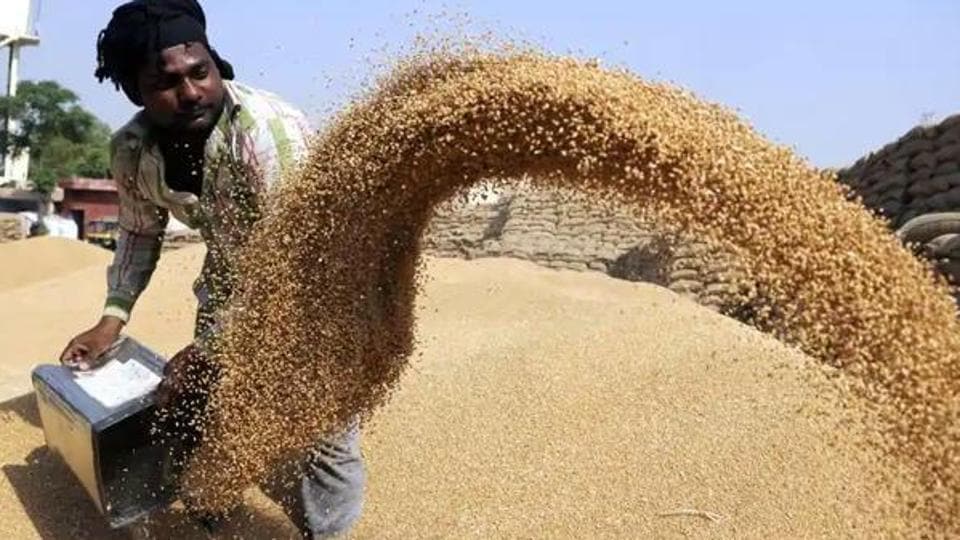
The MP government has done the highest wheat procurement of 356 lakh metric tonnes in 2020 and the government has paid ₹25,311 crore to farmers. In the past five years, wheat production increased from 219 lakh M T to 356 lakh MT, shows agriculture department data. Additionally, the government has paid ₹8,468 crore for paddy production in 2021.
“We are shifting our approach so that farmers don’t need to sell their crop on minimum support price (MSP) and they don’t need to even go to mandi. We want farmers to sell crops at minimum retail price (MRP) directly to companies,” MP agriculture minister Kamal Patel said.
He added that the Farmer Producer Organisation (FPO) will be formed and they will get 3% subsidy in getting loans from NABARD to setting up processing unit and some subsidy for seeds also. The FPOs will sell produce directly to multi-nationals, he added.
The paddy is being cultivated by over 40% of farmers in the Kharif crop season while wheat is the main crop of over 65% of farmers in the Rabi crop season, the official said. He added the aim of the scheme is to ease the increasing burden because of procurement of wheat and paddy at MSP. “With this crop diversification policy, the state government wants farmers to benefit from huge agri-based market reforms,” said another officer of the agriculture department.
The draft of the scheme seen by HT says the crops other than wheat and paddy having carbon sequestration capability will be promoted and will be covered under insurance.
“Similarly, the farmers will be provided all the assistance regarding the cultivation of suitable crops according to soil testing results and will get subsidised seeds and subsidy in setting up food processing units by a group of farmers,” said the policy document. It added that the government will help farmers to sell their produce directly to multi-nationals.
Out of total 148 lakh hectare agriculture land in MP, the diversified crop such as mustard, ground nuts are grown in 17.63 lakh hectare land. A senior officer quoted above said, “If a farmer wants to continue to grow wheat and paddy, the state government will motivate farmers to cultivate different varieties of the demand-driven crop including Basmati Rice, Sharbati wheat, Chinnor rice and black wheat under the scheme.”
Farmers welfare and agriculture department principal secretary, Ajit Kesari, said, “MP agriculture department is going for paradigm shift in method and approach of agriculture and this budget will reflect it.”
Farmers’ organisations said the success of the scheme will depend on the new MSP guarantee law.
Bhartiya Kisan Union (BKU) state president Anil Yadav said, “By introducing such scheme, the state government wants to run away from their responsibility. The farmers can get assured price only if the government bring diversified crops under MSP.”
Apart from reducing MSP burden, the officials said the scheme will also reduce financial implications for food and civil supplies department as it will have to procure less from farmers. “MP government has about 80 lakh MT storage facilities and rest is stored in private warehouses. The storage will be a big problem in future if farmers don’t diversify,” said an officer of the food and civil supplies department.