E-Paper



Water being lifted from Kuno river to help cheetahs beat the heat
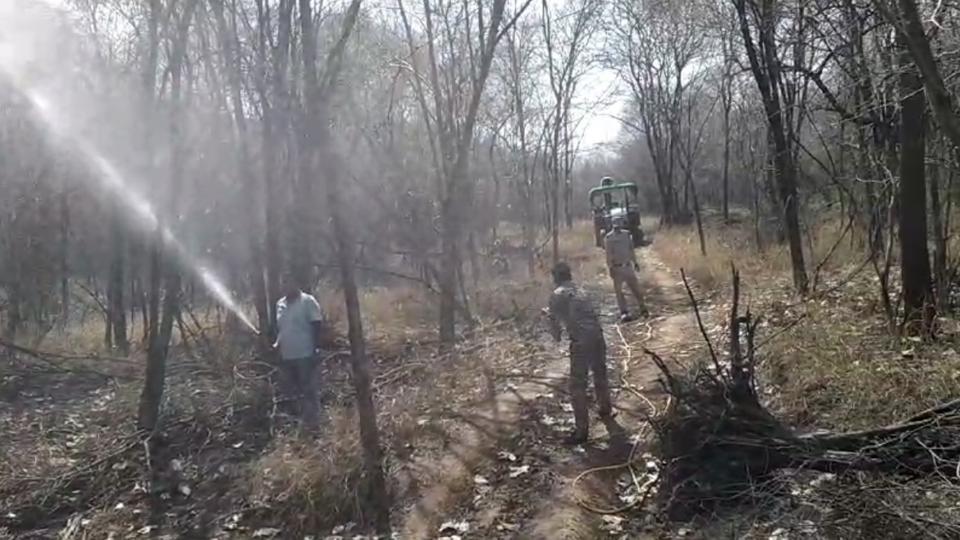
Water is being lifted from the Kuno river running adjacent to the Palpur range and is being pumped into the Soft Release Bomas through a network of pipelines

 Prefer HTon Google


BHOPAL: The forest department has made special arrangements to keep 25 cheetahs including 14 cubs safe in the soft-release enclosures at Kuno National Park (KNP) in Sheopur district amid a heat wave in the state, people familiar with the matter said.
“We have made special arrangements for cheetahs in enclosures and two cheetahs -one male and one female -- are in the wild and adapting to the habitat well,” Uttam Kumar Sharma, field director, KNP, said.
Water is being lifted from the Kuno river running adjacent to the Palpur range and is being pumped into the Soft Release Bomas through a network of pipelines running into 13km. Sharma added.
Officials said water was being sprinkled in the enclosure twice during the day to provide relief to the cheetahs and their cubs. On Monday, the Kuno National Park (KNP) recorded about 48 degrees Celsius.
“Water is lifted and distributed as far as 5 km away by two solar pumps. In addition to supplying this water to ‘water saucers and water guzzlers’ constructed in each enclosure, dry drains are also being filled with this water which not only creates an additional water source but also cools down the place. This protects the cheetahs, especially mothers with cubs from the scorching heat,” said the forest official.
Seven cheetahs died after the reintroduction of 20 cheetahs to India in September 2023 and February 2024. This year, the forest department has decided not to release more than two cheetahs in the wild during the summers and the early rainy season, the official added.