
 E-Paper


1,600 kg rotten meat seized from railway cargo in Budgam: Officials
As per official estimates, Jammu and Kashmir, mostly the Kashmir valley, consumes over 600 lakh kg of mutton annually

 Prefer HTon Google


Around 1,600 kilograms (1.6 tonnes) of deteriorated and rotten meat was seized at Budgam railway station after railway police alerted the food safety department about a suspicious consignment, reportedly leaking blood and emitting a foul smell. The meat was transported from Delhi in railway cargo, allegedly to be distributed in the valley.
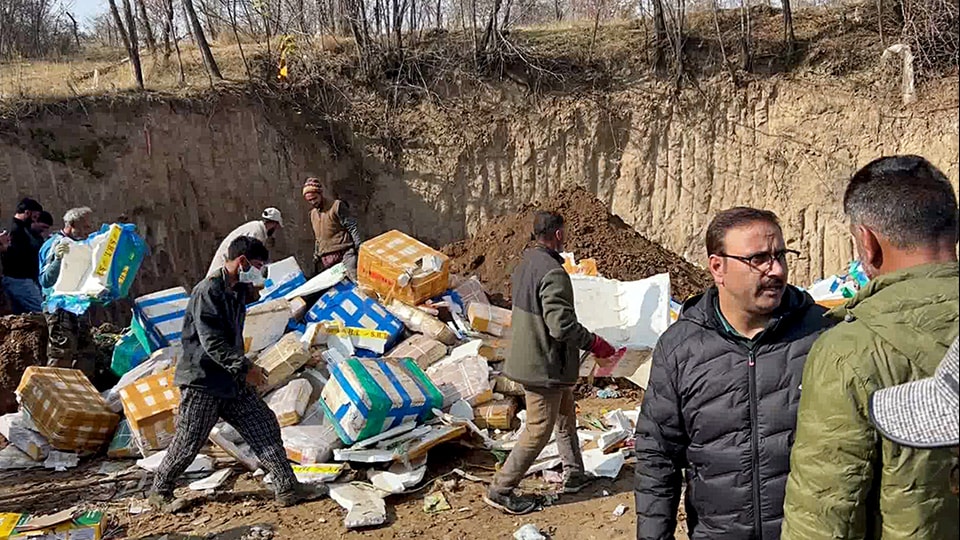
This is not the first time rotten meat has been seized in Kashmir. Last year, hundreds of quintals of rotten meat were seized from different locations. SHO railway police Budgam, Benazir Iqbal, said they received a tip-off about a suspicious consignment. “When our teams reached the spot and opened the cartons, they found rotten meat.”
Senior officials of the food safety department and a magistrate were present on the spot at the time of the seizure. The seized meat was disposed of in the presence of the tehsildar, chief executive officer of Budgam municipal council (MC), and officials of the food safety department.
The chief executive officer of Budgam MC said the timely action by railway police and the concerned departments helped prevent potentially unsafe meat from entering the market, safeguarding public health. “Action will be taken against those involved in this illegal trade,” he said.
NC chief spokesperson and legislator Tanvir Sadiq said the government is already taking action against those trying to sell rotten meat. “A mechanism is already in place, but we also have a responsibility to identify the persons who are bringing this rotten meat into Kashmir and selling it. They too belong to our community, which is shameful.”
As per official estimates, J&K, mostly the Kashmir valley with a population of 70 lakh, consumes over 600 lakh kg of mutton annually, of which 350 lakh kg is brought from other states, including Rajasthan and Delhi.
Officials say most of the meat is brought in the form of live animals like goats and sheep, while a small portion is imported in packaged form, mostly beef, chicken and fish.
Last year, Kashmir was rattled by a series of seizures of unlabelled, rotten, unsafe or stale meat and its products meant to be distributed to some eateries in the Valley. The confiscation of the meat by authorities was triggered when food safety authorities found quintals of decayed meat from an industrial estate in Zakura on the outskirts of Srinagar on July 31.
The recovery shattered the trust of the local public, and many of them have been avoiding restaurants and hotels.
According to some importers, the unsafe and unhygienic packed meat is bought at ₹160 per kg from some outside states, while the mutton and beef rates in Srinagar are ₹700 and ₹400 per kg, respectively. Those bringing the meat are unable to store and transport the meat at the mandated temperature of -18 degrees celsius or below.
Officials of the food and drugs administration said they recovered around 12,000 kg of unsafe meat in the month of August after the Zakura recovery last year. This year, today’s consignment is termed the biggest recovery.


