
 E-Paper



80% decline in farm fires in Ambala this year
Ambala district recorded 80% decline in farm fires this year; Yamunanagar performs well with a decline of 75% fire cases of kharif crop


Even as neighbouring Punjab is recording higher stubble burning cases of 2021 in recent days, Ambala district recorded almost an 80% fall in farm fires this year.
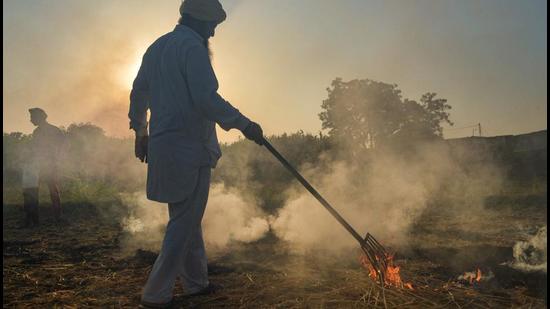
As per the data available, the cases fell from 702 between 15 September and 30 October last year to just 146 in the same period this year. The decline is significant as the other rice-producing districts of the region are way behind.
For instance, Karnal witnessed a mere 24% decline in cases, Kaithal saw 29% fall and 47% fire incidents decreased in Kurukshetra. However, Yamunanagar performed well with a decline of 75% fire cases of kharif crop this year.
Deputy commissioner Vikram said due to concentrated efforts that started in June, much before the cultivation season, the target was achieved easily.
“As many as 499 awareness camps were held at village level to sensitise 20,000 farmers and a large Kisan Mela was organised at Behbalpur village on October 6 to educate farmers about ill-effects of burning stubble. Providing in situ and ex situ stubble management is also among steps taken,” the officer said.
A team headed by an SDM was also constituted in each sub-division to look into the stubble burning cases. “The team reaches the AFL spot to douse the fire and take appropriate action. This also led to a feeling among the villagers that the vigil is strong,” the DC said.
The administration marked nine villages in the red zone, where more than six cases were reported last year and 89 villages were designated in the yellow zone, where the fire incidents reported were between one and five.
Hitesh Kumar, SDM (City), under whose jurisdiction most villages were in the red zone, said special camps and programmes were organised in these villages so that numbers of fire incidence come down to zero.
“Eleven officials of the agriculture department from other districts were sent to these villages to inform farmers and make availability of the appropriate machinery to the farmers,” he said.
The efforts were also appreciated by several farmers in the district who are against stubble burning. Naveen Kumar, a peasant from Mullana village in Barara sub-division, who will use the in situ management on 2.5 acres of his crop, said his fellow villagers were also benefiting from the initiatives and were also scared that anyone could complain to the police if they burn stubble.
His counterpart in Bhanokheri, a village under the red zone, Dimple, also agrees but believes that the subsidised amount should reach farmers at the earliest.
The administration has so far collected a total fine of ₹1,07,500, where 41 farmers were challaned at ₹2,500 per two acres and beyond, but no FIR was lodged against any of them.
Girish Nagpal, deputy director of agriculture, said till October 30, 146 satellite locations were identified by HARSAC, Hisar, and six physically, while no fire was found at 110 sites during field verification.
The decline in cases is evident with the AQI levels dropping from the “poor” to “moderate” category this year. The average air quality levels of October 2020 remained at 226.13, while in the same period this year, the levels were recorded at halfway mark at just 133.
Other than fewer fire cases, this was also possible due to irregular rainfall several times in the month, Nitin Mehta, regional officer, Haryana State Pollution Control Board, said.


