
 E-Paper



Amid drop in prices, global experts join forces to rescue Punjab’s kinnow industry
The team, comprising international scientists and agricultural experts, is on a mission to comprehend the challenges haunting kinnow growers and engineer potential solutions to rescue the industry


In the wake of the staggering decline in kinnow prices in Punjab, a team led by Punjab Agricultural University (PAU) vice-chancellor (V-C) Satbir Singh Gosal initiated a critical assessment during a recent visit to citrus orchards and packing facilities in Abohar.
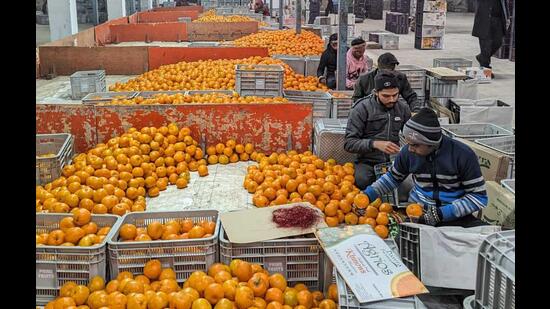
The team, comprising international scientists and agricultural experts, is on a mission to comprehend the challenges haunting kinnow growers and engineer potential solutions to rescue the industry.
Renowned experts, including Rolston St Hillaire from California State University, Fresno, and Kewal Basi, a citrus grower from California, teamed up with local stalwarts, such as Amanpreet Brar and Zora Singh, during the venture. The dire state of Punjab, recognised as the leading kinnow producer in India, is currently grappling with an excess of kinnow fruit and a distressing decline in exports.
The experts have identified a multitude of factors contributing to this alarming situation, ranging from inadequate marketing services and the absence of a processing industry to export rejections due to heavy metal traces and chemical residues. The prevalent size-based grading, vehicular pollution affecting orchards, phytophthora infection and the disregard for proper fruit thinning have further compounded the crisis.
One traditional practice, the use of waxing to extend kinnow shelf-life, is under intense scrutiny from importing countries. Urging a swift response, the experts emphasise the immediate adoption of colour-based grading, aligned with consumer preferences. They stress the significance of obtaining rootstock seeds from healthy fruits harvested from robust trees and caution against using fruits close to the ground due to a heightened risk of phytophthora infection.
Insights shared by US delegates shed light on California’s success with newer citrus varieties, prompting a call for experimentation in Punjab. The experts underscored the critical importance of meticulous fruit handling during packaging to prevent invisible injuries leading to deterioration.
Zora Singh, professor of horticulture from Edith Cowan University, proposed strategic measures, including planting orchards away from roads to reduce heavy metal absorption and recommending windbreak plantations between orchards and roads to minimise vehicular pollution impact. The introduction of sensor-based graders for colour-based grading and strict adherence to export quality standards, encompassing high-quality fruit, uniform colour, no wax, no heavy metals, good size and nutritional quality, were strongly emphasised for the revitalisation of the kinnow industry in the state.


