
 E-Paper



Audit in Punjab schools: Mid-day meals keeping classrooms full, but kitchens remain starved
The social audit, which covered 540 government elementary, high senior secondary and aided schools, highlighted issues with food grain supply, stating that in all 23 districts, teachers and school heads emphasised the need for timely delivery to ensure the scheme’s smooth functioning.

 Prefer HTon Google


While the PM Poshan Shakti Nirman Scheme is playing a positive role in keeping children nutritionally healthy and has improved attendance in Punjab schools, the supply of food grains, cooking facilities and monitoring are far from satisfactory.
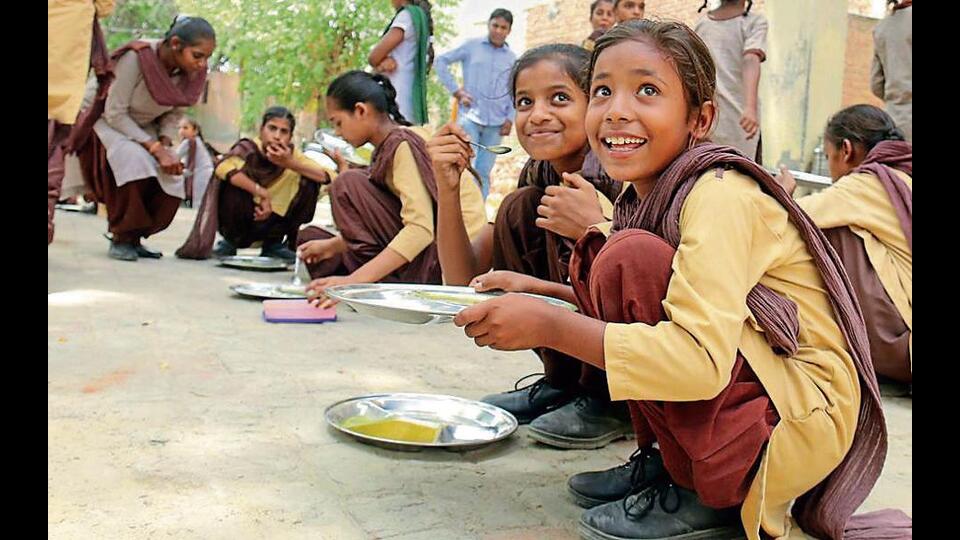
These findings emerged from a social audit of the PM Poshan scheme, earlier known as the National Programme for Mid-Day Meal in Schools, carried out in Punjab by Panjab University for the state government.
The social audit, which covered 540 government elementary, high senior secondary and aided schools, highlighted issues with food grain supply, stating that in all 23 districts, teachers and school heads emphasised the need for timely delivery to ensure the scheme’s smooth functioning.
“The delivery of food grains is delayed by 1-2 months in schools, and it is problematic for schools having high numbers of students to run the scheme,” according to the report. The social audit, which involves feedback and suggestions from stakeholders, is a mandatory requirement under the scheme to identify gaps and ensure better execution.
The centrally sponsored scheme covers approximately 19 lakh students across 19,620 government and government-aided schools in Punjab, and 44,700 metric tonnes of rice and wheat will be supplied by the central government in the 2025-26 financial year to provide freshly cooked mid-day meals to these children.
During a meeting of the Programme Approval Board of the Union ministry of education in April this year, Union secretary, school education and languages, Sanjay Kumar had also emphasised the need for better supply chain management to ensure buffer stock of foodgrains at schools, as despite advance allocation of foodgrains by the central government, many schools have reported on Automated Monitoring System (AMS) that meals could not be served due to non-availability of food grains.
A state school education department official stated that they were in touch with officials of the State Civil Supplies Corporation and contractors who were responsible for delivering food grains to schools.
Run-down kitchen sheds, stolen LPG cylinders
The audit also drew attention to the poor condition of kitchen-cum-stores in nearly 20% of the surveyed schools. While 80.75% of schools maintained their kitchen sheds satisfactorily, the remaining 19.25% schools faced issues such as seepage, broken floors, damaged windows and doors, and lack of electricity.
In Bathinda, kitchen sheds existed in all 21 inspected schools, but four sheds required renovation due to roof seepage wall cracks. The report also noted that 75% of schools in the district needed better kitchen shed cleanliness, recommending an annual grant for repair, maintenance and renovation.
Another major concern flagged was the widespread use of firewood for cooking mid-day meals, despite provision for LPG cylinders. The audit found that firewood was being used in 60% of the surveyed schools.
Over 20% lacked LPG cylinders altogether, primarily due to theft, and were not provided replacements forcing them to rely on firewood. Schools having high student strength were using firewood to cook because of difficulties in cooking large quantities on LPG burners, it said, recommending that financial grants be given to schools after a period of three years to replace old cooking burners, food grain storage bins and utensils.
The report also recommended construction of dining sheds, additional drinking water taps and handwashing areas in urban schools due to the large student population, increase in cooking costs due to rising ingredients prices.
Better nutrition & improved attendance
The audit praised the seamless implementation of the scheme across all schools in the state, stressing its role in improving nutrition and increasing attendance. The report noted that 83% student attendance was recorded in the 540 surveyed schools and 99% of them consumed mid-day meals, which reflected the scheme’s widespread acceptance and efficacy. “There were no reports of discrimination or partiality from any district,” it said.
However, the report also recommended allowing schools the flexibility to alter the mid-day meal menu to suit local needs. “In some schools, the students belong to the migrant families from Bihar, Uttar Pradesh and Madhya Pradesh. Their food preference is more towards rice. Milk, curd, cheese, salad and millets should be made an essential part of the menu, at least once a week,” it suggested.
At present, the mid-day menu is decided at the state level.


