
 E-Paper



Chandigarh admn scales down high court expansion plan to win UNESCO nod
A three-member Chandigarh administration delegation submitted the fresh proposal in Geneva with a balancing act between expansion and heritage preservation


In a bid to address heritage concerns, the Chandigarh administration has downsized the expansion plan for the Punjab and Haryana high court, slashing the proposed additional built-up area from several lakh square feet to just 2 lakh square feet.
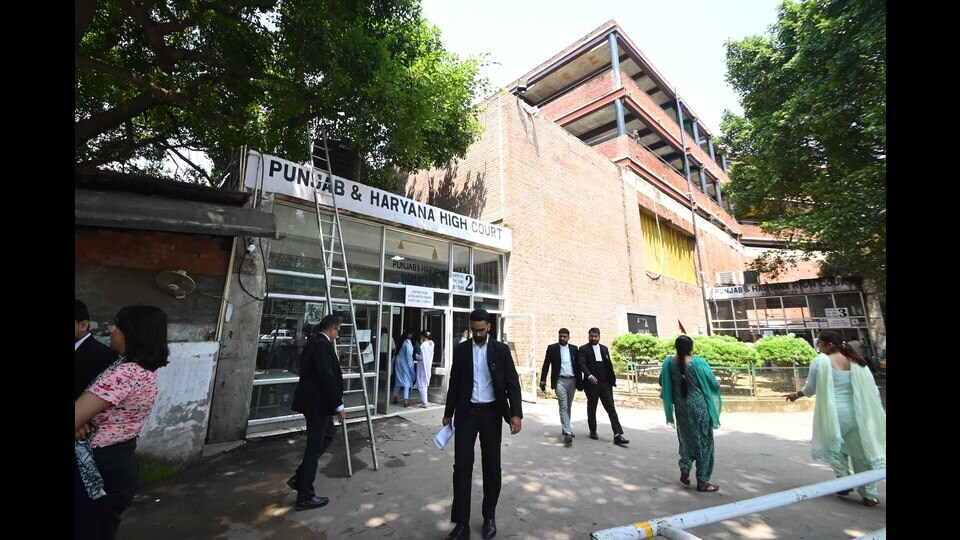
The revised plan, presented to UNESCO for approval during a key meeting in Geneva, Switzerland, on September 6, aims to balance urgent infrastructure needs with the preservation of the World Heritage status awarded to the Capitol Complex, comprising the high court.
The fresh proposal was submitted by a three-member UT delegation, comprising chief secretary Rajeev Verma, chief architect Rajiv Kumar Mehta and Chandigarh College of Architecture principal Sangeeta Bagga.
According to the delegation, the UNESCO team responded positively to the revised proposal and now they are awaiting the official minutes of the meeting, expected within 20 days. Once received, UT will proceed further with the plan.
The HC holistic development plan envisages constructing multi-storey buildings to address the pressing space crunch, given that the court handles over 10,000 lawyers, 3,300 employees, thousands of litigants and around 10,000 vehicles daily.
Under the new proposal, 16 additional courts, advocate chambers, a cafeteria, parking facilities and administrative blocks will be developed within the existing high court complex at a “suitable distance” from the heritage structures.
The revision comes after UNESCO’s World Heritage Committee and its advisory body, ICOMOS, had earlier raised objections, warning that the original plan could compromise the Outstanding Universal Value (OUV) of the Capitol Complex, which was declared a UNESCO World Heritage Site in 2016.
Notably, UNESCO previously had also stalled two other major projects at the site — an underground multi-level parking facility and an AC chiller plant.
Last month, while hearing a PIL filed by High Court Employees’ Association secretary Vinod Dhatterwal, the high court directed the UT administration to clarify whether the holistic development plan had the approval of both the UT administration and the heritage committee, particularly in light of reduced courtroom requirements.
Heritage Impact Assessment
The UT administration had earlier conducted a Heritage Impact Assessment (HIA) to study the implications of the project. The 2023 ICOMOS review emphasised that preserving green spaces, framing the high court’s rear façade and the open areas surrounding the building, was crucial. However, it also recognised the undeniable need for expansion to accommodate present and future users.
Alternative land options
The UT had also proposed 48 acres in Sarangpur village for developing a new high court complex. However, the high court expressed reservations, citing land-use restrictions. While the UT argued that the Sarangpur site offered compatible institutional use, higher floor area ratio (FAR) and excellent connectivity through a 200-foot-wide road, and a proposed elevated corridor, the proposal remains under judicial and heritage scrutiny. The matter will be heard next on September 12.


