
 E-Paper



Chandigarh gets 1st drizzle of season, foggy weekend ahead
The city received the first drizzle of the season on Thursday afternoon, causing the mercury to drop five notches.


The city received the first drizzle of the season on Thursday afternoon, causing the mercury to drop five notches. The India Meteorological Department said Chandigarh recorded 0.3 mm rainfall, already making December wetter than last year when no precipitation was received at all.
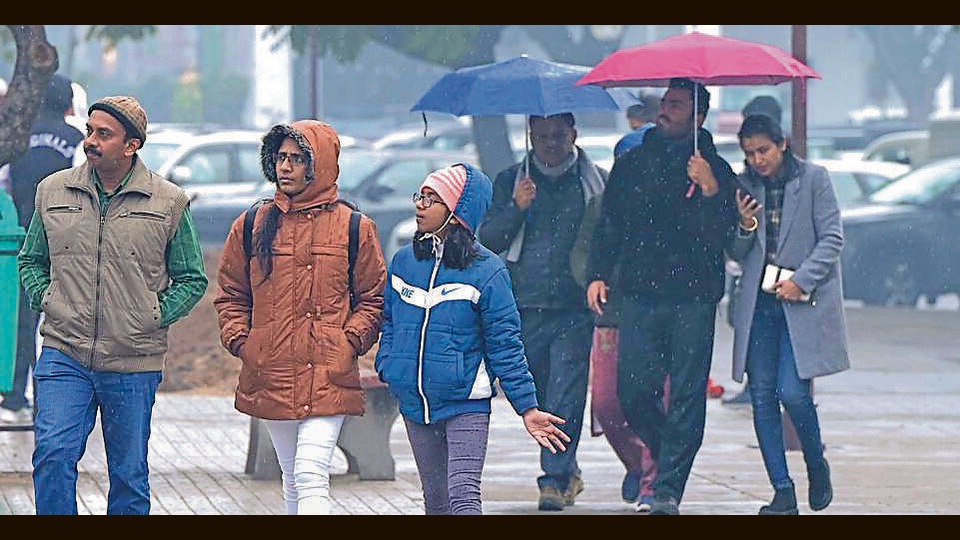
The brief spell of rain was the first in the city since October 11. On the long dry spell, Chandigarh IMD director Manmohan Singh said, “Few western disturbances affected the region in November and December. The weather system that caused the drizzle is active in Himachal Pradesh. It also brought showers to the foothills of the Himalayas.”
The weather remained cloudy during the day. While the mercury dropped from 19.4°C on Wednesday to 14.6°C, the minimum temperature increased from 5.1°C to 8.2°C, which was 2.4 degrees above normal.
As the minimum temperature was below 10°C and the maximum temperature was 4.5-6.4°C below normal, the IMD declared it a “cold day.” While Wednesday was warm and sunny, December 26 and 27 were also “cold days.”
Over the next three days the maximum temperature will remain between 17°C and 18°C and the minimum will hover around 8°C and 9°C.
Slim chance of rain today: IMD
Another western disturbance is expected to be active in the area on Friday. However, IMD officials said that there was little possibility of rain. The weather is expected to remain cloudy on Friday, and fog is likely to return as well.
With humidity increasing in the city, dense fog is expected to engulf the city on New Year’s eve. The IMD has issued an advisory for those heading out on New Year’s eve.
1 flight cancelled, 4 flights delayed
One flight to Sheikh ul-Alam International Airport (Srinagar Airport) was cancelled while four flights were delayed at the Shaheed Bhagat Singh International Airport due to foggy conditions.
Mapping December showers
Year Rainfall
2022: 0.3 mm*
2021: 0 mm
2020: 9.2 mm
2019: 44.9 mm
2018: 11.5 mm
2017: 16.6 mm
*till December 29


