
 E-Paper



Chandigarh: No fresh budget allocation for PGIMER
The Postgraduate Institute of Medical Education and Research (PGIMER), Chandigarh gets ₹2,200 crore in the Union budget 2024-25 for the upcoming financial year


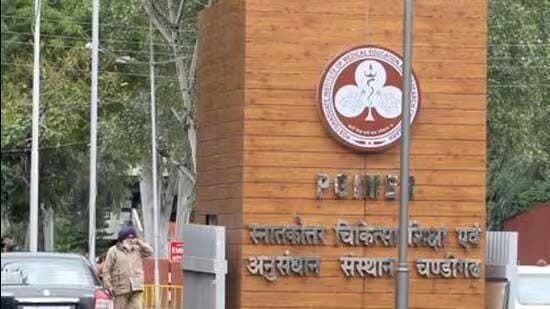
The Postgraduate Institute of Medical Education and Research (PGIMER), Chandigarh gets ₹2,200 crore in the Union budget 2024-25 for the upcoming financial year, which is ₹276.90 crore and ₹77 crore more than last year’s budget estimates (BE) and revised budget estimates (RE) respectively. However, there was no fresh allocation.
The allocation for the creation of capital assets is ₹350 crore ( ₹343.10 crore BE for 2023-24 and ₹343 crore RE for 2023-24).
BE under the grant-in-aid for salaries and under the grant-in-aid (general), are at ₹1,500 crore ( ₹1,300 crore BE for 2023-24 and ₹1,450 crore RE for 2023-24) and ₹340 crore ( ₹270 crore BE for 2023-24 and ₹320 crore RE for 2023-24), respectively.
₹10 crore was allocated under budget head grant-in-aid (SAP), equivalent to the RE for 2023-24.
“This represents the initial allocation and historically additional funds have been allocated through supplementary grants in November/December. The subsequent allocation is contingent upon the expenditure trends through the year and new developments that may arise during the fiscal period,” said PGIMER’s financial adviser Varun Ahaluwalia.
Three cancer medicines exempted
Finance minister Nirmala Sitharaman, while presenting the budget in the Parliament, announced the exemption of customs duty on three cancer medications, aimed at easing financial burden on patients.
“They are products of R&D of multinational pharmaceutical companies, patented by them, marketed at prices that will recover the huge costs of research and earn profits. Hence the high price,”said Dr Sushmita Goshal, professor and head radiotherapy.
“Now that we know that these drugs have significantly improved response rates, we prescribe them for our own patients, but not all can afford the prohibitive costs. Reducing taxes will help some more patients to afford the drugs,” Dr Goshal added.


