
 E-Paper



CDS Subramani to seek approval of theatre commands from defence minister Rajnath Singh
CDS to make a presentation before defence minister Rajnath Singh at month end for permission to get CCS approval.

 Prefer HTon Google


General N S Raja Subramani, who recently took over as India’s third Chief of Defence Staff (CDS), is set to push the process of theaterisation and make a crucial presentation on the road ahead to defence minister Rajnath Singh by the end of this month, people familiar with the matter said.
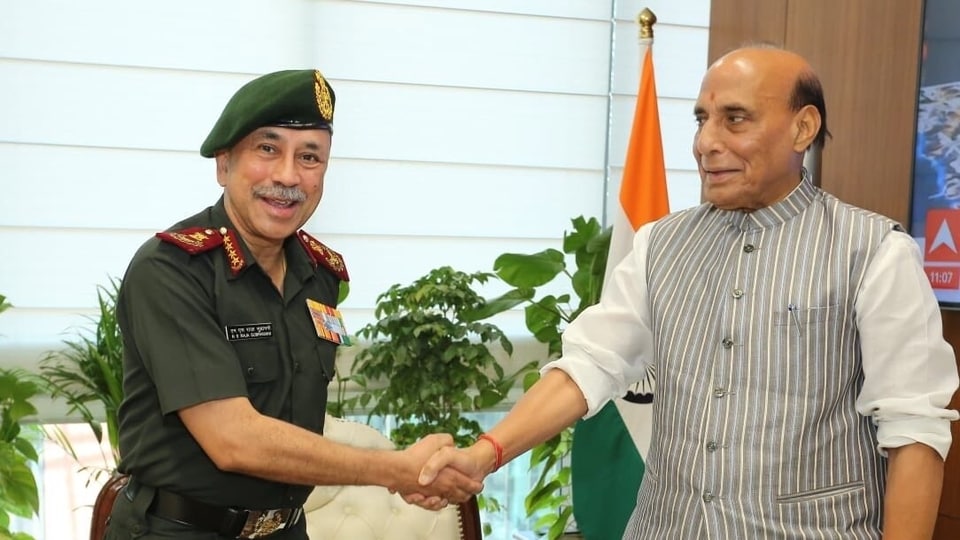
While Gen Subramani’s predecessor, Gen Anil Chauhan, submitted his final draft proposal on the subject before he demitted office on May 31, the new CDS is expected to make a detailed presentation of the same proposal before all stakeholders and the minister, the people added. Once the minister green-lights the proposal, the theatre commands plan will be sent as a note to the Cabinet Committee on Security (CCS) for final approval by Prime Minister Narendra Modi.The plan has been a work in progress since 2022.
At the core of the military theatre commands plan are Northern (facing China), Western (facing Pakistan) and Maritime theatre commands (with the Andaman and Nicobar Island command). Under the proposal, four new posts of four star commands, equivalent to the current service chiefs, will be created, including that of the Vice Chief of Defence Staff (VCDS). Each theatre command will be headed by a four-star officer, according to the plan.
While the political leadership is fully behind theatre commands as part of much-needed military reforms, the three service headquarters remain in two minds over the dilution of service chiefs’ powers; under the new structure, they will have no operational role. Their responsibilities will be limited to training and sustenance, with the theatre commanders taking instructions directly from the defence minister in times of war. The military-civilian bureaucracy is understandably cagey about creating four more posts of four-star officers, who will hold the same rank of ex-officio cabinet secretary as the service chiefs. While there is a case for not making the command structure top-heavy, the counterpoint is that the uniformed services thrive on hierarchy and seniority. Simply put, if the three theatre commanders were three-star officers, the service chiefs would dominate them and the entire exercise would fail.
ALSO READ | Theaterisation on right track, could take shape in next 2-3 years: Army Chief
Even though all the then service chiefs wrote to Gen Chauhan, signing off on theatre commands, it has been known for some time that while the Indian Army and the Navy are fully in favour of the reforms, the Air Force has yet to come fully on board. The Air Force has concerns about the plan, including the risk of overcommitting and dividing its limited aerial assets among the theatre commands.
While the first CDS, Gen Bipin Rawat, adopted a top-down approach to unite the three services, the second CDS, Gen Chauhan, used a softer, bottom-top approach to bring them together through joint military operations, intelligence and communications at the cutting edge. The onus is now on Gen Subramani to carry the much-needed military reform forward.


