
 E-Paper



Chandigarh: Free installation of rooftop solar plants yet to see light of day
Eight months after the Joint Electricity Regulatory Commission okayed the project, the Chandigarh Renewable Energy Science and Technology Promotion Society has failed to hire an agency to execute it


Despite inviting applications from residents for free installation of rooftop solar plants for months, the Chandigarh Renewable Energy Science and Technology Promotion Society (CREST) has failed to hire an agency to execute the project.
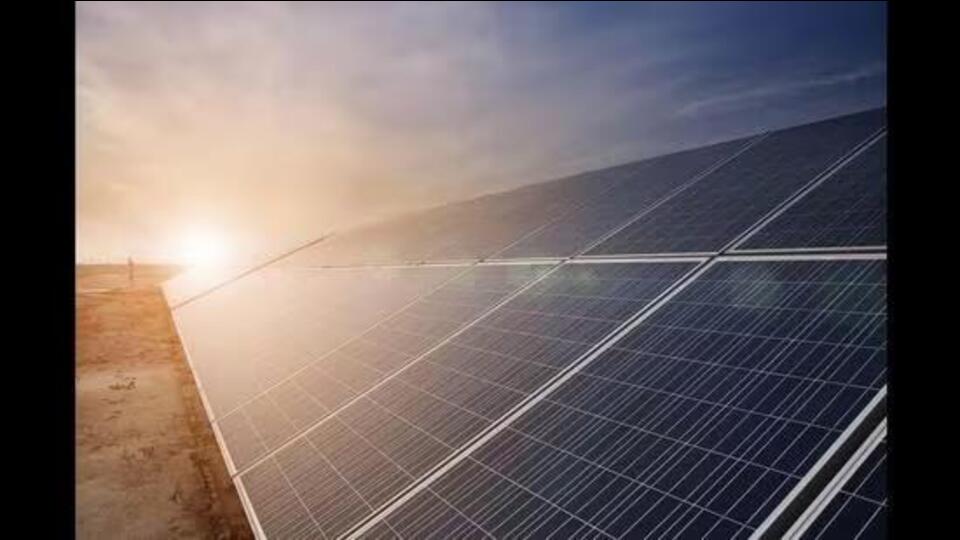
Notably, it has been eight months since the Joint Electricity Regulatory Commission allowed the installation of grid-connected rooftop solar systems in Chandigarh under the RESCO (renewable energy service company) model in January.
In June, CREST had come close to finalising a company, but could not reach a consensus on the build-operate-transfer (BOT) period. While the company demanded 23 years, CREST was intent on 20 years.
So far, CREST has received around 1,250 applications for free installation of rooftop solar plants, which will generate 8.5 MWp (megawatt peak) of solar power.
“Our negotiations are ongoing with the company regarding the BOT period and we are hopeful of sorting it out soon,” said Arulrajan P, chief executive officer (CEO), CREST.
As part of the RESCO model, the selected private firm will be responsible for developing, installing, financing and operating the rooftop solar power plant for a limited BOT period.
During this period, the homeowner will be entitled to electricity at a uniform rate of ₹3.23 per unit, and on the period’s completion, the plant’s ownership will be handed over to the consumer without any further charges. As the system’s expected life is nearly 25 years, the beneficiary will enjoy free solar power for at least five years, if the BOT period is 20 years.
At present, domestic consumers pay ₹2.75 per unit for 0-151 units, ₹4.25 per unit for 151-400 units and ₹4.65 per unit for over 400 units.
The UT administration, in May 2016, had made the installation of rooftop solar plants mandatory in residential units measuring 500 square yards and above, and group housing societies.
However, despite the provision of a 30% subsidy (before RESCO adoption), over six years later, only 3,125 of the total 7,200 eligible houses opted for the plants. The cost to get a 1 kWp plant installed was ₹60,000, but with subsidy, it came down to ₹42,000.
Wait for subsidy continues
Meanwhile, several residents who did switch to solar power after footing the complete installation cost, complain that they have not received any subsidy from the administration.
As many as 421 property owners are awaiting subsidies since 2019. Last month, the central government had cleared the pending subsidy of ₹3.25 crore, but residents’ wait continues.
A senior CREST officer said, “Though the subsidy release orders were issued in July, we have not received the amount so far.”
Notably, the Union Ministry of new and renewable energy had enhanced the city’s solar power generation target from 69 MWp to be achieved by 2022 to 75 MWp to be met by August 15, 2023. But UT, as of June 30, achieved a generation of around 63 MWp only.
A CREST official said since the target was not be met by August 15, a meeting of the governing body of CREST had decided to extend the deadline to December 2023.
Chandigarh is now aiming to achieve 100 MW by 2025. UT officials said a consultant will be hired to draw a detailed strategy to ensure that solar power becomes the primary source for city’s power needs by 2030.


