
 E-Paper



Chillai Kalan ends with snowfall, bringing relief from prolonged dry spell in J&K
Chillai Kalan, which begins on December 21, marks the coldest period of the Valley’s 70-day winter and is followed by Chillai Khurd (20 days) and Chillai Bacha (10 days).

 Prefer HTon Google


The 40-day Chillai Kalan, the harshest phase of winter in Jammu and Kashmir, has ended on a positive note, with snowfall and rainfall in its final days breaking a prolonged dry spell, particularly in the Kashmir Valley.
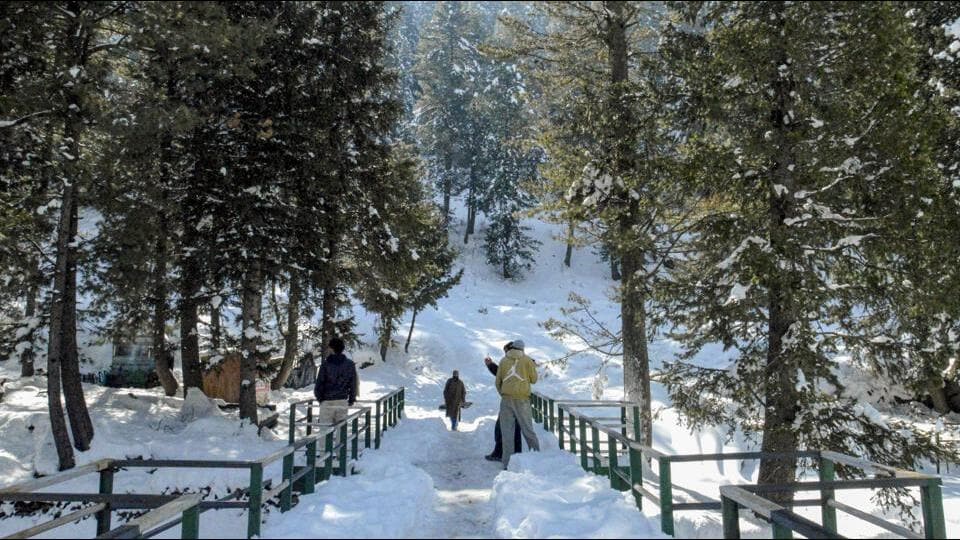
Chillai Kalan, which begins on December 21, marks the coldest period of the Valley’s 70-day winter and is followed by Chillai Khurd (20 days) and Chillai Bacha (10 days). While most of this year’s Chillai Kalan passed without significant precipitation, back-to-back spells of snow and rain towards the end brought much-needed relief.
Environmentalists and weather experts say snowfall during the harshest phase of winter is crucial for sustaining water resources. “In earlier times, Chillai Kalan was marked by persistent cloud cover. In recent years, however, we have seen above-normal daytime temperatures and bright sunshine,” said environmentalist Jalal Jeelani. “A good snowfall at the end of Chillai Kalan will have a long-lasting impact on Kashmir’s spring and summer.” He added that timely snowfall in tourist destinations such as Gulmarg and Sonmarg also attracted visitors, with snow depth in Gulmarg exceeding four to five feet.
Earlier this month, the Meteorological Department (MeT) reported that average seasonal precipitation in the Valley from October to December 25 stood at 57.89 mm, against a normal of 103 mm. “Since October 1, precipitation in the Kashmir division has remained 44% below normal, while Jammu division recorded near-normal rainfall with a deficit of just 9%,” a MeT official said. Jammu received 93 mm of rainfall during this period against a normal of 103 mm.
Prolonged dry weather over the past three months had led to drying up of rivers and multiple forest fire incidents, experts said.
The MeT has now forecast more snowfall with the onset of Chillai Khurd, the second harshest winter phase. Environmentalist Bilal Ahmad said that although snowfall is still less than in earlier decades, it will help recharge groundwater and improve river and stream flows in the coming months, easing the Valley’s recurring water problems.
Night temperatures below freezing point across Kashmir
Night temperatures settled below the freezing point across Kashmir on Friday, but rose in most areas. Saturday marked the beginning of ‘Chillai Khurd’ in Kashmir and the end of the harshest winter period.
The Meteorological Department has forecast light to moderate rain or snow, especially in the higher reaches, they said. The minimum temperature in Srinagar city settled at minus 0.1 degrees Celsius on Friday night, down from the previous night’s 1.3 degrees Celsius. Meanwhile, the Border Roads Organisation (BRO) on Saturday restored road connectivity along the 112-kilometre stretch, reconnecting Jammu and Kashmir’s Doda-Kishtwar belt with Himachal Pradesh after intensive snow clearance operations carried out under extreme weather conditions last week.
The Kishtwar-Sansari road, where the work was completed, links the Union territory with the Lahaul-Spiti region of Himachal Pradesh.
Heavy snow, rain likely in Himachal Pradesh on Sunday; yellow alert issued for thunderstorms
While the snowfall and rain are expected to continue in the middle and high hills till February 3, the weather is likely to remain dry in the lower hills and plains, the Met office said.
The weather is expected to remain dry from February 4 onwards, it added.
In the 24 hours ending at 6 pm on Saturday, the weather largely remained dry in the state.
The minimum and maximum temperatures were 2 to 3 degrees above normal.The lowest temperature was recorded at minus 10.2 degrees Celsius at Tabo village in Lahaul and Spiti district.
(With PTI inputs)


