
 E-Paper



Court lambasts as dengue cases breach 1,000 mark in Panchkula
With Panchkula accounting for over half of the tricity’s 1,888 dengue infections this season, the court has demanded immediate action to clear wild grass, stagnant water and other hazards in Sector 25, while ordering regular fogging operations to prevent further health risks to residents

 Prefer HTon Google


The Permanent Lok Adalat for public utility services in Panchkula has sharply criticised the Haryana Shahari Vikas Pradhikaran (HSVP) and the local municipal corporation for their negligence in maintaining public spaces, contributing to a dramatic surge in dengue cases.
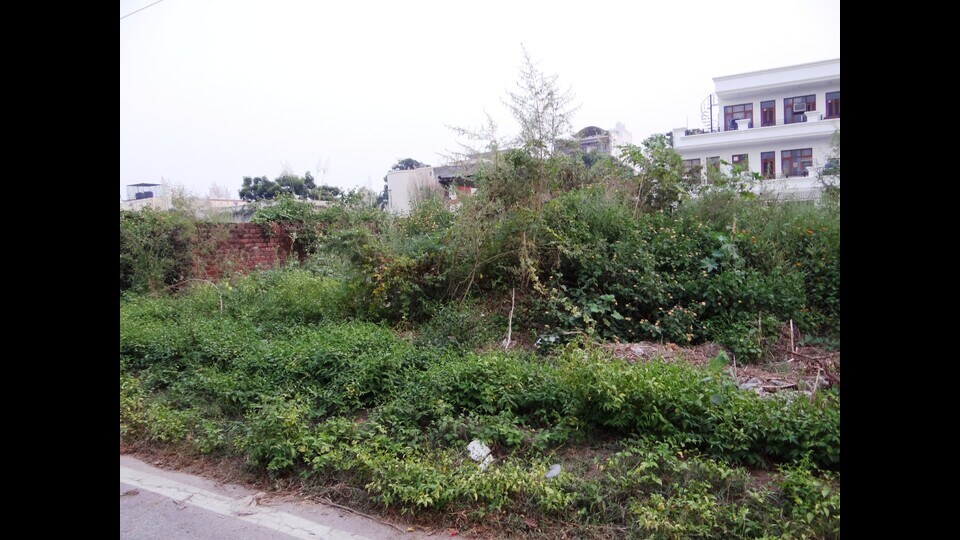
With Panchkula accounting for over half of the tricity’s 1,888 dengue infections this season, the court has demanded immediate action to clear wild grass, stagnant water and other hazards in Sector 25, while ordering regular fogging operations to prevent further health risks to residents.
Of the total 1,888 dengue cases in the tricity, Panchkula alone has reported a staggering 1,025 cases (54%) as of Friday. Mohali is not far behind with 745 cases, while Chandigarh has logged 115 cases.
The petitioners, Bimal Rai Goyal, Nitesh Mittal and Mohit Gupta, all Panchkula residents, claimed that the authorities had failed to maintain green belts, parks, road berms and vacant plots, leading to a spike in dengue cases.
In court, the petitioners argued that the lack of basic upkeep and sanitation services had created breeding grounds for mosquitoes, posing serious health risks to the community.
The petitioners stated that family members of all three had contracted dengue due to the poor condition of public spaces. They accused the forest department of neglecting green belts along National Highway 73, which had become overgrown with wild grass and shrubs.
MC blamed for not conducting regular fogging
MC was also blamed for not conducting regular fogging operations in the area despite the rise in dengue cases.
The residents said while fogging should occur every 5-7 days during outbreaks, it was being conducted only once every 40-45 days, exacerbating the mosquito problem.
The corporation also neglected cleaning of road berms, parks and drains, allowing water to stagnate and grass to overgrow, further contributing to the spread of the disease. When approached, municipal officials shifted the responsibility to the health department, claiming that fogging decisions were under its purview.
The court was informed that as government hospitals were overwhelmed, several residents were forced to seek expensive treatment in private facilities. One petitioner disclosed that he had to spend over ₹50,000 on his wife’s treatment at a private hospital due to a lack of infrastructure at government hospitals.
‘Clear all public spaces, initiate fogging without delay’
Taking note of the allegations and the health crisis in the district, the Lok Adalat issued strict orders to the respondents, including the HSVP, MC, forest department and health department, to take immediate corrective action.
The court directed them to clear all public spaces, including green belts, parks, road berms, roadsides and vacant plots of wild grass, stagnant water and other hazards without delay. It also ordered the authorities to initiate regular fogging operations to prevent further spread of mosquito-borne diseases.
The court also directed to conduct regular maintenance and cleaning of the above areas in Panchkula’s Sector 25 on a quarterly basis to ensure that the health and safety of the residents were not compromised in future, and take strict action against officers responsible for failing to carry out their duties in maintaining sanitation and cleanliness in the area.
It was also directed to compensate the petitioners for the medical expenses incurred by them and mental harassment and loss of health caused to their relatives due to the failure of the respondents to control the mosquito menace and the spread of dengue.
The court emphasised that the compliance report detailing the actions taken must be submitted by the next hearing on October 25. It warned that further inaction could result in stricter legal measures.


