
 E-Paper



Cultural centre in Kashmir aims to bring focus on artisans
A first of its kind of art and cultural centre – Artisane – has come up in Srinagar to not only showcase the Himalayan region’s handicrafts and culture, but also provide a sustainable source of livelihood to the artisans and weavers.


A unique initiative to showcase Kashmir’s art and culture and the hands behind it is shaping up in the Valley. Like what Taj Khazana and Antaran did after coming together or Reliance has done through Swadesh, an old and prominent business house has started something on similar lines in Kashmir.
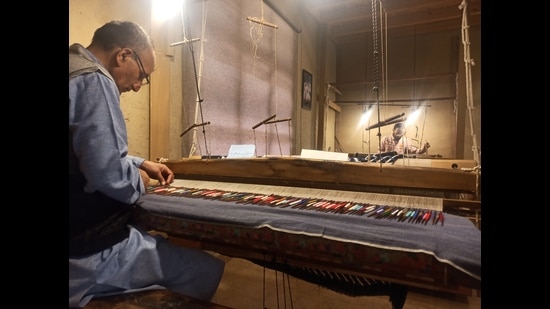
A first of its kind of art and cultural centre – Artisane – has come up in the Valley to not only showcase the Himalayan region’s handicrafts and culture, but also provide a sustainable source of livelihood to the artisans and weavers. Artisane is a French word meaning craftswoman.
At the centre, one can not only check out and purchase Kashmir’s valued handicraft like intricate Kani and Pashmina shawls, silk carpets, colorful paper-machie products, carved walnut woodwork and minute sozni and embroidery work; but also experience a live demonstration of how such souvenirs are made while watching the artisans immersed in the intricate work.
The art and the hands behind the art have been brought together under one roof in a meticulous structure of wood, stones and mud on a 20,000 square ft area at Kunzer on the picturesque Srinagar-Gulmarg road surrounded by the Himalayas. The construction is a fine example of architectural heritage of the Valley.
The centre, an initiative by Ali Shah Carpets business house, selling Kashmir art and craft products for the past many decades, is a mini representation of Kashmir’s art and cultural markers aimed to bring a psychological renaissance to this cottage industry. One can find and interact with the artisans, while they produce the precious, intricate and colourful pieces of art, and then also go on procuring the work.
The motive is not only promotion of products, but giving due respect to weavers and craftspeople, who have so far remained behind the scene.
“Kashmiri art has made us and now it is our endeavour to pay back and give due respect to the artisan behind it,” says its promoter, Iqbal Shah, part of the business house Ali Shah Carpets.
“We have been in the art business for the last 140 years. This is all because of the artisans. I am here standing today because of them,” he says.
The artisans at the centre appear to be satisfied with this initiative. Abdul Rashid from Kani Hama, who has been a Kanis shawl weaver for the past 30 years, says that this will benefit the artisans a lot. “Here, there is no middle man. We get the work and the raw material and we get returns per piece without middlemen taking a major chunk of returns or our products lying unsold at homes. We also get a monthly stipend which takes care of our daily expenses and travel,” he says.
For the establishment of the centre, the family was provided help in finding artisans by a government associated consultancy, a multinational professional services agency.
Suhail Arif Bhat, who says he is a consultant for the directorate of handicrafts, says that they got associated with Artisane in order to support them through promotion, marketing and branding, and to shortlist artisans and bring them here. “We have been working with artisans for the past two years, who lack economic sustenance, so we give them certain platforms and tie them with certain individuals and groups like Artisane,” he says.
The Ali Shah family was motivated to start the centre owing to three major changes going at the macro level.
“These include GI tagging of handicraft products by the government of India, UNESCO declaring Srinagar a craft city and post-covid the changing world fashion from fast (machine made) to slow (hand-made),” Shah says.
The centre is also planning a number of initiatives like a programme under Pocher (harnessing) titled “each one teach one”. “To start, we will shortlist 11 craftswomen – each one of them will teach their craft to at least one person and we as a foundation will provide stipend to the persons who teach and also to those who learn,” he says. Annually, they are also planning a grand program to invite artisans and celebrate their stories under Karigare Zaman(master craftsman)
During the summers, the centre is planning to start a café and also organize cultural musical evenings, where they will invite young artists and musicians.


