
 E-Paper



Dwarf virus hits paddy crop on over 6,300 acres in Sangrur-Malerkotla belt
As the paddy harvesting season nears in the Malwa belt, farmers in Sangrur and Malerkotla districts are dealing with low yield, financial losses due to dwarf virus.

 Prefer HTon Google


As the paddy harvesting season nears in the Malwa belt, farmers in Sangrur and Malerkotla districts are dealing with low yield, financial losses due to dwarf virus.
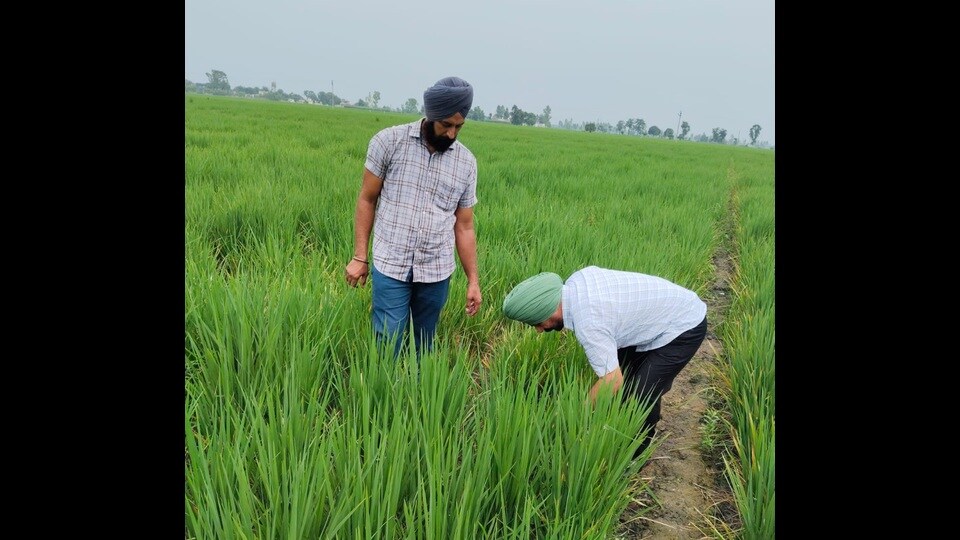
The data from the district agriculture department reveals that 5,475 acres of farmland in Sangrur and 860 acres in Malerkotla have been affected by the virus causing financial losses to farmers. However, Barnala district reported zero cases.
Chief agriculture officer, Barnala, Harbans Singh said that the district recorded zero dwarf cases.
The disease causes the crop to stop growing, dry out completely, and lose all yield, leaving the plant without a single grain.
Farmers who invested heavily in cultivation and government-recommended varieties are now facing financial loss with no immediate relief or compensation from the government.
Amrik Singh, a farmer from Hambalwas village of Sangrur, said, “Two acres of my farmland have been affected completely. I even used sprays to prevent this, but expenses proved to be futile. The damage has cost me ₹1.6 lakh loss.”
Another farmer, Karnail Singh who hails from Dhandial village, reported losses across 10 acres, with four acres completely damaged, estimating his loss at about ₹4 lakh. He had sown government-promoted varieties (PR128, PR 131) and followed the direct sowing method.
He said, “The agriculture department visited here and said that the crop has been damaged completely. About the compensation, they said that we can only do the survey and submit reports and that the compensation for this will be decided by the government.”
Agriculture development officer Narinderpal Singh said that the virus causes crops to dry up completely. Yield becomes zero.
Regarding financial aid, he said, “There is no such thing of compensation as of now, it would be followed as per the orders.” He stated that our current role is to report the disease to the headquarters.
He confirmed that while the virus has been seen in districts like Ropar and Fatehgarh Sahib for four to five years, this is the first time Sangrur has witnessed a spike.


