
 E-Paper



Enterprising Mansa farmer shows the way, makes wealth from waste
Paddy harvesting in Mansa is at its peak as it was delayed due to spells of rain in the last week of September. Avtar is ready for his 8th year of straw management at Dhalewan, Kotra, Bhkihi and Moola Singhwala villages and set a target to cover 700 acres


KOTRA KALAN (MANSA) For 30-year-old enterprising farmer Avtar Singh, management of paddy waste turned out to be a golden opportunity for enhancing his income.
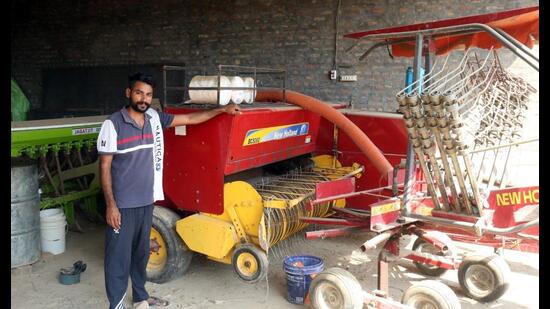
In the last season, he earned ₹28 lakh in less than 50 days by selling about 20,000 quintal of stubble to a biomass generation plant at the nearby Khokar Kalan village.
Paddy harvesting in Mansa is at its peak as it was delayed due to spells of rain in the last week of September. Avtar is ready for his 8th year of straw management at Dhalewan, Kotra, Bhkihi and Moola Singhwala villages and set a target to cover 700 acres.
“I bought a second-hand bailer for ₹11 lakh with the primary motive of managing straw from our family farmland of 30 acres. In 2015, I first offered to remove paddy waste for free on 100 acres from my native village Kotra Kalan. It was planned to ensure that smoke emitted from farm fires does not cause any road mishap on the busy Bathinda-Mansa state highway,” he said.
After sensing a commercial opportunity in straw management, this young farmer started extending his business with the support of his joint family.
“Like the previous season, this year also I intend to do a business of ₹30 lakh from 700 acres. I feel happy to provide direct employment to 60 labourers every season. After paying a daily wage of ₹1,500 to the workforce, I will end up with a net saving of at least ₹7 lakh in less than six weeks,” said Avtar.
Taking inspiration from him and financial support from the state government, this year, four more residents of Kotra have ventured into the business of straw management.
This time, Avtar has tied up with a nearby paper mill as unlike the biomass unit, the mill owner has committed complete payment in one go.
“It is a remunerative business and farmers can form groups and invest jointly to buy tractors and bailers. The government should promote multiple biomass plants in each district to eradicate stubble burning and open source of additional income to villagers,” he says.
“In the last few years, I have seen that if the administration maintains a tough stand against farm fires, farmers avoid setting afire the crop waste. This time as the window between paddy harvesting and wheat sowing has decreased due to delayed sowing of rice, farmers may opt to burn the stubble,” he said adding it is a wait-and-watch period till paddy harvesting goes at full scale.


