E-Paper



Fall Armyworm: Himachal agri varsity advises maize growers to adopt integrated mgmt practices
A varied percentage of FAW infestation has been reported from several parts of the state, including pockets from Kangra, Hamirpur, Mandi, Una, Bilaspur and Chamba districts

 Prefer HTon Google


As the infestation of the Fall Armyworm (FAW), a destructive pest, has caused concern among maize farmers across multiple districts of Himachal, experts at Chaudhary Sarwan Kumar Himachal Pradesh Agricultural University, Palampur, advised them to remain vigilant and adopt integrated pest management (IPM) practices for sustainable control of the pest.
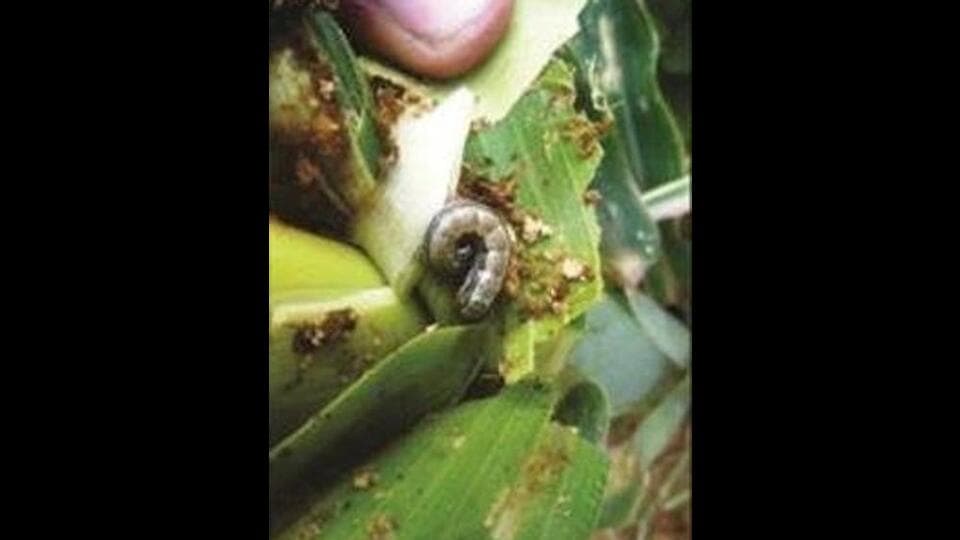
A varied percentage of FAW infestation has been reported from several parts of the state, including pockets from Kangra, Hamirpur, Mandi, Una, Bilaspur and Chamba districts. Farmers have also been advised to seek technical guidance from the University or their nearest Krishi Vigyan Kendra whenever pest infestation is observed.
Fall armyworm, scientifically known as Spodoptera frugiperda, is a highly destructive insect pest that can significantly damage maize crops. Its larvae feed on maize leaves, tassels, and ears, causing substantial yield losses. It bores into plant tissue, hollowing out the stems and causing irreversible damage.
Dr Surjeet Kumar, head of department of entomology, said farmers should regularly monitor their maize fields for early signs of infestation. “The pest can be identified by characteristic symptoms such as window-pane feeding on young leaves, irregular holes and the presence of larvae along with their excreta in the whorl of maize plants. Early detection plays a crucial role in minimising crop damage,” he said.
Kumar emphasised that farmers should adopt Integrated Pest Management (IPM) practices for sustainable control of the pest. “These include regular field scouting, destruction of egg masses and larvae, maintenance of field sanitation, conservation of beneficial insects, and installation of pheromone traps for monitoring the pest population. Chemical control measures should be adopted only when the pest population exceeds the economic threshold level and strictly as per the recommendations of agricultural experts,” he said.
The university experts have appealed to maize growers to avoid indiscriminate use of pesticides and instead adopt scientific and eco-friendly pest management practices. Farmers have also been advised that insecticides should be used only when Fall Armyworm damage exceeds 10% of the crop or when the pest population reaches the Economic Threshold Level (ETL). Under such conditions, farmers are advised to spray any one of the following insecticides as recommended by the University: Emamectin Benzoate 5 SG @ 0.4 g per litre of water or Chlorantraniliprole 18.5 SC @ 0.4 ml per litre of water. Farmers should ensure thorough coverage of the maize whorl during spraying and use insecticides strictly as per the recommended dose and safety precautions.